Category: News

shop_11-4

To Faith Leaders and faith organisation representatives

Greetings from SAFCEI, the Southern African Faith Communities Environment Institute. We share with you a letter about African food security and resilience in the time of Covid-19 and beyond.

We write with a request that you consider endorsing the following letter about food security. We also ask that you share this appeal as widely as possible amongst other faith based institutions and initiatives that are concerned about establishing a just and nutritious food system for people that also restores the good Earth.

Open letter to the Bill and Melinda Gates Foundation from SAFCEI and Faith community representatives from the African continent.

We, faith leaders from Africa, are experiencing first-hand how the Covid-19 pandemic is making visible failing food systems and fuelling hunger and poverty in Africa. Alongside our responsibility to be custodians of the Earth, faith networks are entrusted to ensure the just distribution and sharing of resources for all in need.

The Bill and Melinda Gates Foundation expresses a commitment to overcoming food insecurity, but we are gravely concerned that their support for intensive industrial scale agriculture is deepening the humanitarian crisis.  We believe that our people are not being sustained by the high input – high output approach of industrial monoculture farming and food processing that the Gates Foundation promotes. We are also aware that aggressive frontier expansion of farmable land breaches human-nature barriers, enhancing the opportunistic transmission of pathogens from reservoirs in wild animal populations to humans.

In the light of evidence that community-based agroecological approaches with minimal inputs will strengthen local and informal food network systems and bring about greater ecological integrity and social and gender justice, we appeal to the Gates Foundation to reconsider how it promotes “food security”.  Locally-defined, holistic approaches, that are based on regenerative farming methods, will enable an agroecological transition to sustainable food systems in Africa.

This is a vision the faith traditions of the continent long for as we strive to ensure the just distribution and sharing of resources for all in need. It can only happen if we restore our relationship with the Earth and the community of life upon which we depend.

Please join us to raise your voice by signing on to the letter to the Gates Foundation. Please endorse this letter by 30th September.

Download the open letter here.

In solidarity and faith,

The SAFCEI team

Read More
Learning Hubs

ACT Ubumbano Learning Hub #5 – Community voice, human dignity, and the demand for a Basic Income Grant

From 10h00 to 12h15 on Monday 14th September 2020, ACT Ubumbano is convening a Learning Hub to reflect on how community voice is amplified in calling for a universal Basic Income Grant (BIG). Isobel Frye from Studies in Poverty and Inequality Institute, and Skhumbuzo Zuma from Church Land Programme will lead the conversation. Click here to register to participate.

The revival of the campaign for a universal is important for South Africa and the region. The COVID-19 lockdown has exposed the inadequacy of social security safety net provisions, and has driven poor people with few livelihood and social security options to an even more precarious position. The income support of a BIG can provide significant relief to poor communities, yet it faces strong opposition from political and economic conservatives. To successfully counter this resistance, civil society organisations and activists will need to force change by proving the technical feasibility of a BIG, and ensure that pressure is brought to bear on decision makers through mass action and other forms of advocacy.

In this advocacy work, the voice of people most affected is of critical importance.

  • What strategies and coalitions will be needed to ensure their experiences and concerns are reflected in and inform policy conversations?
  • How do campaigning and advocacy organisations ensure that people have the necessary technical knowledge to articulate their BIG-related demands independently and effectively?
  • What role do community organisers play in connecting the technical policy issues to community struggles?
  • What do solidarity networks and their participating organisations need to do to develop and implement a truly mass-based campaign?

If you have any questions, email thabo@actubumbano.org.

Read More
Learning Hubs

ACT Ubumbano Learning Hub #5

[av_heading heading=’Community voice, human dignity, and the demand for a Basic Income Grant ‘ tag=’h3′ style=’blockquote modern-quote modern-centered’ subheading_active=” show_icon=” icon=’ue800′ font=’entypo-fontello’ size=” av-medium-font-size-title=” av-small-font-size-title=” av-mini-font-size-title=” subheading_size=” av-medium-font-size=” av-small-font-size=” av-mini-font-size=” icon_size=” av-medium-font-size-1=” av-small-font-size-1=” av-mini-font-size-1=” color=” custom_font=” icon_color=” margin=” margin_sync=’true’ padding=’10’ icon_padding=’10’ link=” link_target=” id=” custom_class=” av_uid=’av-2u4aua’ admin_preview_bg=”][/av_heading]

The revival of the campaign for a universal Basic Income Grant (BIG) is important for South Africa and the region. The COVID-19 lockdown has exposed the inadequacy of social security safety net provisions, and has driven poor people with few livelihood and social security options to an even more precarious position. The income support of a BIG can provide significant relief to poor communities, yet it faces strong opposition from political and economic conservatives. To successfully counter this resistance, civil society organisations and activists will need to force change by proving the technical feasibility of a BIG, and ensure that pressure is brough to bear on decision makers through mass action and other forms of advocacy.

In this advocacy work, the voice of people most affected is of critical importance.

  • What strategies and coalitions will be needed to ensure their experiences and concerns are reflected in and inform policy conversations?
  • How do campaigning and advocacy organisations ensure that people have the necessary technical knowledge to articulate their BIG-related demands independently and effectively?
  • What role do community organisers play in connecting the technical policy issues to community struggles?
  • What do solidarity networks and their participating organisations need to do to develop and implement a truly mass-based campaign?

ACT Ubumbano will convene an online Learning Hub on Monday 14th September from 10h00 to 12h15 to grapple with these questions, and to challenge participating organisations and activists to find new ways of supporting struggles for BIG…and for human dignity in communities in the region.

Click here to register to participate. If you have any questions, email thabo@actubumbano.org.

Read More

Maputo activists training in partnership with Christian Council of Mozambique

[av_horizontal_gallery ids=’1476,1478,1479′ height=’25’ size=’large’ gap=’1px’ active=’enlarge’ initial=” control_layout=’av-control-default’ links=’active’ link_dest=” lightbox_text=” lazy_loading=’disabled’ id=” custom_class=” av_uid=’av-2gvelv’][/av_horizontal_gallery]

I was able to learn to put myself in the place of others, to know what is happening with that person” – Ubumbano Training Course in Mozambique

The Christian Council of Mozambique partnered with ACT Ubumbano to conduct training for activists in Maputo. Run over four sessions in August, the training sought to deepen the ability of participants to get to the root cause of problems that are being faced by their communities. Skills of research, analysis and critical writing up of issues were shared, and the challenge of supporting solidarity action and the struggles being waged by communities was a focus. The process showed the need for more consistent community organising that goes beyond work being done by individuals.

The activists were asked to identify an issue in their community, and then to deepen their understanding of the causes together with community members. Among the issues raised were:

  • Sexual harassment at Matola High School,
  • Drug consumption in George Dimitrov “Benfica” neighborhood,
  • Hygiene and sanitation in the Maxaquene C Community,
  • Abandonment of elderly people on the streets of Maputo City,
  • Consumption of cannabis sativa in Patrice Lumumba neighborhood,
  • The rise of robberies in the neighborhood of Matola “F”,
  • The removal of informal street vendors from Matola Municipality, and
  • Domestic violence against women in Maputo.


[av_image src='https://www.actubumbano.org/wp-content/uploads/2020/09/Thumbnails.jpg' attachment='1486' attachment_size='full' copyright='' caption='' styling='' align='center' font_size='' overlay_opacity='0.4' overlay_color='#000000' overlay_text_color='#ffffff' animation='no-animation' hover='' appearance='' lazy_loading='disabled' link='' target='' title_attr='' alt_attr='' id='' custom_class='' av_element_hidden_in_editor='0' av_uid='av-29arsj' admin_preview_bg=''][/av_image]

Feedback from the activists indicates that the methodology of learning from action and experience can lead to greater insight about our social justice practice.

  • Ofélia liked the fact that she enabled people to tell their story.
  • Hilario raised a worry about how money often is what spoils social organising, and challenged everyone to have follow-up actions to avoid starting from scratch at the next workshop.
  • For Paulo, this “unforgettable experience” learning research methods convinced him that he still has a lot to learn. “I made a self-discovery of myself, when I had the opportunity to talk to the elderly, it made me realize that we have to do something. The old lady asked me what is the purpose of the interview? Will it be followed up with action?”
  • Dorina was “…able to learn to put myself in the place of others, to know what is happening with that person, to know what is going on to reach that situation.”

These activists will continue to work with CCM and ACT Ubumbano in amplifying the voice of communities struggling for justice.


Read More

Abahlali baseMjondolo and Church Land Programme: Solidarity – The Wind Beneath Activists’ Wings

[av_layout_row border='' min_height_percent='' min_height_pc='25' min_height='0' color='main_color' mobile='av-flex-cells' mobile_breaking='' av-desktop-hide='' av-medium-hide='' av-small-hide='' av-mini-hide='' id='' custom_class='' aria_label='' av_element_hidden_in_editor='0' av_uid='av-83vcvd'] [av_cell_one_fourth av_uid='av-5ouut5'] [/av_cell_one_fourth][av_cell_one_half av_uid='av-44ggo9'] [av_heading heading='Abahlali baseMjondolo and Church Land Programme: Solidarity – The Wind Beneath Activists’ Wings' tag='h2' link='' link_target='' style='blockquote modern-quote' size='' subheading_active='' subheading_size='' margin='' padding='30' icon_padding='10' color='' custom_font='' icon_color='' show_icon='' icon='ue800' font='' icon_size='' custom_class='' id='' admin_preview_bg='' av-desktop-hide='' av-medium-hide='' av-small-hide='' av-mini-hide='' av-medium-font-size-title='' av-small-font-size-title='' av-mini-font-size-title='' av-medium-font-size='' av-small-font-size='' av-mini-font-size='' av-medium-font-size-1='' av-small-font-size-1='' av-mini-font-size-1=''][/av_heading] [av_video src='https://youtu.be/lXZefZNwRLQ' mobile_image='https://www.actubumbano.org/wp-content/uploads/2020/07/Video.jpg' attachment='1394' attachment_size='full' format='16-9' width='16' height='9' conditional_play='' id='' custom_class='' av_uid='av-2ikhm8'] [av_textblock size='' av-medium-font-size='' av-small-font-size='' av-mini-font-size='' font_color='' color='' id='' custom_class='' av_uid='av-kb16hs73' admin_preview_bg=''] Brief excerpt of David Ntseng from the Church Land Programme on how the plight of Abahlali invites one’s humanity to wake up.
[/av_textblock] [av_hr class=’invisible’ icon_select=’yes’ icon=’ue808′ font=’entypo-fontello’ position=’center’ shadow=’no-shadow’ height=’10’ custom_border=’av-border-thin’ custom_width=’50px’ custom_margin_top=’30px’ custom_margin_bottom=’30px’ custom_border_color=” custom_icon_color=” id=” custom_class=” av_uid=’av-kb16nckl’ admin_preview_bg=”] [av_textblock size=” av-medium-font-size=” av-small-font-size=” av-mini-font-size=” font_color=” color=” id=” custom_class=” av_uid=’av-kb16hs73′ admin_preview_bg=”] On 8 July 2020, the second ACT Ubumbano Learning Hub convened to reflect on solidarity and speaking out as a human practice to confront injustice within societies. The session discussed the Church Land Programme and Abahlali baseMjondolo’s campaign to protest violations by the eThekwini municipality against community members in three informal settlements in KZN.

To watch full video click here.
To download the Learning Note #2, a report on the Learning Hub, click here.

Learning Hub #5 is scheduled for the week of 10th September 2020 (date and topic to be announced). You can apply to participate here. Organisations and activists are invited to contact us to profile and share as a learning resource for upcoming back.
[/av_textblock] [/av_cell_one_half][av_cell_one_fourth vertical_align=’top’ padding=’30px’ background=’bg_color’ background_color=” background_gradient_color1=” background_gradient_color2=” background_gradient_direction=’vertical’ src=” background_attachment=’scroll’ background_position=’top left’ background_repeat=’no-repeat’ link=” linktarget=” link_hover=” mobile_display=” custom_class=” av_uid=’av-23siah’] [/av_cell_one_fourth][/av_layout_row]

Read More
162

ACT Ubumbano Learning Hub #4 – Care and connection in the time of COVID

Care and connection in the time of COVID: Working slower and deeper

On Tuesday 25 August 2020, ACT Ubumbano will host the 4th in a series of Learning Hubs – a space for critical reflection, learning and action. In this session, Thuli Mjwara of Inclusive and Affirming ministries (IAM) will share her experience on how her personal and professional practice changed to provide care and support to others and to receive support for herself.

COVID-19 has forced us to develop new ways of connecting with each other. As we isolate in our homes and are unable to meet and work together, we have to connect in new and different ways – to support each other, exchange information and simply check in to see how our friends and colleagues are doing. In the Hub, we will discuss the questions: Has the reality of COVID resulted in a more people-centred way of working? Have we returned to a deeper practice of centering our humanity as we focus less on activities and events?

The Learning Hubs are designed to facilitate deep reflection and learning among community activists, and so participant numbers are kept small. You can apply to participate in forthcoming Hubs here.

Organisations and activists are invited to contact us if you have work you would like to be profiled and shared as a learning resource with others.

Read More

Food relief, community connections and solidarity against COVID-19

[av_layout_row border='' min_height_percent='' min_height_pc='25' min_height='0' color='main_color' mobile='av-flex-cells' mobile_breaking='' av-desktop-hide='' av-medium-hide='' av-small-hide='' av-mini-hide='' id='' custom_class='' aria_label='' av_element_hidden_in_editor='0' av_uid='av-83vcvd'] [av_cell_one_fourth av_uid='av-5ouut5'] [/av_cell_one_fourth][av_cell_one_half av_uid='av-44ggo9'] [av_heading heading='Food relief, community connections and solidarity against COVID-19' tag='h2' link='' link_target='' style='blockquote modern-quote' size='' subheading_active='' subheading_size='' margin='' padding='30' color='' custom_font='' custom_class='' id='' admin_preview_bg='' av-desktop-hide='' av-medium-hide='' av-small-hide='' av-mini-hide='' av-medium-font-size-title='' av-small-font-size-title='' av-mini-font-size-title='' av-medium-font-size='' av-small-font-size='' av-mini-font-size=''][/av_heading] [av_video src='https://www.youtube.com/watch?v=I250apm28J0&feature=youtu.be' mobile_image='https://www.actubumbano.org/wp-content/uploads/2020/07/Video.jpg' attachment='1394' attachment_size='full' format='16-9' width='16' height='9' conditional_play='' id='' custom_class='' av_uid='av-2ikhm8'] [av_textblock size='' av-medium-font-size='' av-small-font-size='' av-mini-font-size='' font_color='' color='' id='' custom_class='' av_uid='av-kb16hs73' admin_preview_bg=''] Brief excerpt of Michael Malinga from PACSA talking about how they could not run and hide from Covid-19.
[/av_textblock] [av_hr class=’invisible’ icon_select=’yes’ icon=’ue808′ font=’entypo-fontello’ position=’center’ shadow=’no-shadow’ height=’10’ custom_border=’av-border-thin’ custom_width=’50px’ custom_margin_top=’30px’ custom_margin_bottom=’30px’ custom_border_color=” custom_icon_color=” id=” custom_class=” av_uid=’av-kb16nckl’ admin_preview_bg=”] [av_textblock size=” av-medium-font-size=” av-small-font-size=” av-mini-font-size=” font_color=” color=” id=” custom_class=” av_uid=’av-kb16hs73′ admin_preview_bg=”] The first of the our Learning Hubs took place on 23rd of June 2020. CREATE-CBR and PACSA led a food distribution drive that involved them connecting with households affected by the COVID lockdown in Pietermaritzburg. The Learning Hub explored how these connections helped deepen their relationships of solidarity with community members, and ensured that dignity was safeguarded during this relief effort.

To watch full video click here.
To download the Learning Note #1, a report on the Learning Hub, click here.

Learning Hub #4 is scheduled for the week of 10th August 2020 (date and topic to be announced). You can apply to participate here. Organisations and activists are invited to contact us to profile and share as a learning resource for upcoming back.
[/av_textblock] [/av_cell_one_half][av_cell_one_fourth vertical_align=’top’ padding=’30px’ background=’bg_color’ background_color=” background_gradient_color1=” background_gradient_color2=” background_gradient_direction=’vertical’ src=” background_attachment=’scroll’ background_position=’top left’ background_repeat=’no-repeat’ link=” linktarget=” link_hover=” mobile_display=” custom_class=” av_uid=’av-23siah’] [/av_cell_one_fourth][/av_layout_row]

Read More
166

Amplifying voice with the inaugural ACT Ubumbano Activist Training Course

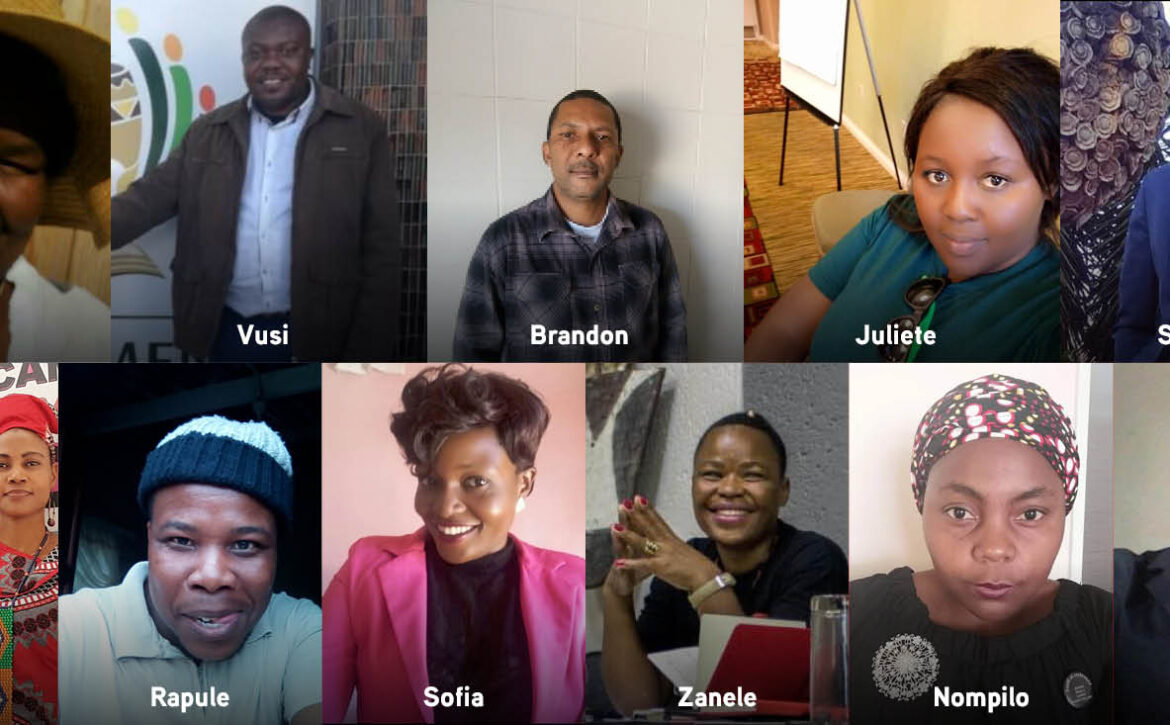
On 16 July 2020, ACT Ubumbano launched its first Training Course for activists in Southern Africa. We believe that learning is best done by doing, and so virtual platforms are combined with practical application of new insights and skills gained by activists. The training involves activists identifying key issues affecting their community, learning how to investigate and analyse the root causes of the problem, and then how to write this up to inform transformative action. The issues covered are as diverse as the geography these activists are from, and you can see the list below.

The course will run until 16 September 2020, and hopefully will strengthen the voice and agency of those who struggle for their dignity.

Name Issue Location
Juliet Difficulties in accessing contraception as a result of lockdown movement restrictions Penhalonga, Zimbabwe
Nompilo Challenges of supporting women survivors of violence during Covid 19 social distancing Umlazi, Durban
Ongeziwe The high rate of girls dropping out of school in Nyanga, Cape Town Nyanga, Cape Town
Zanele Problems faced by women in reporting the perpetrators of violence against them Rooiport farm, Dannhauser, KZN
Brandon problems of income and unemployment among youth Wentworth, South Durban
Siyabonga problems of income and unemployment among youth Luyengo, Eswatini
Mabore challenges faced by high school students during school shut down Mogashoa Village, Limpopo
Rapule problems of home-based care workers during Covid 19 Diepkoof, Soweto
Thami Problems with electricity outages experienced by the community Braamfisherville, Soweto
Vusi respiratory health problems in the mining affected community Vosman, Emalahleni, Mpumalanga

Read More
167

Invitation to Bid – Financial Services Provider

  1. Introduction & BackgroundACT Ubumbano is a voluntary association comprising European and Southern African organisations working for social justice. More information is available at www.actubumbano.org.We are looking to appoint a service provider to support the ACT Ubumbano Coordinator in the management of the organisation’s finances, administration and regulatory compliance.  Currently we have a staff of three people, and an annual budget (not considering COVID-19 revisions) of approximately ZAR 8 million.ACT Ubumbano has currently contracted one of its partner non-profit organisations to act as its fiscal host but finance matters will now be brought under the control of the Coordinator.
  1. Scope of WorkThe new service provider will be expected to provide, among others, the following main functions:

    • With the Coordinator, develop and implement a robust financial management system for ACT Ubumbano that incorporates a strong framework of internal control and enables good financial reporting to internal and external stakeholders.
    • Assist with the opening of new bank accounts and the management of all banking activities including the making of properly authorised payments to service providers on a monthly basis.
    • Establish and manage a forex facility for enabling transactions beyond South Africa.
    • Lead the handover of accounting records from the current fiscal host; capture all monthly financial transactions, based on proper and appropriate documentation and on coding/allocations provided by the Coordinator according to an agreed monthly timetable; reconcile/analyse all balance sheet accounts and provide financial reports for the organisation’s budget holders, for its board and for donors in the manner, and at the points in time, required by the respective funding contracts.
    • Prepare funder reports for audit, where applicable, and compile the draft annual financial statements for the organisation’s general purpose audit on the basis of a suitable accounting framework.
    • Prepare/provide all supporting schedules and reconciliations required by the auditors.
    • Manage payroll functions for the organisation’s employees including the monthly running of the payroll against an authorised salary, allowance and deduction schedule, together with leave recording, maintenance of the leave provision and submission of monthly, half-yearly and annual SARS returns and compliance with other statutory requirements from SARS, UIF, COIDA and others.
    • As requested, advise the Coordinator on financial management matters for the prudent stewardship of the organisation’s money.
  1. Invitation to BidInterested and suitably qualified and experienced parties are invited to submit their bids to provide the required financial management services. Each bid should contain the following:

    • Your assessment of the level of effort required to provide this service.
    • A clear statement of your suitability and capacity to undertake the assignment on an ongoing basis, including a description of the experience and qualifications of those who will be providing the services.
    • Evidence of experience in similar work (we will treat information with due discretion).
    • Confirmation of the accounting and payroll packages that you would propose to use to meet the above requirements with your reasons as to why those packages would be suitable.
    • Name and contact details of a representative of at least 2 existing clients who would be prepared to act as referees.
    • Your fee estimate.
  1. Submission InformationAll submissions must be sent to ashley@actubumbano.org by no later than 16h00 on Monday 17 August 2020. The same email address can be used for any questions that you need to ask when preparing your bid.

Read More
168

ACT Ubumbano Learning Hub #3 – Giving voice to people’s struggles!

Today, ACT Ubumbano is hosting the 3rd in a series of Learning Hubs to reflect on our practice of organising, solidarity and resistance against injustice. Using the Pine Road victory in Cape Town as a case study, the session will examine the complex set of skills, strategies and experience needed to facilitate change and to consolidate the gains that our activism brings.

The Pine Road community in inner-city Cape Town has been neglected for more than two decades and has faced numerous attempts by the municipality to forcibly remove them to locations far away from their lives, history and livelihoods. The Development Action Group (DAG), acting in solidarity with this community, facilitated a set of processes and engagements which supported the people affected to actively engage the City of Cape Town to develop an appropriate solution to meet their housing needs.

The Learning Hubs are designed to facilitate deep reflection and learning among community activists, and so participant numbers are kept small. Today’s session is already fully subscribed, but you can apply for forthcoming Hubs here.

Organisations and activists are invited to contact us if you have work you would like to be profiled and shared as a learning resource with others.

Read More