
Category: News
Community Manifestos as Tools for Accountability
Pumla Mabizela
Election season has arrived. Candidates suddenly seem to know every street, attend every meeting, and promise to fix everything. Meanwhile, community-based organisations have been busy mobilising residents across different wards so that they can organise and strategies before engaging political parties and prospective candidates.
My Vote Counts and ACT Ubumbano, together with partners such as Msunduzi Association of Residents, Ratepayers and Civics (MARRC), Durban South Community Advice Centre (DSCAC), and Umbrella Civic who are working to strengthen accountability, have developed a Community Manifesto template and a plain-language guide that communities can adapt to their own realities. This work will not end on election day or once the excitement of voting has faded. Community-led manifestos will serve as practical monitoring tools that residents can use to hold their councillors accountable.. Follow the links below to access these resources.
- My Vote Counts: Because your vote should not be the end of the conversation. It should be the beginning of an accountable relationship.
- Community Manifesto template: https://www.actubumbano.org/…/community-manifesto…
- Plain-language guide: https://www.actubumbano.org/…/community-manifesto-guide…
- Campaign post: Your ward. Your manifesto. Your power. #DemocracyFromBelow #CommunityManifesto #LocalGovernment #CommunityPower: https://www.fcom/story.php?story_fbid=1487874170037488&id=100064447579698&mibextid=wwXIfr&rdid=TDYXBnEey7N1Bk6R#
- Msunduzi Association of Residents, Ratepayers and Civics (MARRC): “A compact between the residents and the person who wants to represent us.” In partnership with the Brookside Corridor Civic Association (BCCA) in Ward 33, the Woodlands Resident and Ratepayer Association (WRRA) in Ward 32, and the Imbali Resident and Civic Association (IRCA) in Ward 41, MARRC held community dialogues where residents discussed the issues in their wards and agreed on their top five priorities. They also set out what they expect of their councillor and the mechanisms available to hold the councillor accountable. Posters have been produced (see attached), and MARRC has been interviewed by media houses. Read more in The Witness.
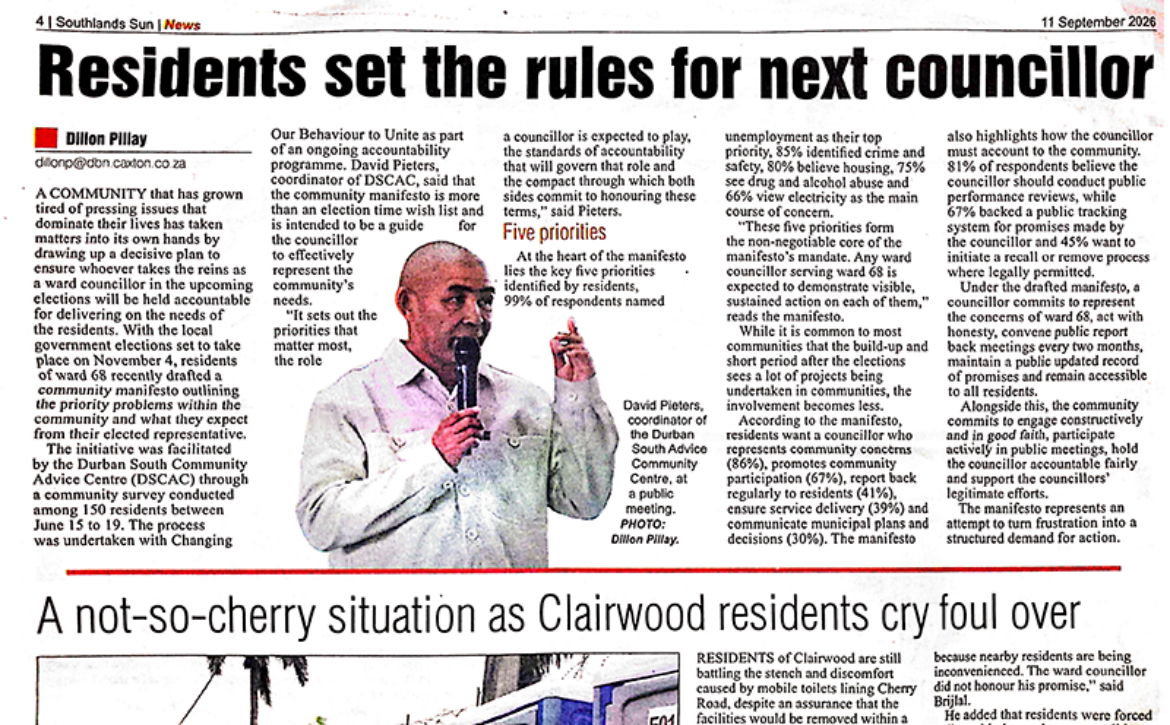
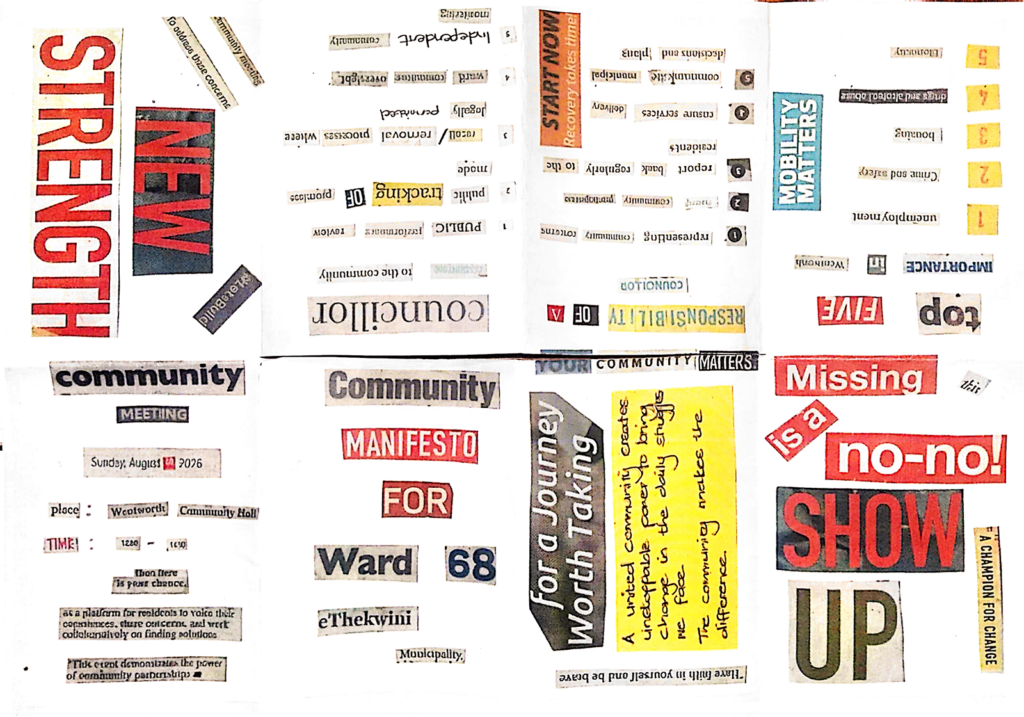
- Durban South Community Advice Centre (DSCAC): DSCAC has launched its community engagement initiative with a creative zine (see attached). Centre coordinator David Pieters was interviewed by the Southlands Sun about why the organisation is engaging Ward 68 in developing a community manifesto. The article explains the reasons for a community-led manifesto and outlines the process leading up to it (see attached article). DSCAC has hosted its community manifesto engagement on 24 September 2026.
- Umbrella Civic Ward 92 Community Manifesto: “This is for the people, by the people.” Ahead of the 2026 local government elections, Umbrella Civic has been asking: “What do we expect from our ward councillor?” Rather than simply giving candidates a platform, it developed a Community Manifesto setting out the community’s expectations and priorities, along with accountability mechanisms and metrics for measuring and monitoring the elected representative. The manifesto follows a series of engagements on “Democracy from Below”, supported by My Vote Counts, and is being circulated to residents and voters in the ward for endorsement. Umbrella Civic will use these endorsements to secure commitments from candidates: “We will not vote for you if you do not commit to prioritising community needs.” On 10 October 2026, Umbrella Civic will host a Town Hall with the candidates contesting the ward, where the manifesto and ward priorities will be shared and residents can engage candidates before making an informed choice. Follow Umbrella Civic ward 92 Instagram page @umbrellacivic or read the full manifesto here. Linked here is a summary.
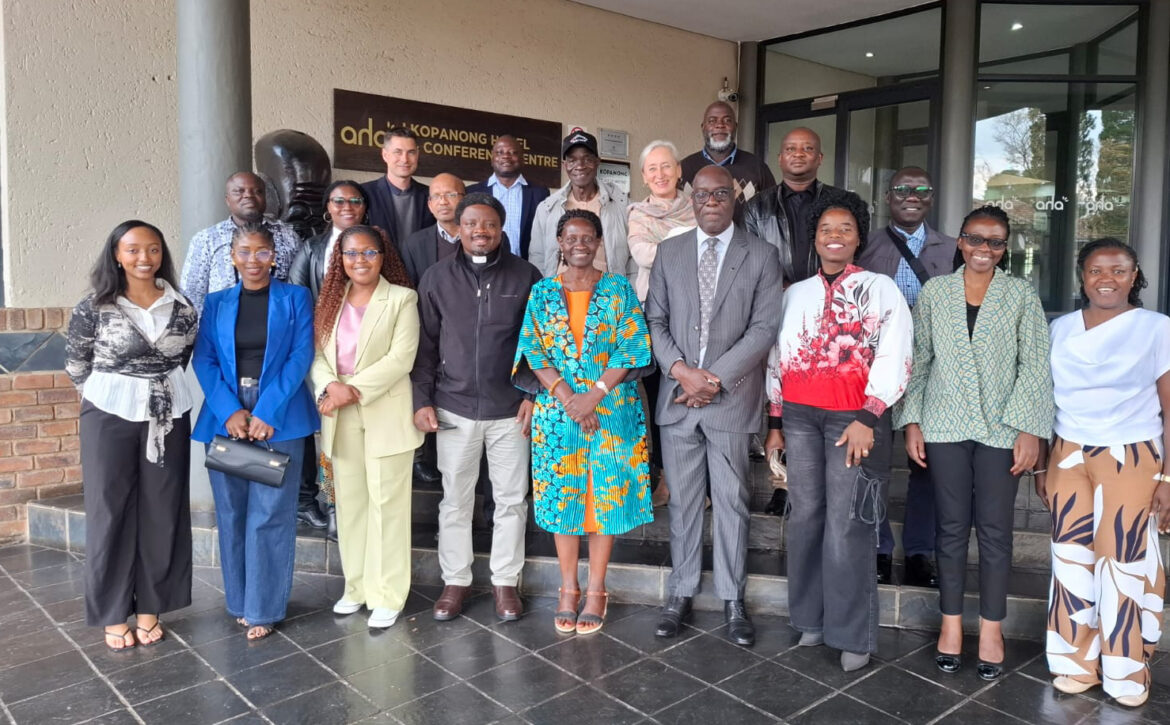
ACT Alliance Africa Conveners in Johannesburg – 8-10 September 2026
By Thabo Chaba
ACT Ubumbano hosted the ACT Alliance Africa gathering of national forum convenors, coordinators, and secretariat representatives in Johannesburg in September 2026. This was a space for solidarity, peer learning, and strategic mapping to strengthen regional coordination, scale up youth involvement, and elevate faith-based voices ahead of critical global milestones.
Participants focused on strategic alignment, evaluating the alliance’s unique faith-based identity and exploring concrete pathways to address shrinking civic space, political tensions, and humanitarian pressures. Forums deliberated on increasing local impact by aligning Community of Practice activities with global priorities, advancing locally led initiatives, scaling up cross-border programming, and improving joint resource mobilization. To support these efforts, the African Secretariat committed to transitioning from reactive responses to proactive crisis management by strengthening consortium creation, simplifying reporting processes, and offering enhanced technical support alongside access to donor networks.
Governance and climate action took centre stage with the presentation of a major global campaign, Africa Can’t Wait: Interfaith Voices for Just Climate Action in preparation for COP 32. National forums agreed to develop tailored campaign messages locally within a month of receiving guidance notes. Discussions on emergency preparedness highlighted a shift toward decentralized joint resource mobilization, continuous contingency budgeting, and warehouse innovation to reduce over-reliance on standard appeal mechanisms. To guide regional forums through these upcoming processes and ecumenical collaborations, an interim Regional Steering Committee comprising Alex Minjale, Emmanuel Ankama, and Haq Makumbi was elected. The region is also preparing for a visit from the ACT General Secretary in January 2027to Nigeria, Malawi, Zimbabwe, and Kenya.
True to the commitment of centring the lived experiences of marginalized communities, the final day featured a learning field visit to Snake Park, organized by the Benchmark Foundation. This Toxic Tour of Soweto provided a sobering look into the realities of communities living adjacent to historic gold mine tailings. A significant highlight was interacting with a local women’s association—a group of caregivers raising children and young people with disabilities heavily impacted by historical mining activities. Through handicraft work, these women raise a small income to support their centre, reminding the network of the urgent need for churches and people of goodwill to offer direct financial and in-kind solidarity to grassroots movements.
Moving forward, the gathering established a clear roadmap for the remainder of 2026. Climate messaging guidance notes will be circulated within two weeks to allow forums to finalize local messages a month later. Additionally, the interim steering committee will work to finalize their formal Terms of Reference, and the Secretariat will arrange a year-end review meeting to track progress on all commitments before the General Secretary’s regional visit in early 2027.

Re-imagining Democracy Futures: Solidarity as Imagination
Rifqah Tifloen
In the first piece in this series, we argued that democracy is “a way of being, not a destination”, something practised at the edges of formal power, long before and long after the ballot box[1]. This second reflection asks a narrower question: who gets to gather, and on whose terms?
We are living through a moment when the act of imagining has become contested ground, because those who profit from genocide, extraction and inequality need us to believe there is no alternative. Across the world, and now openly in the places that once lectured others about democracy, power is managing rooms. It decides who is invited, which questions are allowed, who gets to think, and what the outcome must be before anyone speaks. Against that, the simple act of bringing people together to listen, disagree and not yet know the answer is no longer neutral. It is a form of resistance. And it depends on something we rarely name as political: imagination.
In a recent public debate on “the age of illiberal democracy”, three voices circled the same unease[2]. Michael Ignatieff, who had to move a university out of Viktor Orbán’s Hungary, warned that concentrated power is structurally prone to corruption. Kishore Mahbubani reminded the room that the West is 12% of the world, and that much of the global South has learned to distrust liberal democracy when it arrives as a weapon. Marlene Laruelle named what is really driving the illiberal turn: people do not want less democracy. They are tired of institutions that are “unaccountable” and “technocratic”, and that “sociologically, don’t represent us”[3].
Laruelle then offered an image worth reflecting on. She imagined decision-making bodies that are not elected but are “all of us: local, rooted, drawn from different ages and walks of life”. That is not a description of any parliament. It is a description of a collective holding each other accountable.
This is where the question of convening becomes urgent. Authoritarian and illiberal politics do not only capture courts, media and people’s imagination. They capture the practice of assembly itself. Consultations become box-ticking. “Stakeholder/national dialogues” are stage-managed. Civic space shrinks, and what remains is curated from above. People are gathered, but they do not have space and safety for organic conversations. They are an audience for a decision already made. They are passive and set up to simply swallow the ideology of the experts.
Our own sector is not innocent here. Donor frameworks, logframes and what one London hub participant called “outcomes addiction” can reproduce the same logic in softer form: rooms where the answer is known in advance and listening is a performance.
London: holding a mirror
On 16-17 September 2026, ACT Ubumbano convened a Solidarity Hub in London with practitioners from UK and European social justice, philanthropy and faith-based organisations. The context had shifted since our Berlin Hub in 2024. As facilitator Allan Moolman put it, it is no longer only about “fixing the countries down there”. Western liberal democracy is now joining the disorder. Aid budgets have been cut, far-right parties are rising, and the decolonisation promises made after Black Lives Matter have stalled or reversed.
What made the room different was not its agenda but its method. The Hub began with questions: “What am I grappling with? What is giving me anxiety? Are we even creating change?” Participants brought open hearts and fatigue, curiosity and rage, and the room made space for all of it. The conversations were uncomfortable by design. People named the sector as ‘a machine feeding itself’: the same donors funding the same organisations to produce the same results, recycled back into the same system”.
They admitted to posing as experts to communities in the global South who have practised solidarity for centuries, including through Ubuntu. One participant said: “We started with idealism, sold the lie that resources will create change, and now we are in competition with each other”. Another asked, in Arabic, that we alnazar fi almir’ah: hold a mirror to ourselves (excerpts from the London Solidarity Hub draft report: Patel, 2026).
Solidarity as imagination
Authoritarianism works partly by narrowing what we believe is possible. It tells us there is only one way to govern, one way to organise, one kind of expert in the room. Solidarity, when it is real, does the reverse. It asks us to imagine a “we” that does not yet exist and then behave as though it does.
After the Solidarity Hub in London, I visited Ibraaz, a London space describing itself as “a brave space for art, culture, and ideas from the global majority”, has been asking a question that sits close to our own: who is your “we”? Its recent programme offers two lessons for anyone who convenes.
The first comes from the Indonesian collective Taring Padi, formed in Yogyakarta in 1998 as Suharto’s authoritarian regime fell. Writing for Ibraaz, Marco Baravalle describes a practice where individual authorship dissolves into collective making, one that “stitches together a collective politics of resistance grounded in multiple lines of oppression”[4]. The “people” here, he writes, “are not the pure and homogenous national citizens of Western populism”[5]. That is exactly the imagination pathway illiberal politics tries to shut down: a plural people who make things together.
The second comes from a conversation on liberation cinema, where filmmaker and curator Jonathan Ali warns: “It’s very easy to say you’re in solidarity with something, but solidarity as political practice means something else”. His co-author Rehana Esmail adds that those who carry these works into Western institutions must stay “accountable to that intention”[6]. For those of us who hold rooms, funding or platforms in the global North, the lesson is direct. Convening is not neutral hosting. It is a responsibility to the struggles we bring into the room.
The organiser and writer Zedé pushes this further. In Come Outside First, Then Curate Your Ideology, she writes about the tiredness of the people doing the work: “We’re tired. We’re exhausted. We’re overworked and unsupported… What if you met us outside and helped, then curated your ideology?” She insists that “implementers can be critical thinkers too”, and warns against “credentialism”, the belief that a degree or the right vocabulary makes someone’s thinking more valid than someone who has actually done the work[7]. Her answer is to resource the neighbour running “a local welfare network out their block” the way we resource the theorist.
This is what London participants were reaching for when they spoke of Ubuntu, and of the solidarity already practised in homes and communities without funding or frameworks. Imagination is not something we plan in a workshop. It is something we practise by coming outside, together.
Towards the Imaginarium
From 19 to 21 October 2026, the Southern Africa Imaginarium of (Re)Imagining Africa’s Democratic Futures will bring together community organisers, grassroots leaders and emerging scholars. What we continue to learn in our practice of convening regionally and at the London Hub is shaping how we hold that space.
If illiberal politics dictates how knowledge is shared, and who gets to think, then democratic futures begin with rooms that refuse to be managed. For us, that means a few commitments:
- Start with lived experience, not expertise.
- Let questions lead.
- Make space for discomfort and rage.
- Name power, including our own.
- Care for the people doing the work.
The London participants left us with a question we will carry into our upcoming convening: “How do we shift towards building solidarity and power with those with limited or no power?” Our answer, for now, is to keep convening, and to treat each gathering as a small rehearsal of the democracies we are trying to imagine.
Solidarity is a choice about who we stand with. Imagination is what lets us see who that could be. Gathering is how the two become real.
[1] Tifloen, R. (2026). Re-imagining Democracy Futures: Learning from the Edges of Formal Power. ACT Ubumbano.
[2]-3 ‘The age of the illiberal democracy’ public debate with Kishore Mahbubani, Michael Ignatieff and Marlene Laruelle, chaired by Roger Hearing. (AIA TV, September 2026.)
[4]-5 Baravalle, M. Those who “also paint”: Taring Padi Against the Division of Artistic Labour. Ibraaz Publishing.
[6] Esmail, R. and Ali, J. The Afterlives of Sugar: Liberation Cinema, Solidarity, and the Politics of Use. Ibraaz Publishing.
[7] Zedé (2026, 2 August). Come Outside First, Then Curate Your Ideology. Substack.
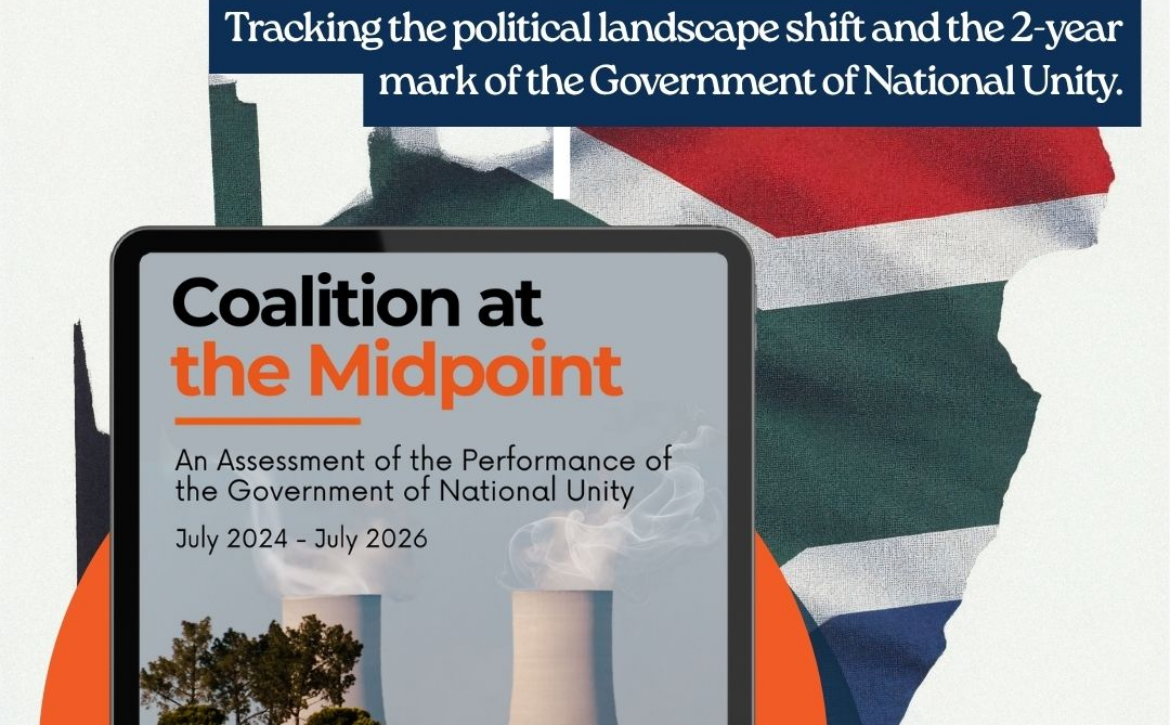
Coalition at the Midpoint: Assessing two years of the GNU

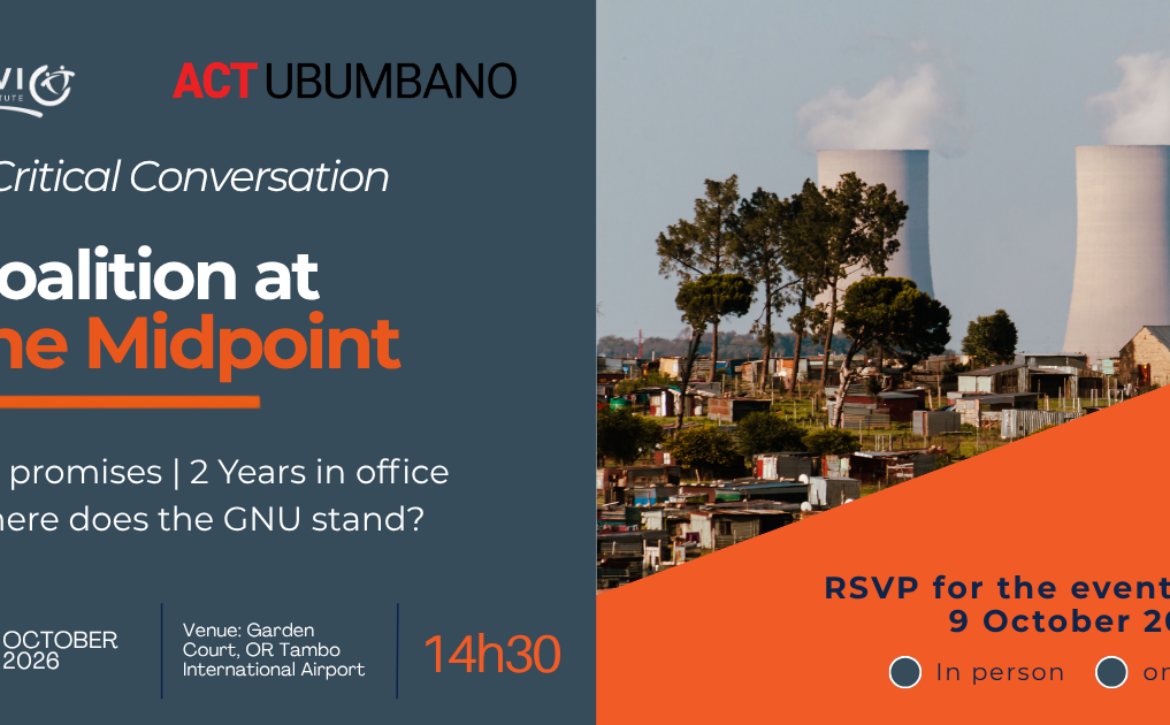
The Sivio Institute’s South Africa Citizens Watch (SACW) Tracker, with support from ACT Ubumbano, provides an evidence-based assessment of how government has translated election commitments into policy action. Drawing on the Tracker’s monitoring of 120 policy promises across five sectors, the Coalition at Midpoint report assesses not only whether commitments are being acted on, but also the quality and extent of implementation.
The report records an overall assessment score of 34%, with the highest performance in Economy (41%), followed by Governance (38%), Corruption (34%), Climate Change (33%), and Social Services (27. Of the 120 commitments tracked, 53% (64/120) are In Progress, 3% (4/120) have been Implemented, and 44% (52/120) have Not Commenced. Notably, no commitments were classified as Broken.
Click here to download the 2025 Annual Report
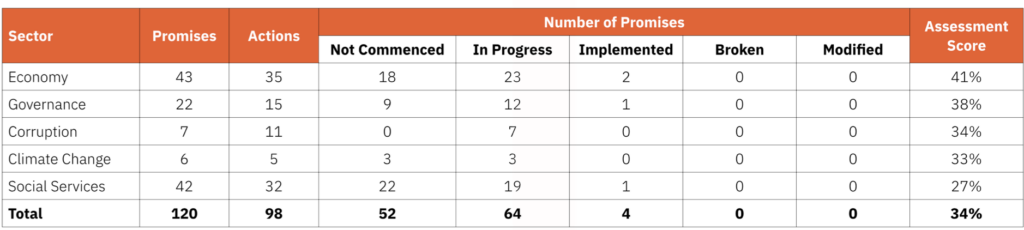
While the findings point to increased government activity across sectors, progress remains uneven, with many commitments still awaiting implementation.
The Report will be the subject of a Critical Conversation on 12 October in Johannesburg. A separate notification for this event will be circulated shortly.
Read the full report: https://doi.org/10.59186/SI.2R22D58F
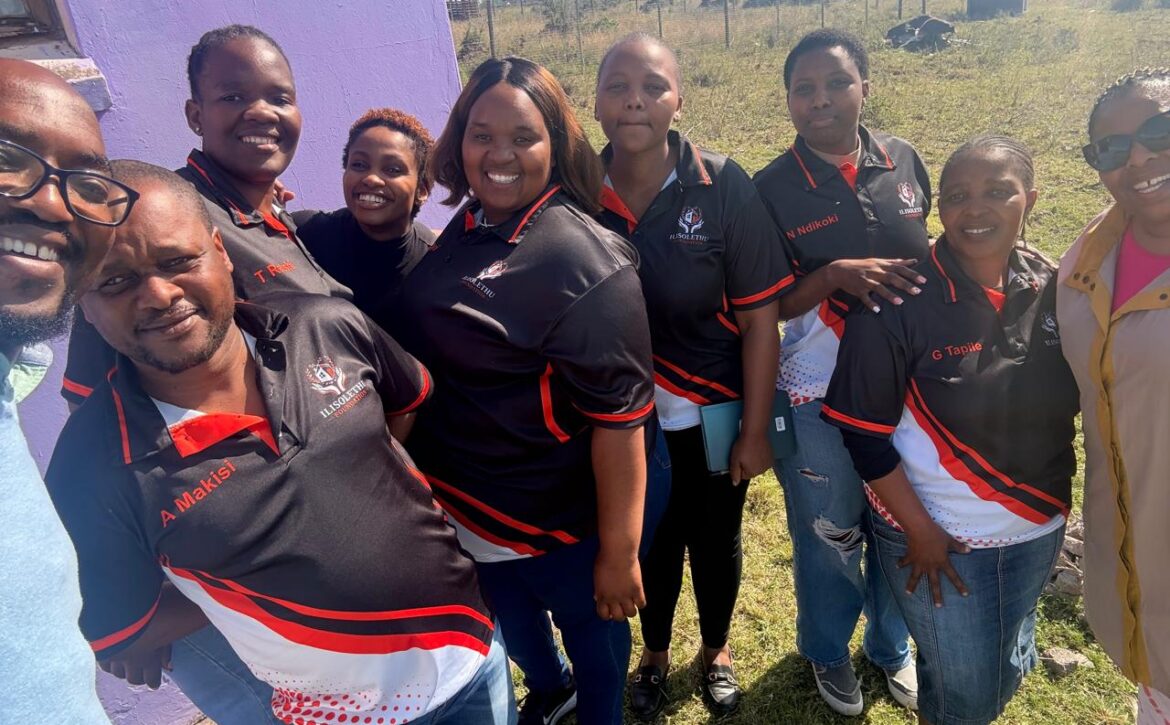
Who Is Visiting Whom? Notes from the Second Round of the Leverage Fund Institute’s (LFI) Partner Visits
Mpho Raboeane
We arrived to witness the work. But as the visits unfolded, the gaze kept returning to us. What exactly had we come to see? What needed to be verified? Whose confidence was the itinerary meant to secure?
The questions became harder to avoid because the work did not begin with us, and its meaning could not be contained by our reporting categories. The partners knew the ground, the histories and the stakes. We arrived with the grant.
Across the Free State, Western Cape, Northern Cape, Eastern Cape and Mpumalanga, we encountered changes that could easily be mistaken for ordinary administration. A room had been secured. An organisation had strengthened its systems. A partner could finally point to a place of its own from which to work, loosening the constant anxiety of transience produced by insecure tenure.
None of this is incidental. Permanence is political when communities and their institutions have been made to live provisionally.
In Mpumalanga, a nearly completed multipurpose centre will bring an advice office and paralegal services, after-school programmes and a library, driving licence-readiness support, a satellite point for commissioners of oaths and a computer skills centre under one roof. Seen through a project lens, these are deliverables. Seen from the ground, they raise a different question: why must one community institution gather together the functions that public systems have fragmented, withdrawn or made difficult to reach?
The centre is not simply evidence that funding has worked. It is evidence of how people organise life in the gaps between institutions.
Community advice offices repeatedly appeared as something like the central nervous system of this organising. Around them sit mutual aid, food security and sovereignty, water scarcity, access to social protection, education, gender-based violence and femicide, disability awareness, youth unemployment and pathways into work. The grant did not invent this intelligence. It gave existing relationships more room, reach and material form.
That distinction matters.
One of the partners is developing a relationship with Services SETA (Sector Education and Training Authorities) to create training and employment pathways for around twenty women fieldworkers, their “sisterhood alumni”, whose prospects might otherwise have ended when a project closed in July. There is something uncomfortable in the phrase “when a project closed”. Philanthropy is very good at making endings look administrative. A contract reaches its end date. A budget line closes. A report is submitted. But the people whose labour carried the work remain. So do their obligations, their relationships, their aspirations and their need for a livelihood.
Grantmaking governs through time as much as through money. It decides when work begins, when it becomes legible and when it is deemed complete. Communities live in another time. Their crises do not keep to funding cycles, and neither do their relationships.
This sharpened something for me about freedom.
We often speak about freedom as an idea: the freedom to imagine, to choose, to believe that another world is possible. But freedom is also particular. It has a location. It requires material conditions. And when it is real, it is felt.
Amartya Sen’s account of development as substantive freedom is useful here. What matters is not only what resources people receive, but what those resources actually enable them to be and do. A grant can pay for activity without expanding the range of choices available to people. It can produce outputs while leaving the underlying conditions of life largely untouched.
The question I keep coming back to is therefore not simply, “What did the grant fund?” But rather, “What became possible because of it?”
A secure space creates continuity. An organisation with stronger systems can negotiate differently. A trained fieldworker can carry a livelihood beyond a project. A community institution can make an otherwise fragmented state more navigable. Relationships between organisations can allow knowledge and practice to travel. These things may sound modest from the vantage point of a funder. On the ground, they can alter the room people have to move.
Freedom has an infrastructure.
This is also where the visits turned the gaze back towards LFI. We still have habits of the funder that are difficult to dislodge. We define the problem. We fix the timetable. We decide what counts as evidence. We retain the authority to judge whether transformation has occurred. Even a flexible grant can leave that deeper arrangement intact. We may loosen the conditions without relinquishing the position from which those conditions are set. This is where the language of decolonial grantmaking becomes uncomfortable.
Eve Tuck and K. Wayne Yang’s Decolonization Is Not a Metaphor refuses the ease with which decolonisation can become a generous synonym for inclusion, participation or doing development better. Their insistence on the repatriation of indigenous land and life is deliberately difficult. It prevents us from congratulating ourselves too quickly.
For philanthropy, the warning is direct. We cannot call a practice decolonial simply because it is participatory, compassionate or less restrictive. The question is whether authority moves.
Money can become medicine when it repairs relationships, creates room for organising and renews the possibility of sovereignty. It can also remain a means of supervision, even when the language surrounding it is progressive.
The difference is not captured by the size of the grant or even by how flexible it is. It lies in who gets to name what matters, whose knowledge is treated as authoritative, who interprets what happened, whose learning travels and whether a partner can refuse the terms on offer.
This, for me, is where the LFI proposition becomes interesting. I don’t think LFI should be understood simply as a fund that gives more flexible money to organisations that conventional philanthropy has overlooked. That is necessary, but it is not sufficient.
The more ambitious proposition is that capital can make room for people to judge, choose and act on their own terms:
Room to respond to what was not anticipated in the proposal. Room to build an institution rather than endlessly deliver a project. Room to retain people after a funding cycle ends. Room to experiment, fail, adapt and try again. Room for relationships that cannot be reduced to outputs. And, importantly, room for communities to decide what is worth building in the first place.
That means thinking about grantmaking less as purchasing predetermined outcomes and more as underwriting possibility. It also means accepting that possibility carries risk.
The second round of visits left me less certain about our answers and clearer about the question. Our task is not to become better architects of other people’s liberation. Nor is it to romanticise communities or pretend that outside expertise has no place. It is to know when our expertise should support, when it should step back, and when the people closest to the work know something we cannot know from a boardroom or a proposal.
We saw a room secured. A centre rising. A livelihood extended beyond the life of a project. Practices shared between organisations. Community institutions becoming better able to hold life. These are not the whole story. But they are evidence of something important: people making more room for themselves to act.
My faith, ultimately, is in that capacity. Not the thin idea that people can overcome structural conditions through individual will, but the much more material proposition that people can exercise agency when the conditions around them allow it to become consequential. Perhaps that is what the ground is teaching us.
The harder work is ours: to surrender the authority to decide in advance what freedom must look like, and to accept that the ground may be teaching us not how to lead, but how to follow. And perhaps the most radical discipline for LFI is to become comfortable with the fact that we may not be the ones who know what comes next.
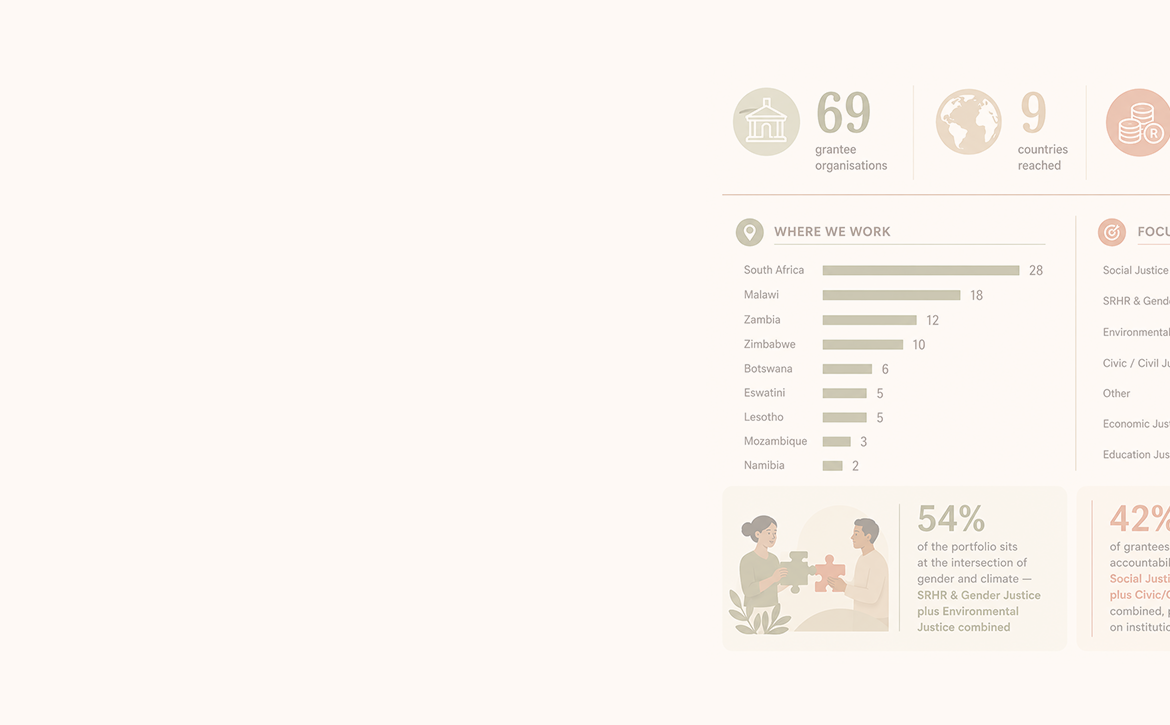
SSF Monitoring, Thematic & Learning Snapshot — 2026
International solidarity, local action
The Solidarity Support Facility (SSF) portfolio shows what flexible, trust-based micro-grantmaking makes possible: communities across Southern Africa defining their own struggles and translating regional advocacy frameworks into local practice.
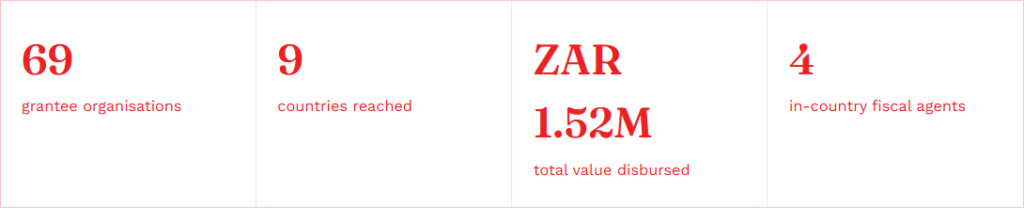
Where the funding lands
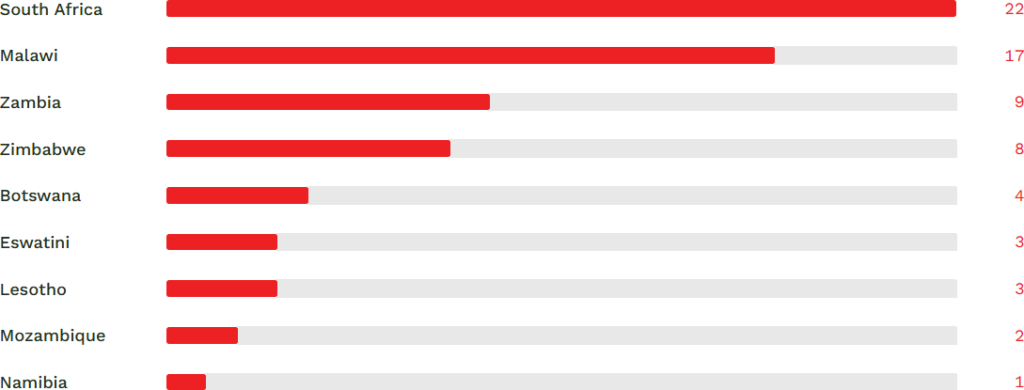
South Africa, Malawi and Zambia host the largest concentration of grantee activity — reflecting where partner networks and fiscal agents are strongest.
What the funding supports
Social Justice and SRHR & Gender Justice dominate the portfolio, together representing where community-based civil society is placing its energy right now.
Themes are not mutually exclusive — a number of projects are tagged to more than one, so counts add up to more than 69.


Three things the data tells us
Reading the thematic breakdown as a regional temperature check, not just a funding tally.

Full breakdown by country and theme
The underlying grid behind every figure above.| Country | Civic/Civil | Economic | Education | Environmental | SRHR & Gender | Social Justice | Other | Total |
|---|---|---|---|---|---|---|---|---|
| South Africa | 2 | 1 | 1 | 6 | 1 | 10 | 1 | 22 |
| Malawi | 1 | 0 | 0 | 1 | 7 | 7 | 1 | 17 |
| Zambia | 0 | 0 | 0 | 4 | 3 | 2 | 0 | 9 |
| Zimbabwe | 0 | 0 | 0 | 1 | 5 | 2 | 0 | 8 |
| Botswana | 1 | 1 | 0 | 0 | 2 | 0 | 0 | 4 |
| Eswatini | 0 | 0 | 0 | 0 | 2 | 1 | 0 | 3 |
| Lesotho | 0 | 0 | 0 | 2 | 0 | 1 | 0 | 3 |
| Mozambique | 0 | 0 | 0 | 0 | 2 | 0 | 0 | 2 |
| Namibia | 0 | 0 | 0 | 0 | 1 | 0 | 0 | 1 |
| Total | 4 | 2 | 1 | 14 | 23 | 25 | 2 | 69 |
Looking ahead
As ACT Ubumbano prepares for the Annual Solidarity Hub in Johannesburg, this portfolio is a reminder of what flexible, trust-based micro-grantmaking makes possible.
Fiscal Agents supporting the work: Churches Action in Relief and Development (Malawi) · Council of Swaziland Churches (Eswatini) · United Church of Zambia · Zimbabwe Coalition on Debt and Development

Re-imagining Democracy Futures: Learning from the edges of formal power
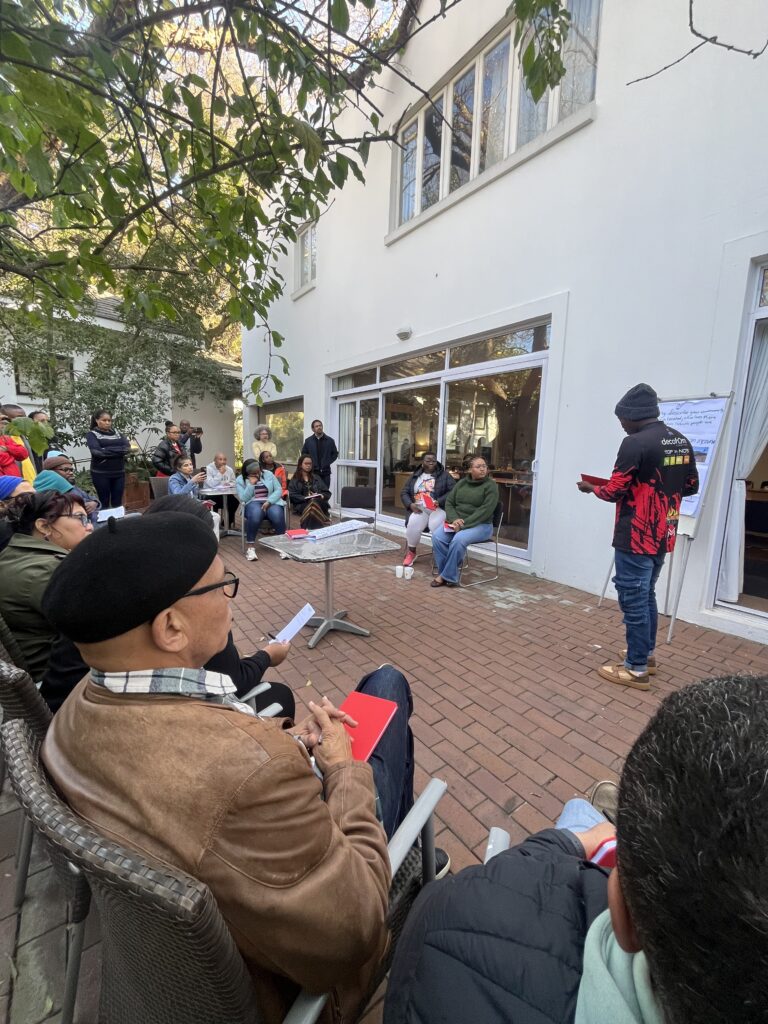
Rifqah Tifloen
Sometimes I think the bar for celebrating democracy in South Africa has become embarrassingly low. The water came on today. The bins were collected. Someone finally fixed the pothole. Incredible scenes. But are we mistaking basic service delivery for meaningful political vision?
Democracy cannot just mean being pleasantly surprised when the basics work. It is a way of being, not a destination, and we feel it most clearly at the point of delivery: in who holds power, who gets heard, who is accountable, and whose needs are met. It is more than ticking a ballot box every four years and hoping the recipe will somehow fix itself. Democracy is lived in the long stretch between elections, in how communities organise, hold one another accountable, and find ways to meet collective needs when formal systems simply don’t.
If democracy is a way of being, then formal institutions cannot be the only places in which we look for it. Across Southern Africa, communities are developing forms of participation, accountability, governance and service delivery that exercise political agency. These practices are not intended to replace the state, but they do challenge the assumption that Western liberal democracy is the only legitimate model through which democratic life can be recognised.
In Bellville South, residents tired of being consulted only after decisions had already been made ran their own series of workshops mapping their neighbourhood, where the safety hazards were, which vacant parcels of land could become housing and what the community’s actual housing backlog looked like. When the city later moved to auction off a piece of that land, the community could point to its own plan and say no. In Witzenberg, a group of domestic workers refused to accept that fifty rand of electricity should buy only four units and kept asking their municipality’s chief financial officer to explain himself. In Wentworth and Austerville (eThekwini), Ward 92 in Cape Town, and a mix of communities in uMsunduzi Municipality, residents have begun drafting their own manifestos to hold their councillors to account. All of it is democracy being practiced.
These stories are not isolated exceptions. People aren’t waiting for permission to govern their own lives, they’re already doing it. They raise a larger question: what might become possible if practices like these were brought into conversation across communities, countries and regions?
It is in this spirit that ACT Ubumbano has joined a collective including the Nelson Mandela Foundation, SIVIO Institute, TrustAfrica, Action Aid, and My Vote Counts among them — in a new, multi-year initiative: (Re)Imagining Africa’s Democratic Futures.
It begins at home. The Southern Africa Imaginarium convenes from 19-21 October 2026, bringing together community organisers, grassroots leaders, emerging scholars, and practitioners already experimenting with accountability at the edges of what is formally recognised. It is deliberately making space for those who feel governance failure most acutely. The process will travel to East, West, and North/Central Africa, plus a diaspora process, each surfacing its own practice inventory and stories of accountability, feeding into a continental convening on what African-led, African-rooted democratic thought and practice could look like.
The coming together of these organisations has been its own experiential, emergent process, and is seen as part of the larger system of new practices we are trying to grow. Within that circle, ACT Ubumbano is carrying responsibility for the methodology that will shape the Imaginariums. The design itself is being worked out collectively, across long sessions with facilitators, historians, and partners each contributing different ingredients, histories and ways of knowing to the table.
We’re also alive to the fact that we are not doing this work in a vacuum, and we’re not pretending South Africa’s mood is separate from the continent’s. The graphic that opened this piece resonates with me because it reflects something many of us feel: a growing, cross-generational, cross-region impatience with politics-as-performance, and a hunger for politics that actually changes daily life.
We’ll be sharing more as the Southern Africa Imaginarium approaches. Watch this space for more in the series ‘Re-imagining Democracy Futures’.

Funding Opportunities
NGOs, social enterprises and community-based initiatives working in sustainable agriculture, climate action, women empowerment, youth development, education, health and economic empowerment should explore new funding opportunities offering support from US$50,000. Many funders back initiatives advancing justice, community-led development, youth employment, health innovation, climate resilience and social inclusion.
Strong applications depend on a clear problem statement, measurable impact, realistic budgets and close alignment with donor priorities. Look beyond chasing grants—develop investable projects that deliver lasting impact.
View opportunities here.
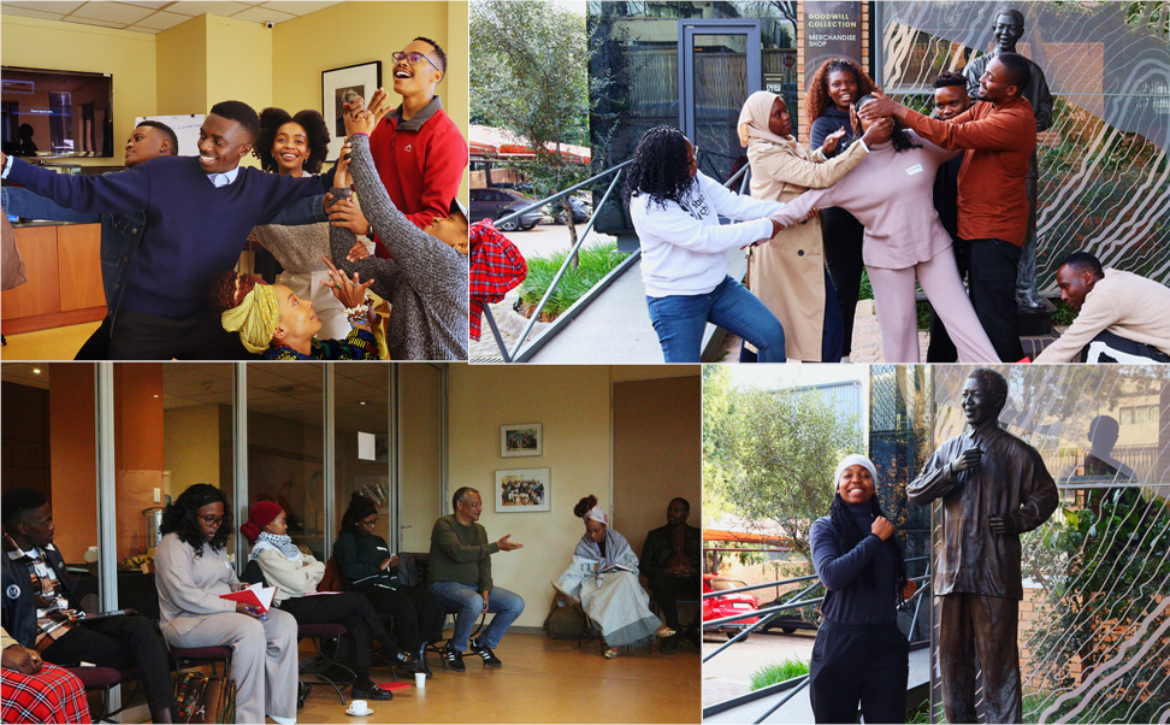
Reflections from the Faith Hub & Youth Hub
This section brings together voices from our recent Youth and Faith Hub gathering — young activists and faith leaders reflecting on the personal stories, objects, and convictions that shape their work for justice. These reflections remind us that solidarity work is never separate from who we are.
Click here to read more on their honest, moving accounts of what it meant to gather, learn, and grow together