
Category: News


Save the Date – Solidarity Hub in Europe
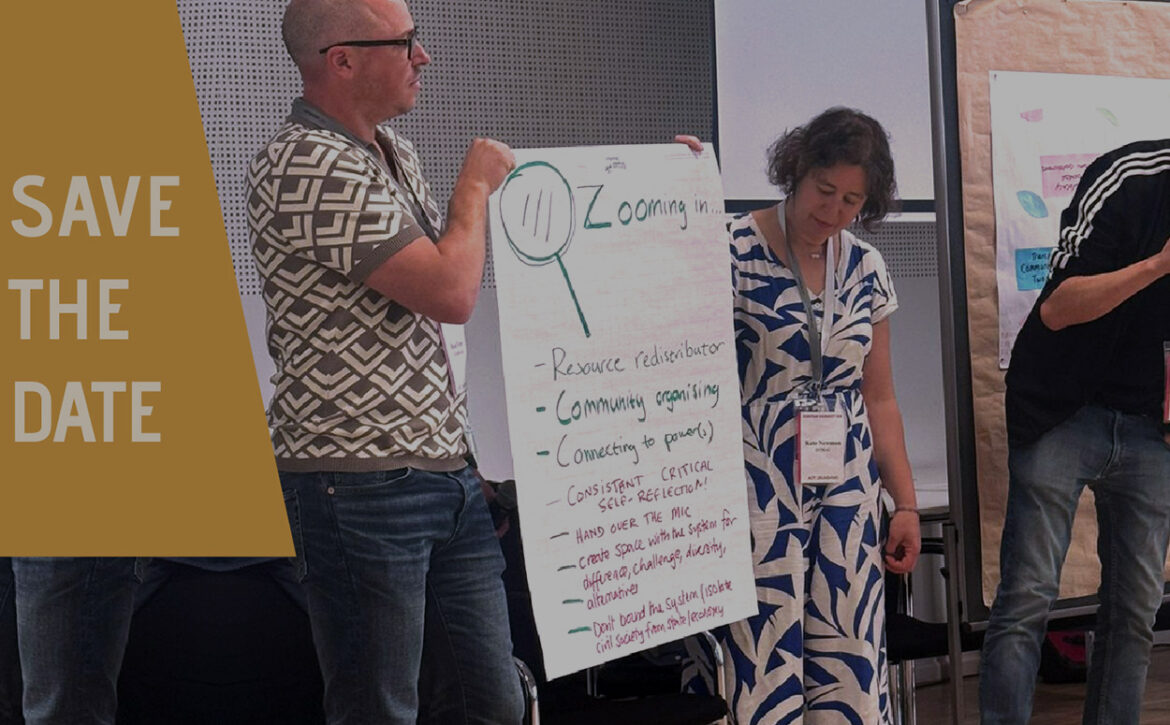
The 2024 Solidarity Hub in Berlin brought together European-based organisations to reflect on our positionality and experiences of systems of power, stifling donor practices, and the dysfunctionality and trauma of systems within Western modernity. The Hub is a space to hold our humanity, often broken but still vibrant, and for deepening relationships. The second Solidarity Hub in Europe will take place in London on 16-17 September.
Moving Money Differently in the Crucible of Transition
The pilot phase in the establishment of the Leverage Fund Institute has seen the first round of grants being made in South Africa. Mpho Raboeane shares her personal reflection on contracting these grants with CBOs, advice offices, and on stewarding shared resources through law, trust and liberatory decolonial praxis
There are moments in the work that appear, from the outside, to be ordinary. A contract signed. A banking detail verified. A compliance document received. A grant agreement sent back with initials in all the right places. But beneath these administrative gestures, something like a tender justice is happening: resources are beginning to move towards people and places long asked to survive on too little.
Successfully contracting the first round of grants with community-based organisations and advice offices feels, to me, like bringing nebulous ideals and politics into concrete, albeit transitional, infrastructure. It is delicate, practical, urgent and sacred all at once. And a stark reminder that money has memory, that paperwork has power, and that the way we move resources can either repeat old violences or rehearse new freedoms.
There is a structural friction here that I cannot romanticise away. To anchor decolonial stewardship, authentic community agency and radical trust inside the architecture of the legal system is to feel two worlds rub against each other: one reaching for interconnectedness, repair and life; the other trained in containment, exclusion and control. And still, we enter that friction consciously, asking whether contracts, compliance and grant administration can be made to serve relationship, redistribution and repair rather than suspicion, extraction and punishment.
To steward shared resources is to begin with humility. These funds do not belong to us privately; we are temporary custodians asked to listen for where resources are being called, move them with integrity, and account for them without turning accountability into suspicion. A liberatory decolonial praxis asks more of us than efficiency: it asks us to notice the colonial afterlives still living inside funding systems, while also being careful with shared resources because people’s lives and material conditions are at stake.
The contract as transition infrastructure
Alnoor Ladha and Lynn Murphy’s Post-Capitalist Philanthropy: Healing Wealth in the Time of Collapse helps me name this paradox. Their work asks philanthropy to confront the history of wealth accumulation, the logic of late capitalism, and the need for deeper shifts in how we relate, redistribute and repair. The Transition Resource Circle describes this as work to alchemise and liberate capital in service of Life, honouring historical entanglements, lineage, reconciliation and healing. That language helps me understand the contract as transition infrastructure: an imperfect container built inside the old world to protect the tender experiments of the next one.
In this frame, the legal shell becomes a shield rather than a shrine. The grant agreement, compliance checklist and audit trail are not holy in themselves; they are tools. They become dangerous when we mistake them for the work, but useful when they protect resources from capture, misuse or withdrawal from the commons. Compliance, at its best, becomes an act of care: not obedience to a master, but the careful tending of a structure so that quiet, radical redistribution can happen inside it.
Linda Alvarez’s work on Discovering Agreement and Conscious Contracts also offers language for what this process was reaching towards: legally enforceable agreements that support alignment, creativity and a return to relationship when change or disagreement arises. This matters because traditional contracts often anticipate betrayal before they imagine care, allocating blame before asking what the relationship is for.
To de-escalate the contract is not to make it weak. It is to make it more honest about what sustains the work. The preamble, shared purpose, values and mutual recognition should not sit ornamentally at the front of an agreement; they should be the pulse that calls parties back to relationship when conflict, delay or uncertainty appears.
A practice of moving differently
I keep thinking about what it means to move money differently: not only faster, though speed matters when organisations are stretched; not only more cleanly, though governance matters when resources are shared. I mean differently in a deeper sense: with memory, consent, reverence for local knowledge, and an awareness that every system we build teaches people what we believe about them.
This is the ethics of the bilingual practitioner. We have to remain fluent in the radical, life-affirming language of decoloniality, relationality and community agency, while also being fluent enough in the dry language of indemnities, governance protocols, reporting duties and liability to prevent that language from doing harm. The work is not to let the sterile alphabet of law swallow the living grammar of liberation, but to bend the tool towards protection.
That is why this first round has felt like a crucible. Not a perfect practice, not a purified politics, but an honest attempt to build something strong enough to withstand scrutiny and soft enough to remember why it exists. A practice where reporting can become learning, compliance can protect rather than punish, and community organisations are not treated as risks to be managed but as co-stewards of a shared future.
I want to acknowledge this first round softly: not as a finish line, and not as proof that the work is now simple, but as a beginning that required many hands, many reminders, many acts of coordination, and a shared belief that advice offices and CBOs deserve to be resourced with seriousness and care.
Perhaps this is the lesson I am carrying most closely: resourcing justice is not only about transferring funds. It is about the spirit in which we transfer them, the structures we build around them, and the courage to keep those structures answerable to life. It is about refusing to let bureaucracy harden the heart of the work, and instead bending cold tools of enclosure into protective sanctuaries where dignity can travel with the money.
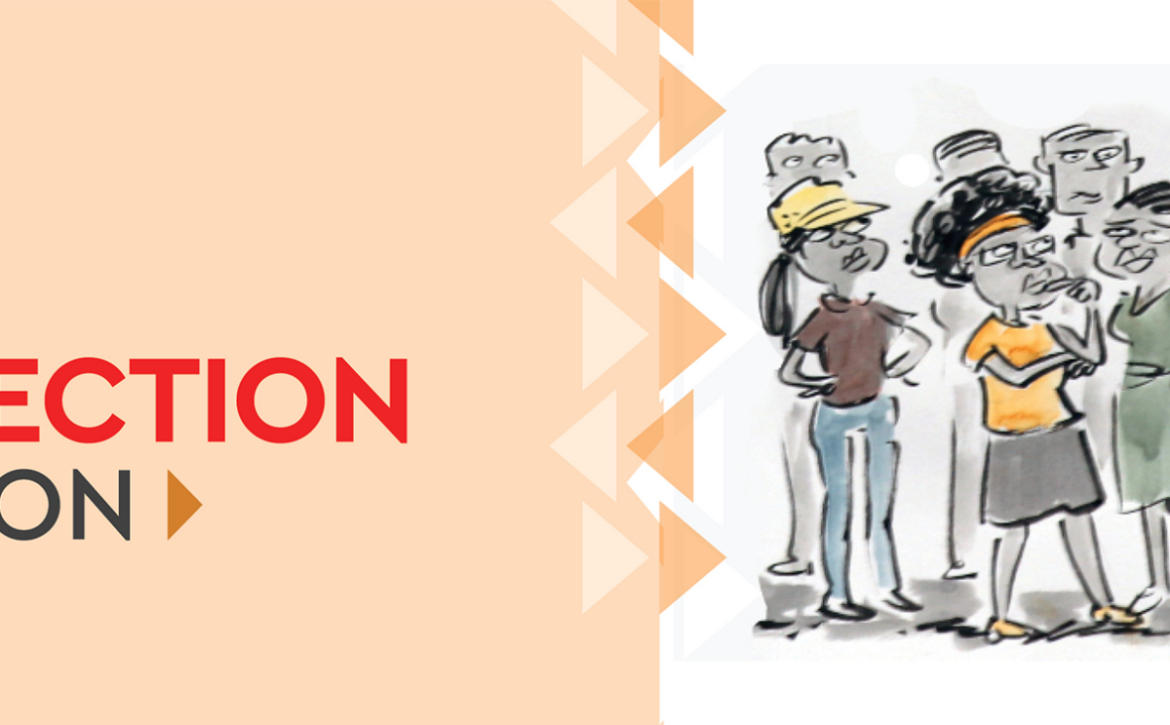
Reflections from The Youth Hub in Johannesburg
By Rifqah Tifloen
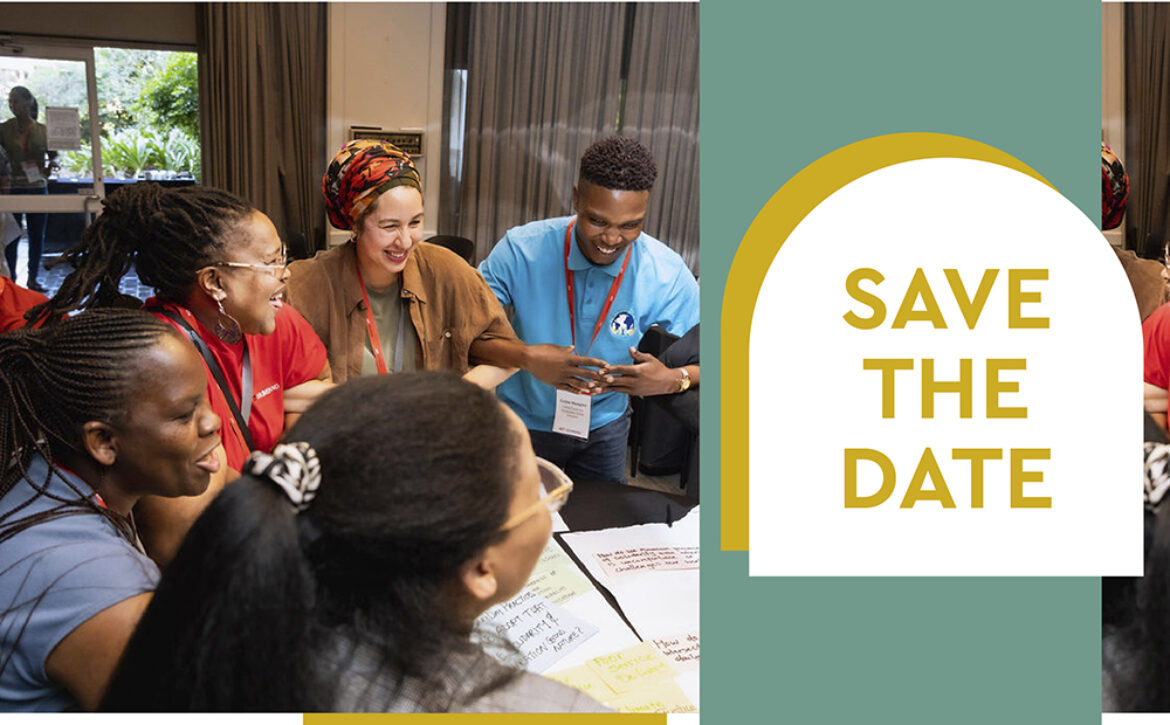
Last week, I sat in a room at the Nelson Mandela Foundation with young activists for the Youth Hub from eight African countries — South Africa, Malawi, Zambia, Namibia, Mozambique, Zimbabwe, Lesotho, and Botswana. Many had crossed borders to get there, uncertain and fearful while outside, anti-migrant marches were being planned to shut down the city. Inside, we were talking about solidarity in the same walls where Nelson Mandela once worked.
In the days afterwards I kept returning to the conversations we had at the hub. We talked about our solidarity practice, the cost of activism, AI, power, multiple genocides, infrastructures of care, mental health, belonging, religion, we disagreed about what solidarity requires and we talked about what young people are already doing that the sector may not recognise as activism. Around the same time, I read a Substack essay by Khadija Patel, where she argues that “the right to move is the most contested right of our time. It is being challenged everywhere, by walls and wire and hostile policy and organised violence”. And yet, we were still able to gather.
This was exactly the contradiction the Hub was operating inside of. A country built by people who once needed passes to move through their own land is now, in places, asking other Africans to produce the same kind of paperwork to prove they are allowed to exist here.
As part of the pre-work for the learning hub, youth activists were invited to bring an object, photograph, or item that represented where they come from and the struggle they are most engaged in, something more personal. It was an invitation to begin with ourselves.
I found myself reflecting on how often, in social justice work, there exists a separation from what we do and who we are, even though the two are deeply connected. For me, as a Muslim, the idea of tawḥīd—Oneness—shapes my practice. Our lives, our relationships, and our struggles are not separate from one another. It asks me to keep returning to the work of resisting division, both around me and within me.
The hub seemed to enact exactly this. A photograph of a first volunteer mission sixteen years earlier, with a uniform that cost more than the year’s stipend. A dissertation journal opened to a quote from Angela Davis on the discipline of imagining a different world. A disposable menstrual pad beside a reuseable one. A notepad carrying compressed grief. A Capulana cloth. A cowrie shell. A paintbrush. A jazz vinyl record. A cup of water.
None of these were presentations. None of these were organisational strategies. They were lives.
Although the struggles were different—menstrual dignity, polluted rivers, mental health, climate justice, education, belonging—the objects showed much more. They spoke about relationship. About memory. About care. About places and people that had made these young activists who they were before they ever joined an organisation.
At a time when movements such as March and March have amplified anti-migrant sentiment and Afrophobic narratives, what does it mean for organisations like ours—organisations that claim solidarity as both a value and a practice—to convene across borders? The timing of the Hub made these questions impossible to avoid.
What does it mean to invite African partners into South Africa at this particular moment? Is creating a shared space enough, or does the moment ask something more of us? How do we make our position against Afrophobia visible—not only in our statements, but in the way we host, accompany, advocate, and act? What responsibilities do we carry towards our fellow Africans who continue to experience violence, displacement, and exclusion in a country that has so often spoken the language of liberation?
Perhaps this is why beginning with ourselves mattered. Before we could ask what solidarity requires of organisations, we first had to remember what it asks of people.
These are not comfortable questions, nor are there easy answers. But perhaps they are precisely the questions that solidarity demands we sit with. If solidarity exists only within the walls of a convening, or in statements, does it endure? What might it look like for solidarity to become a sustained practice rather than an event—one that is willing to confront the realities of the present while imagining different possibilities for the future?
South Africa itself invites us into this tension. If the Freedom Charter still asks us to believe that South Africa belongs to all who live in it, then who is responsible for making that true — and are we willing to be counted among them?

Support the Generating Better Livelihoods (GBL) Project
The GBL project focuses on helping SASSA child support grant beneficiaries, specifically young women aged 18 to 35 by connecting them with opportunities, including skills training, education, job placements and entrepreneurship. The project’s goal is to create an enabling environment and provide the tools they need to achieve sustainable livelihoods.
Through coaching, the GBL project helps young women identify their entrepreneurial pathway. With the right tools, they become business owners who contribute to their household and, ultimately, the community. With the investment they need, they can earn, grow and support their families.
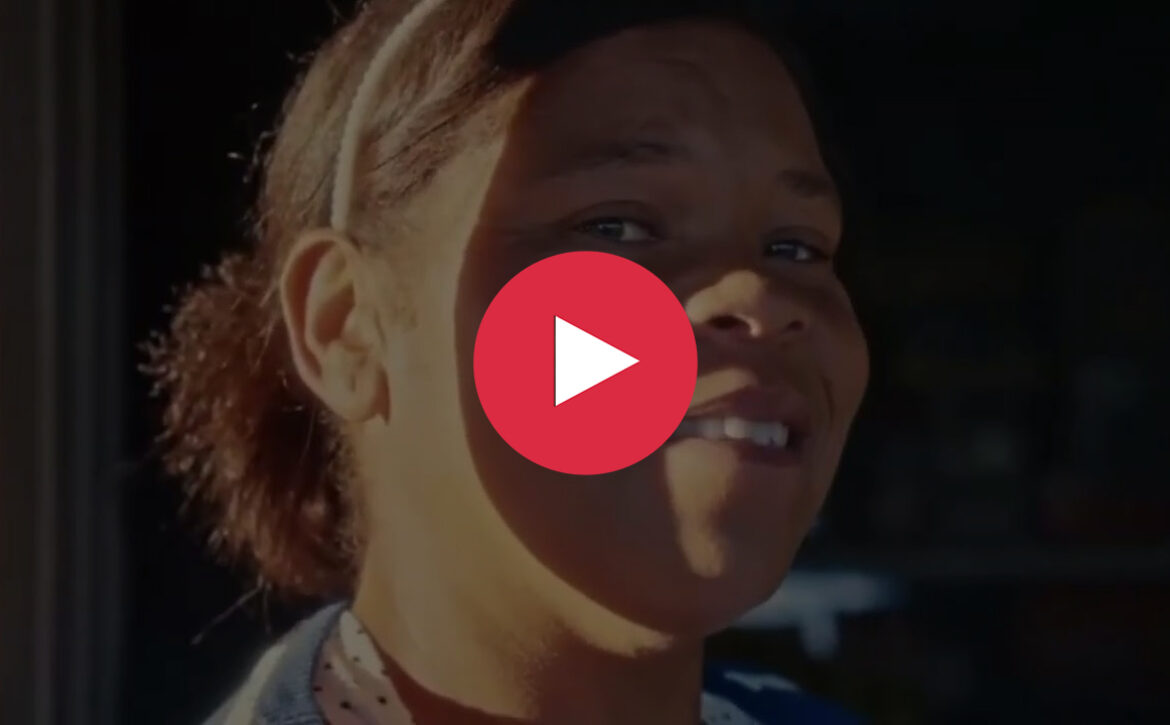
Watch a short film of how a combination of social grants and GBL support is helping young people build better livelihoods for their families. Support 6 GBL participants start earning an income from their businesses here.