Category: News

152

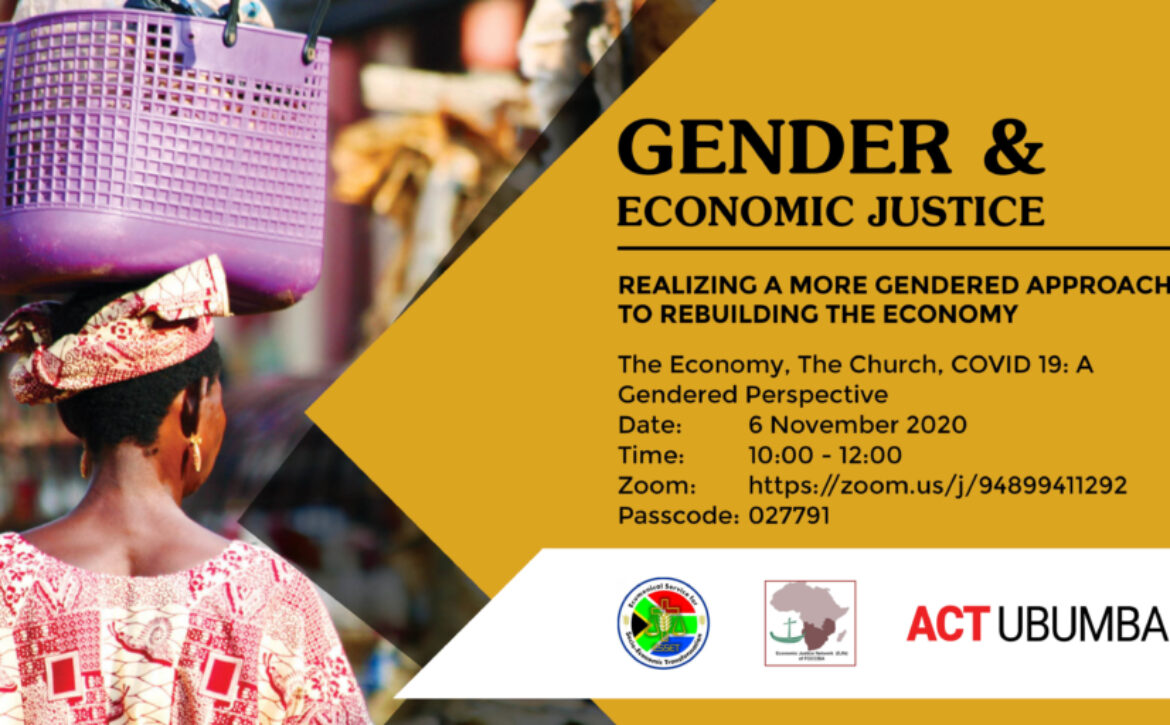
Gender & Economic Justice: Realizing a More Gendered Approach to Rebuilding the Economy

Women bear the brunt of holding society together and rebuilding society along the fault lines of a myriad of consequences. Women are marginalised by lower wages, discrimination, and unequal opportunities in the workplace despite their invaluable contribution to the economy.

Join this four-part series to assess the economic, political, and social roles of women in Africa, how these have been shaped historically and altered during times of crises.

DATE TOPIC
06-Nov-20 The Economy, The Church, COVID 19: A Gendered Perspective
13-Nov-20 The Informal Economy During a Global Health Pandemic
20-Nov-20 Care Economy, Gendered Roles & The Church
27-Nov-20 Food Security & COVID19: Assessing the Impacts on Women & Girls

Time: 10:00 – 12:00
Zoom: https://zoom.us/j/94899411292
Passcode: 027791

Read More
153

Ubumbano Partner Profiles: Workers’ World Media Productions (WWMP)

WWMP is a non-profit organisation specialising in media development, mass education and leadership skills training for building the organising and leadership capacity of poor and marginalised communities. Established in 1999, it has in the last decade shifted the location of its projects to unorganised precarious workers and poor working-class communities. Its work focuses on developing mass media platforms with target groups to produce their own media while at the same time producing informative and educational weekly radio and TV shows involving over 30 community broadcasters as well as an electronic newspaper, Elitsha, that distributes articles daily via social media.

WWMP assisted waste-pickers in Western Cape, community healthcare workers nationally, farmworkers in various rural areas and ex-mineworkers to establish independent organisations to enable them to campaign and deal directly with authorities. These groups have also established 16 Labour Community Media Forums (LCMF’s) in poor communities around the country. They meet every fortnight to direct their campaigns towards issues such as community service delivery, food security, housing and unemployment. WWMP supports these LCMF’s and organisations with training, media development and organising across multiple themes including democracy and civic participation, gender and women’s oppression, anti-discrimination (racism, homophobia and xenophobia), the environmental crisis and responses, occupational health and safety and vulnerable or marginalized workers as well as job-creation.

See examples of WWMP COVID-19 video documentary productions for Community Healthcare Workers and Homebased Workers and Co-operatives. For more information visit the WWMP website.

Read More
154

Dignity during Covid – Support for women and girls

“We sometimes squeeze together limited funds to buy groceries, also milk to feed our babies. There is not always money for pads. Due to COVID-19 we found ourselves unexpectedly in crisis with drastic setbacks.” – Masi

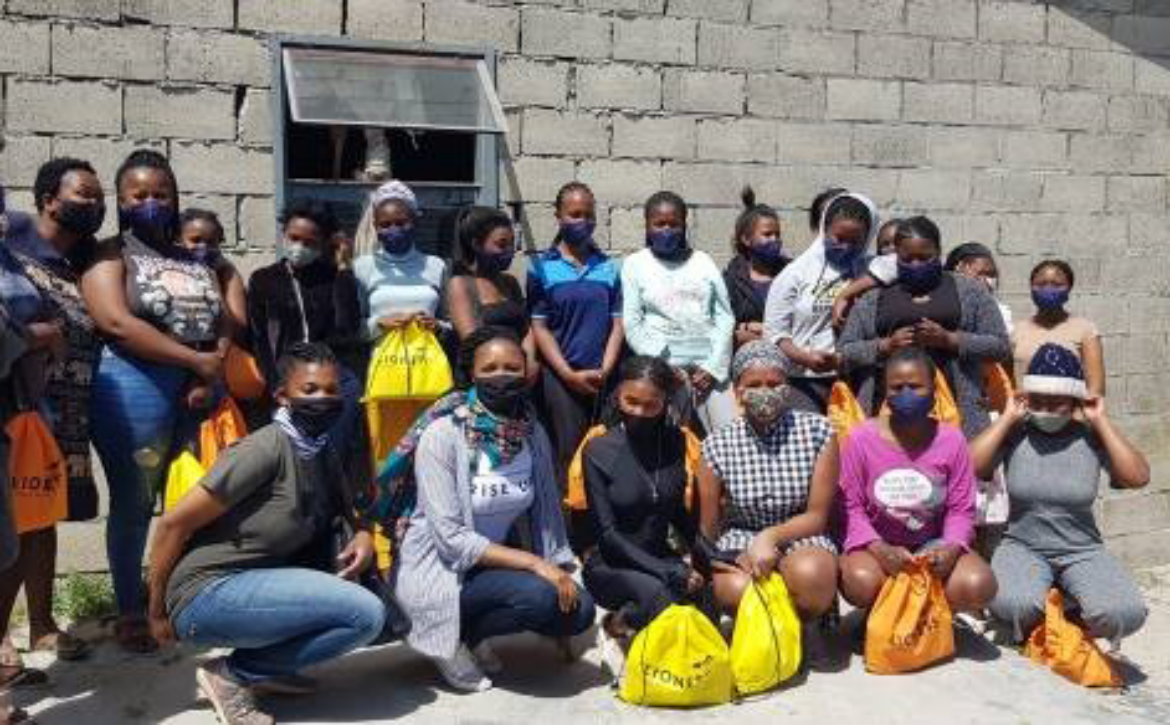
The COVID pandemic has placed young women and girls in precarious positions, and as families have had to prioritise feeding themselves, sanitary wear gets pushed to the back of the queue.  Lioness.org, in partnership with Apostolic Women Empowerment Trust, facilitated a menstrual health dignity drive to reach out to marginalised young women and girls, and with support from ACT Ubumbano provided 100 dignity packs to community. This was also a form of reconnecting and providing psychosocial support during the COVID-19 lockdown.

Read More
157

NPOwer Free Mental Health Support for NPO’s in South Africa

NPOwer is a first-of-its kind NPO Mental Health Support Programme and 24-hour toll-free Helpline offering FREE Mental Health care and support to all NPO’s in South Africa.

NPO’s always provide help, resources and support to others, but never before has their mental health been prioritised. In a partnership between Tshikululu Social Investments and SADAG (South African Depression and Anxiety Group), the initiative provides psychological first aid to NPO leaders, staff and volunteers, many of whom are experiencing unprecedented strain and burnout.

NPOwer provides a 24-hour NPO Mental Health and Psychosocial Support Helpline staffed by a team of dedicated counsellors. This programme also includes capacity workshops on NPO related issues.

Read More

Read More

Learning Hub #5: Community voice, human dignity, and the demand for a Basic Income Grant

[av_video src=’https://www.youtube.com/watch?v=6pif-BTL69s&feature=youtu.be’ mobile_image=” attachment=” attachment_size=” format=’16-9′ width=’16’ height=’9′ conditional_play=” id=” custom_class=” av_uid=’av-7n8m9′]

Brief clip [2min 8sec] of Isobel Frye on income dependency.

“It is a tricky one because, I earn a salary, and I depend on the income of my salary to pay my rent and to buy food …I think in this complex society that we live in, there is a dependency on income. The question is where you get that income from.”

On the 14th of September 2020, ACT Ubumbano convened the 5th Learning Hub to reflect on the universal Basic Income Grant (BIG) and how income support provides significant relief to poor communities in South Africa and the region. In the session, Isobel Frye from Studies in Poverty and Inequality Institute and Skhumbuzo Zuma from Church Land Programme led a discussion on community voice and campaigning for life-saving social grants.

To watch the full video for this session, click here.

Read More
Learning Hubs

Learning Hub #6 – Week of 19 October 2020

In many public campaigns, people are called upon to act in the interest of the ‘voiceless, unseen and powerless’ with little recognition being given to the agency, dignity, courage and ability of those ‘voiceless’ to understand and propose alternatives to the complex socio-economic issues that our country and region are experiencing. Learning Hub #6 will ask probing questions and have a critical conversation with activists, campaigners and social justice organisations to see how those who resist the assault on their humanity are leading struggles and campaigns for change.

You can register to participate here.

Organisations and activists are invited to contact us if they have an experience of resistance or practice of social justice that they would like to engage with in a Learning Hub.

Read More
Video#3

Learning Hub #4: Care and connection in the time of COVID – Working slower and deeper

[av_video src=’https://www.youtube.com/watch?v=3q97Z2NE-MU&feature=youtu.be’ mobile_image=” attachment=” attachment_size=” video_autoplay_enabled=’aviaTBvideo_autoplay_enabled’ format=’16-9′ width=’16’ height=’9′ conditional_play=” id=” custom_class=” av_uid=’av-aeou5′]

Brief clip [2min 4sec] of Thuli Mjwara on giving the support that people need.

What is support to you? What actions do you feel will help in you seeing that you are getting supported? …Giving people the space to say how does support look like to them, what is the support that they need, and not assuming what people want.

On Tuesday 25 August 2020 ACT Ubumbano convened the 4th Learning Hub to discuss taking time out to reflect on processes to connect with and offer support to those who need it in ways that make sense to them. In the session, Thuli Mjwara of Inclusive and Affirming ministries (IAM) shared her experiences on the practice of working slower and deeper for better results.

To watch full video click here.

Read More
156

Ubumbano Partner Profiles: Zimbabwe Coalition on Debt and Development

Zimbabwe Coalition on Debt and Development (ZIMCODD) is a social and economic justice coalition that envisions a just Zimbabwe premised on the realisation of citizens’ social and economic rights. ZIMCODD advocates for pro poor policies both at local and national level, and believes that prudence in the mobilisation and utilisation of public resources is key in ensuring that social and economic justice prevails.
It is against this background that in the wake of the COVID-19 pandemic, the coalition upped its game in advocating for efficiency and effectiveness in the management of public resources.  ZIMCODD engaged on a massive campaign against corruption, especially in the procurement of testing kits and other medical necessities needed to fight the deadly virus. The pandemic highlighted the need for innovation, flexibility and adaptability in our advocacy work.

ZIMCODD did not stop its work when the pandemic and associated lockdowns began. Rather it embraced digital platforms to continue with its advocacy and campaigns work.  The fight for social and economic justice in Zimbabwe and beyond cannot be engaged in silos, so like-minded individuals and organisations need to work together to confront the injustices in their various forms both, at home and abroad.

You can find out more about ZIMCODD at www.zimcodd.org.

Read More
blacklogomedium

Fight Inequality Alliance revs up action in October

Our People’s Assemblies to Fight Inequality have begun! The resolutions of the Global Gathering in August are coming to life as we continue adapting our organising to a COVID reality.  See the updated list of national assembly plans here – find out about all the action from Nepal to Kenya to Mexico to Panama to Bangladesh and many more taking place from 15 Sept – 15 October.

Systemic inequalities and repressive regimes have been supercharged during this pandemic, but we also know that this period of history gives us potential for a future beyond Covid-19 that is radically different – equal, just, sustainable. There can be no ‘going back to normal’ when normal was the problem. It is up to us to organise for it together from the grassroots.

Read More
159

New Head of Africa Department at BfdW

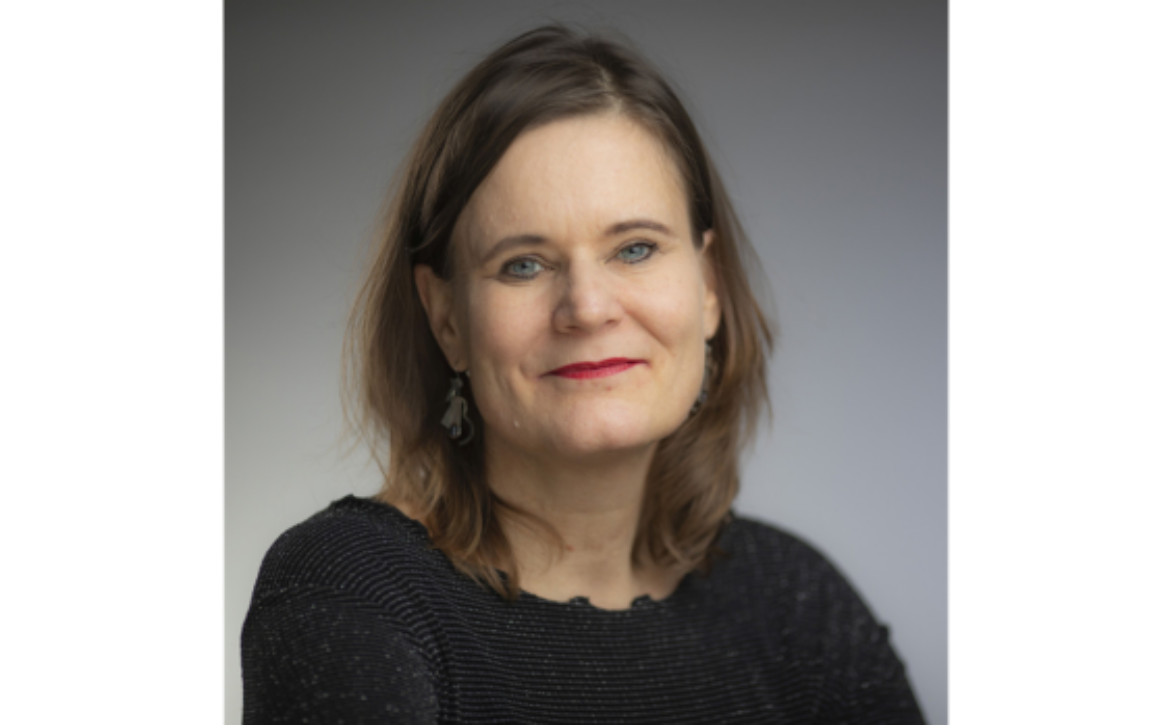
Helle Døssing has been with Bread for the World since 2012, and has been appointed as the Head of the Africa Department. Helle began as Programme Manager responsible for South Africa, and was integrally part of the process that has led to the establishment of ACT Ubumbano today. She has been consultant on Africa politics, and recently headed a BfdW unit for Europe, Central Asia and Churches helping Churches. She has 25 years of experience from the development sector, mainly focussing on civil society in Africa. She has worked for the UN, governmental and non-governmental organisations in different countries, has lived in Cameroon, Burkina Faso and Tanzania, and has travelled extensively to countries all over the continent.

Helle is Danish and lives in Berlin with her two teenage boys. The ACT Ubumbano community is very excited by the appointment, and wishes Helle well in this challenging role.

Read More