182

What’s Happening Around Tembisa

Many of the people in Tembisa believe in making money from selling cooked food. Their marketplace is outside shopping complexes, taxi ranks etc. What is worrying now is that they defy lockdown rules and regulations but only remember them when they clash with law enforcement agents. I witnessed men cooking and selling mogodu just outside a shopping complex attracting many customers at the same time but not practicing social distancing. Ekurhuleni is one of the metros with many cases of the virus which makes it a hotspot of the pandemic, but I have realised that people only put on masks to be allowed into the mall but remove them as soon as they leave the complex.

Meanwhile, it is also worrying how those who are entrusted with distribution food parcels are helping themselves first before the people who are in real need of the food. This is even though we are in a situation where many people have lost their livelihoods and can no longer afford to fend themselves and their families. In Vusimuzi, the community registered to get food parcels, a list of names of people who registered was used to get food parcels.

On another note, these days, SAPS has been at the forefront ensuring that citizens adhere to rules and regulations of the lockdown. Before entry at the Tembisa police station, officers scan people to check their temperature and the officers record each person’s temperature, they have also implemented a no mask no entry principle at their premises whilst enforcing social distancing. I have witnessed the same at Spar Supermarket although they do not check temperature, but the principle of no mask no entry is enforced.
Read More
f42cf131-4da6-8c88-caf3-c2daa7cee960

Is your community-led impact hidden? It’s time to step into the spotlight

EPIC-Africa has officially launched the 2026 African CSO Awards, and they are looking for the “quiet champions” of community-led development. If your organisation is rooted in local action, or if you know an individual leader who deserves continental recognition, this is the moment to share that story.

Bonus: All entrants gain automatic access to the African CSO Platform for peer networking and funding leads.

Deadline: 28 February 2026

Enter or nominate here.

Read More
848e50fd-5324-fc56-2cf4-03dcb7af523a

Environmental Justice Fund: Apply for Support

The Environmental Justice Fund (EJF) supports campaigns and projects designed to advance environmental justice. They also assist community-based organisations to strengthen their organisational capacity, develop their leadership, build their networks and build their sustainability over the long term.

They fund projects in areas such as climate justice, air pollution, mining, food sovereignty, water, protection of oceans and coasts, waste management, ecofeminism, eco-socialism, land rights, indigenous knowledge, sustainable livelihoods, environmental health, access to environmental information, and community participation in natural resource decisions.  EJF also consider applications outside of these areas if they still fall within the ambit of environmental justice.

Click here to read more about this fund at apply for support.

Read More
bdb77ba5-643e-2081-e4e1-cbe8d1a51508

What do South Africans say about the GNU?

A year after the formation of the GNU, South Africans are expressing deep frustration over governance, service delivery and economic conditions. Sivio Institute, with support from ACT Ubumbano,  undertook the 2025 Citizens’ Perceptions and Expectations (CPE) Survey that captured the voices of 3,156 adults across all 9 provinces. The report shows a country losing trust in its leaders but not in its democratic aspirations. South Africans remain deeply invested in a future built on transparency, integrity, economic opportunity and meaningful participation. The message to the GNU is clear: citizens want action, accountability and a renewed social contract capable of delivering the prosperity they continue to believe is possible.

The full report is available at this link – South African Voices – CPE Report

Read More
c149a865-fc40-cd2e-8a41-14419f64e0d8

Welcome to 2026

The holidays passed by in the blur, but the ACT Ubumbano team is renewed in its commitment to support community struggles. We hope your 2026 is full of hope that is realised, joy that is tangible, and love that defines our relationships. There are a number of things to look out for. In February we will activate the Solidarity Support Facility for small grants to local action. The Outcomes Harvesting Report will be published – you can read what our partners have to say. And the Solidarity Hub 2026 will happen in the week of 12 October. You will notice the new features in the Newsletter that allow you to share it widely – please do. And soon we will re-launch our website to make interaction that much easier. Watch this space.

Read More
ACT-U-award-2048×1365

Nelson Mandela Graca Machel Innovation Award

Ashley was on hand on behalf of ACT Ubumbano to accept the Brave Philanthropy award at the International Civil Society Week (ICSW) in Thailand in November. The work of ACT Ubumbano in advancing a more critical approach to social justice practice, and taking an approach to solidarity grantmaking that places at the centre the voice and agency of those who resist their dehumanisation, was recognised as an innovation in the field of philanthropy. It can be done.

Watch a short video of Ashley’s acceptance of the award here. Visit CIVICUS to find out more about the ICSW in Bangkok.

Read More
Screenshot 2026-03-17 093328

What do citizens think of government performance?

SIVIO Institute supported by ACT Ubumbano, has done the research for the National Survey on Citizen Perspectives and Expectations (CPE). The report is in the last stages of finalisation, and it is hoped to share it publicly soon, possibly at the We, the 99 People’s Summit happening 20–22 November at Constitutional Hill, Johannesburg.

The full CPE Report will be featured in the ACT Ubumbano Newsletter in December. Keep watching this space and join the conversation!

Read More
39202a1f-7133-803c-29f4-0196f44c0c48

Solidarity Hub 2025

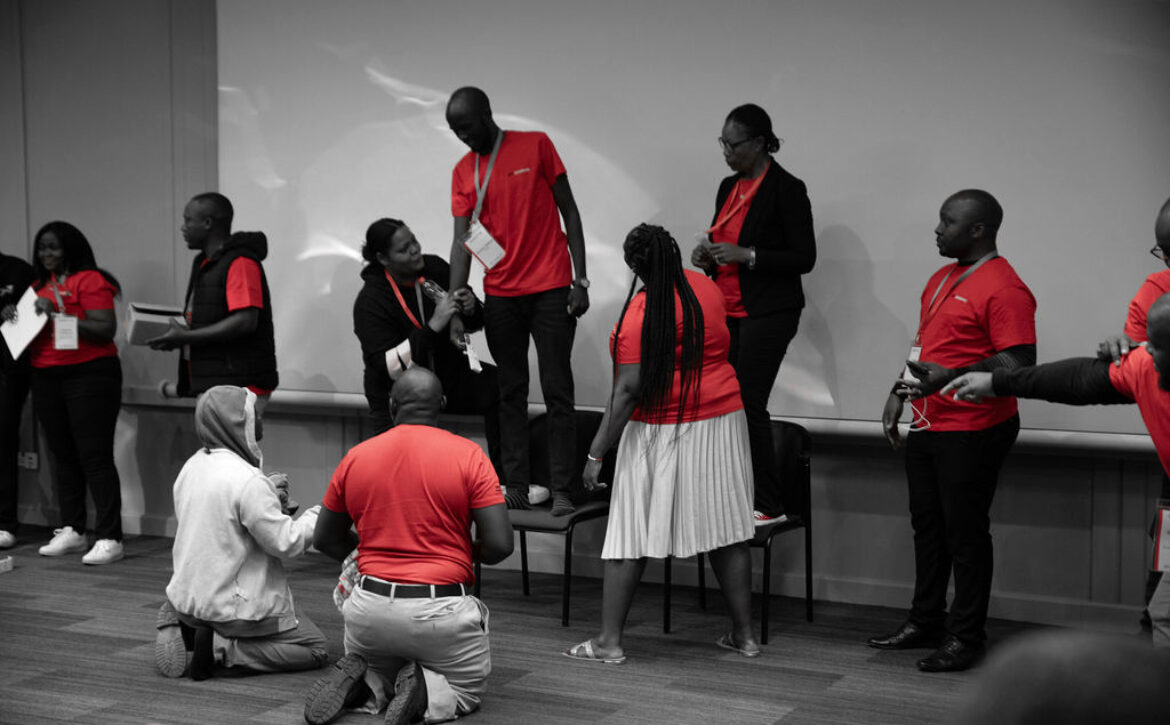
The Solidarity Hub in October 2025 brought together about 100 activists, community organisers, and civil society practitioners from thirteen countries across Southern Africa and beyond for two days of reflective conversation. Unlike traditional workshops with predetermined agendas, the Hub created space for participants to pause, collectively decide what the most pressing challenges are, and then together grapple with the deeper questions shaping solidarity work.

The conversations revealed profound contradictions at the heart of solidarity work: between urgency and reflection, between community voice and expert knowledge, between paid NGO work and volunteer activism, and between welfare and political organising. Participants challenged each other to move beyond rhetoric, asking uncomfortable questions like “Are we collaborating with communities honestly, or colluding to keep them in their underdevelopment?” They reflected about whether the formal, resourced civil society would be willing to make sacrifices – and what those would be – to achieve social justice. Power emerged as the central question – who has it, who doesn’t, how it’s used, and how it’s shared. The discussions acknowledged that whilst every grouping within the development system has some power, these powers are neither balanced nor valued equally, with the perception being that money and technical knowledge carry more weight than collective mobilisation, despite the rhetoric of community-led development.

For participants, the Hub’s value lay precisely in creating space for this kind of honest interrogation. As facilitator Quincy reflected, “The Hub provided a rare and valuable opportunity for participants to pause, reflect, and interrogate the deeper questions behind our work. What struck most was the honesty and vulnerability – participants were willing to challenge assumptions, including their own, and explore uncomfortable truths about power, privilege, and positionality.”

Participants left with concrete takeaways, from replicating the participatory methodologies in their own work to recognising that solidarity means answering hard questions, transcending disagreement through unity in diversity, and understanding that transformation happens not through perfect strategies but through relationships, daily practices, and small acts of kindness that accumulate into movements.

Read More
2

2025 Solidarity Hub

The Solidarity Hub 2025 is happening in October. We are expecting 100 community organisers (35% are below the age of 39) from more than 8 countries to arrive in Johannesburg. The Hub has become a valuable space for activists to reflect critically on their social justice practice, and to build new connections in the pursuit of solidarity. We will also take these deliberations into a day of dialogue on practical solidarity at the end.

Read More
a8ca0f79-25e3-9080-ae3d-7d01c5f11f96-2

Call for Proposals: Democracy at Work Fund

The Democracy at Work Fund, stewarded by Funders Organized for Rights in the Global Economy (FORGE), has launched a new round of funding to support grassroots organizations across Bangladesh, Indonesia, Kenya, South Africa, Argentina, and Brazil.

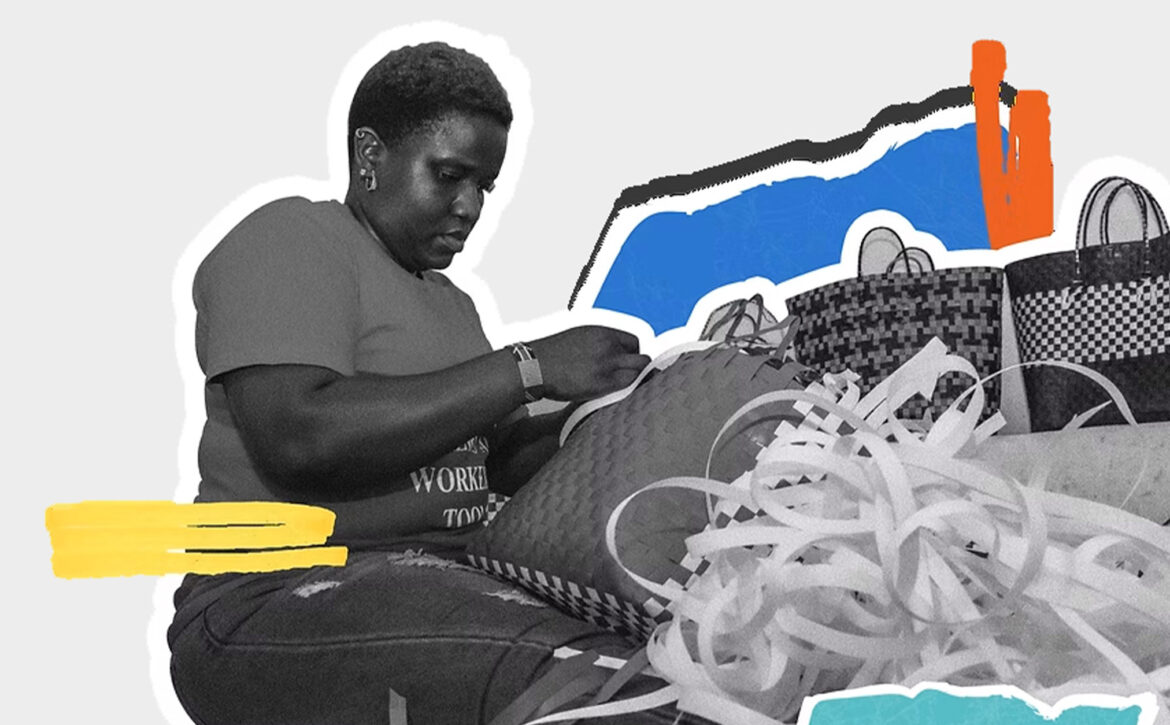
The fund prioritizes initiatives that build worker power, especially among informal workers, women, and underrepresented groups, with a focus on the intersections of workers’ rights, gender justice, racial justice, and climate justice.
– Eligible organizations can apply for grants of up to $80,000.
– Deadline: October 27, 2025 (5pm ET, US).

The first round of the fund backed 19 organizations across 11 countries, from supporting migrant content moderators in Kenya to protecting banana workers in Ecuador and amplifying trade union voices in Brazil’s climate discussions.

More details and application info: Democracy at Work Fund’s website.

Read More