Category: News

1-5

Solidarity Dialogue & Critical Conversation

ACT Ubumbano, in collaboration with the Independent Philanthropy Association South Africa and CIVICUS World Alliance for Citizen Participation, invite you to a day of reflection and dialogue on Thursday 16th October 2025.

 Solidarity Dialogue 09h00-12h30

 We’ll hear from people at the coalface of resisting injustice about how community struggles can be connected across the region. We will explore what form(s) solidarity might take, and what transnational solidarity could look like.

 Critical Conversation 14h00-16h30

 This continues our focus on the role of funders in supporting community-led struggles, with a panel reflecting on what is needed to provide ‘practical solidarity’ to community efforts at achieving social justice. Online participation is possible!

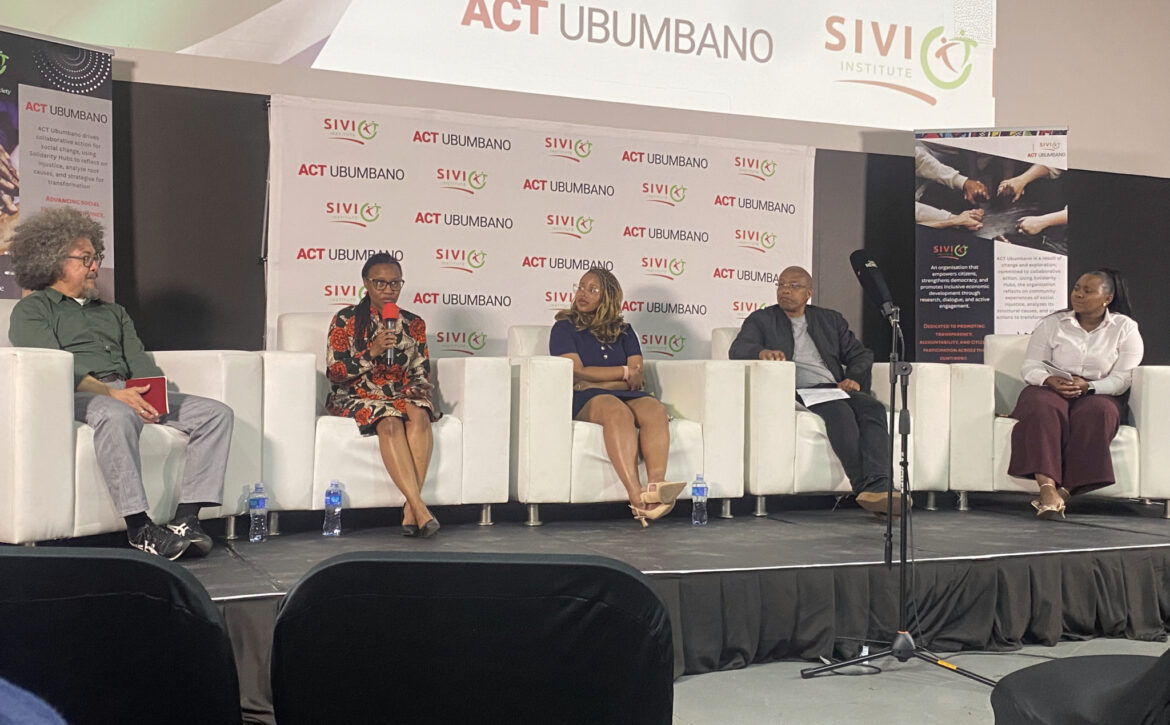
 Panellists: Nancy Moloantoa – Porticus; Tendai Murisa – SIVIO Institute; Bongi Ndondo – Hlanganisa; Boichoko Ditlhake – Kagiso Trust

RSVP: Register here
Registration closes on Friday, 10 October 2025. Lunch will be provided.

Read More
SA-Barometer-Launch-Invite-Flyer-2048×1448

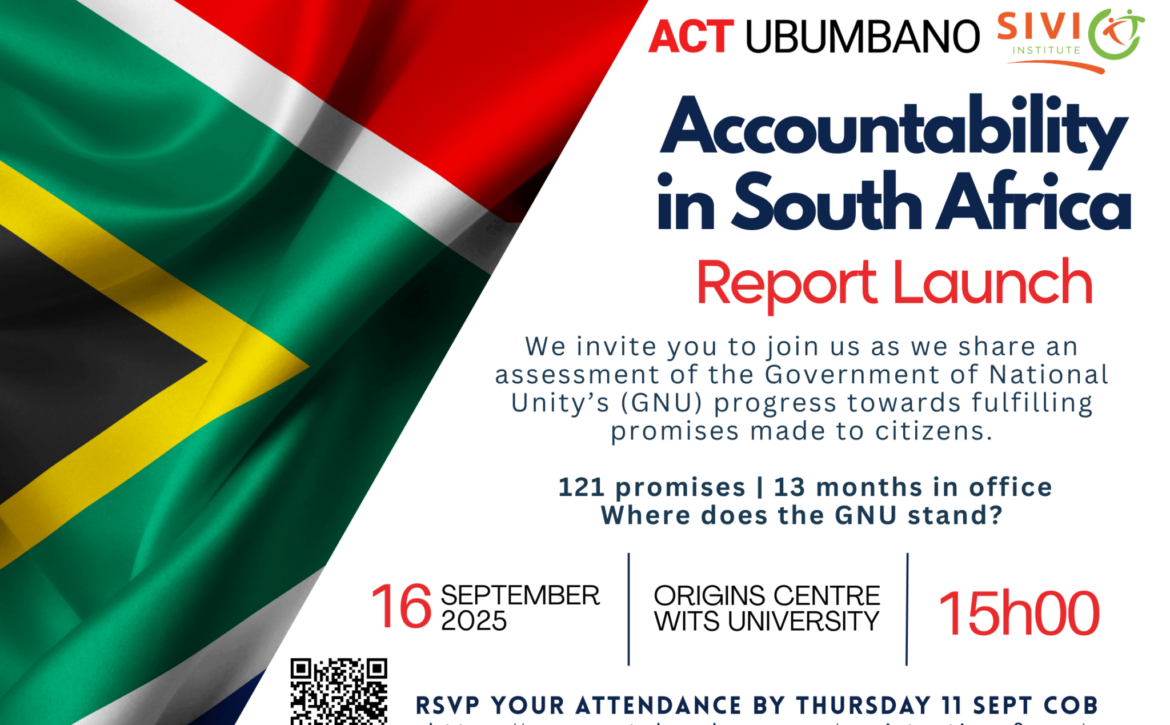
Accountability in South Africa: Report Launch

We invite you to join us as we share an assessment of the Government of National Unity’s (GNU) progress towards fulfilling promises made to citizens.

121 promises | 13 months in office

Where does the GNU stand?

Register here to attend: https://www.actubumbano.org/registration-form/


Read More
Screenshot-2022-11-22-at-11.27.17

Invitation to Grant Recipients

We are committed to strengthening collaboration and showcasing the work that partner organisations are doing. ACT Ubumbano supports this work in different ways, including through the provision of small grants. If you have received a grant from ACT Ubumbano, complete this form and submit content so that we can feature your work on our website and in our newsletter. We recommend that you keep the responses brief and focused, and include a logo with high-quality images of your work.

For questions or clarification, email hub@actubumbano.org

Read More
1756886561114-1

New Grant & Funding Alerts for African NGOs

$3M+ in open grants, prizes & fellowships this week for African NGOs, social ventures & changemakers.

Click here for full details on how to apply and for deadlines.

Read More

Tracking Promises, Demanding Accountability: A Scorecard on the GNU’s First Year in Office

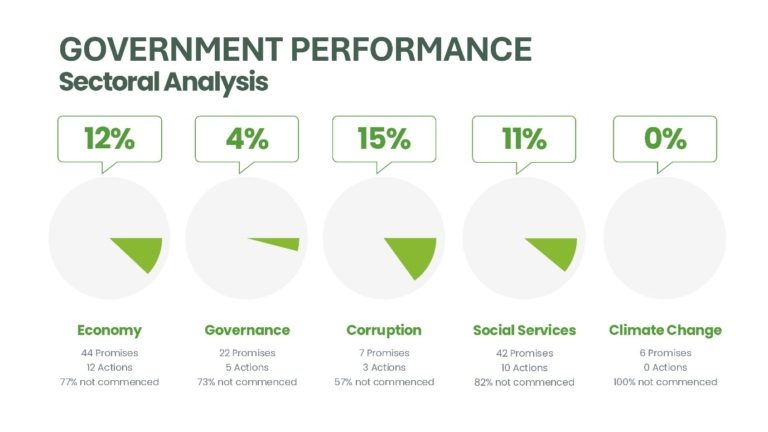
121 promises; 13 months in office. Where does the Government of National Unity (GNU) stand in terms of delivery? The GNU made 121 promises through the President’s Opening of Parliament Address and in the Medium-Term Development Plan endorsed by Cabinet.

The honeymoon phase is over. Join us for a deep dive into where the GNU stands regarding the implementation of their promises.

This assessment report — a collaborative effort between ACT Ubumbano and SIVIO Institute – presents a comprehensive scorecard on the GNU’s performance. It highlights areas of progress, exposes gaps in implementation, and rekindles the civic conversation on transparency, delivery, and democratic accountability.

If you advocate for transparency, delivery, and holding officeholders to account, be part of the discussions as we launch this report on 16 September 2025 in Johannesburg.

RSVP your attendance by clicking here.

Read More
WhatsApp-Image-2025-08-27-at-15.04.34-1

Accountability Project Update

The Accountability Project is about making it easier for people living and working in South Africa to hold decision-makers and organisations accountable. Through the community engagement process, we hope to better understand how community members experience and practice accountability, and to lay the basis for improving accountability practices.

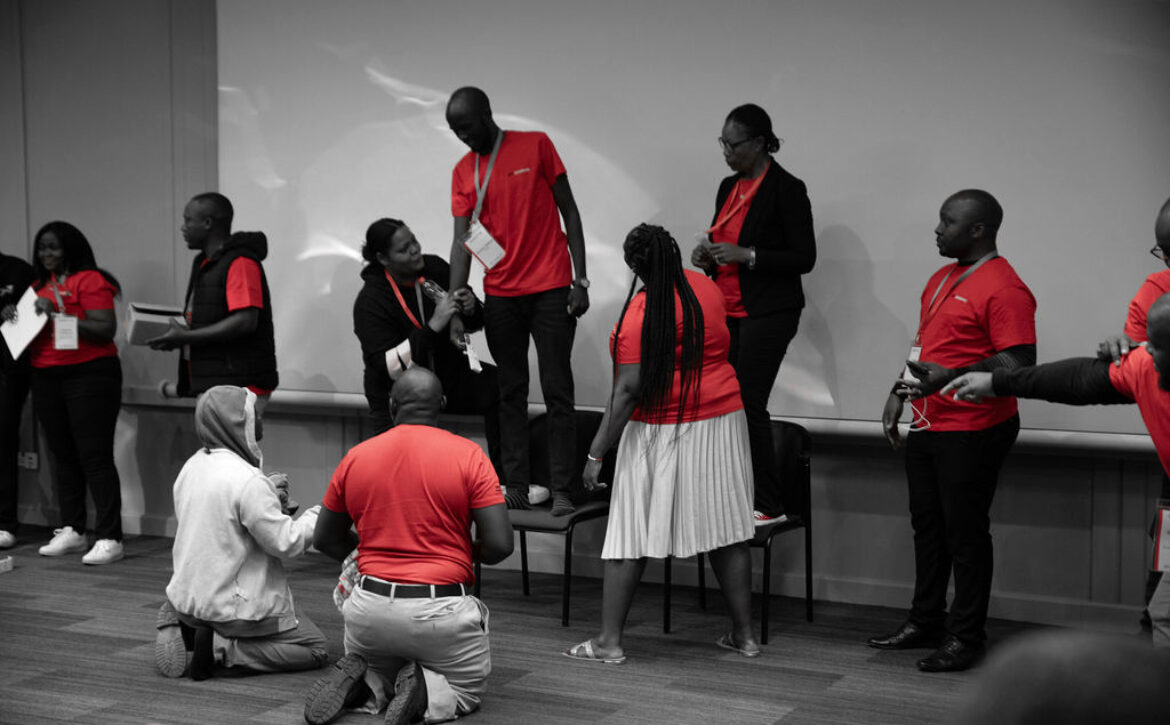
In August we trained twenty-five individuals from communities in KwaZulu-Natal, Western Cape, Eastern Cape, Northern Cape, and Gauteng to facilitate these engagements.

The second pillar of the Project focuses on evidentiary data to track government commitments. See the separate announcement of the launch of a report on the first year of the GNU.

Tracking Promises, Demanding Accountability: A Scorecard on the GNU

In the afternoon of 16 September 2025 we will launch a comprehensive scorecard on the GNU’s performance after its first year in office. This assessment report — a collaborative effort between ACT Ubumbano and SIVIO Institute – highlights areas of progress, exposes gaps in implementation, and rekindles the civic conversation on transparency, delivery, and democratic accountability.

If you advocate for transparency, delivery, and holding officeholders to account, save the date and be part of the discussions as we launch this report in Johannesburg. The launch is an in-person event, with no option for online participation. There will be a podcast about the report.

What do Citizens think?

Also as part of our collaboration on the Accountability Project, SIVIO has deployed enumerators who are currently capturing public sentiment on the performance of both local government and the GNU. Watch this space in the coming weeks for the publication of the National Citizen Perspective Expectation Survey

Read More

Save the Date for a Critical Conversation and Solidarity Dialogue on 16 October 2025

As always, we are not happy that we’ve had to decline a number of applications to attend this year’s Solidarity Hub as space is limited. Most of those selected will be attending for the first time, and most are aged 39 years and younger.

The 2025 Solidarity Hub process will be a bit different from previous iterations, comprising a set of integrated processes framed around a theme that will be carried through three events taking place over three days. The events are:

  1. The Solidarity Hub itself, taking place over two days, will maintain its traditional focus: providing a space for community-based practitioners to engage with their own practices and allowing participants to share their experiences, learning, and questions with one another to expand their tactical toolkits and build connections.
  2. Day three is the Solidarity Dialogue, and is open to anyone interested. The morning will be a discussion on the need for more practical solidarity in the region. The intention of the is to examine, from the perspective of organisers/people engaged in local struggles in various countries in Southern Africa, how struggles can be connected across the region, discussing what form(s) solidarity might take, and what transnational solidarity might contribute to resolving them.
  3. The afternoon session will extend the Critical Conversations series which focuses on the role of funders in supporting community-led struggles. A panel will be asked to reflect on the outcomes of the deliberations that have taken place over the course of the two and a half days guided by the question: What role should the funding community play in supporting local struggles and solidarity actions? What resistance/hurdles would funders need to overcome to provide ‘practical solidarity? An invitation to Day Three will be published separately.

Read More
Picture1 (1)

6th African Philanthropy Conference (APC)

Thabo had the privilege of attending the 6th African Philanthropy Conference (APC), at the end of July at the American University in Cairo, Egypt. This year’s conference, hosted for the first time in North Africa, was a transformative experience, bringing together over 300 practitioners, academics, and activists from across the continent to chart a new, decolonised future for African development.

The central theme, “Sustainable Financing for Development in the Majority World,” resonated deeply with ACT Ubumbano’s mission of promoting economic, gender, and environmental justice. The conference served as a powerful platform for challenging the traditional aid model, which has often been external and donor-driven. Instead, the focus was firmly on African-led solutions, rooted in local knowledge and the lived realities of communities.

Over the five days, the discussions were rich and multifaceted. Key conversations revolved around several critical sub-themes that directly align with our work at ACT Ubumbano:

Decolonised funding structures: exploration around how to build funding systems that are not only sustainable but also free from the historical and geopolitical dependencies that have long dictated Africa’s development narrative.

Ethical and gender-responsive financing: sessions highlighted the importance of integrating a gender lens into philanthropic work, ensuring that funding empowers women and girls and addresses the root causes of gender inequality.

Climate-responsive philanthropy: The urgent need for African-led climate resilience initiatives was a major topic. The conference emphasised how local philanthropic efforts are essential for adapting to a changing climate and securing a sustainable future.

Reclaiming our story: the dialogue on leveraging our lived experiences as powerful resources for community development, in a form of documenting in innovative ways was another interesting session.

Beyond the formal sessions, the conference was a vibrant space for networking, exploring the historic Egypt and solidarity. The energy was palpable as we connected with a diverse group of change-makers, from grassroots movements to academic researchers, sharing experiences and forging new collaborations. It was a powerful reminder that our collective efforts are part of a larger, interconnected movement for justice and dignity across the continent.

Thabo returns from Cairo with a renewed sense of purpose. The insights and connections gained will be invaluable as we continue our work in ensuring that community voices and agency remain at the heart of our mission to build a more just and equitable world.

Read More
slide-3-1-2048×731

Introducing Rifqah

We are thrilled to welcome Rifqah Tifloen as our new Programme Manager.

Rifqah is a skilled programme manager with over a decade of experience in community-led development, research, and strategic stakeholder engagement. She brings a deep commitment to social, environmental, and gender justice, with her work having a strong focus on grassroots movement-building and intersectional approaches to systemic change. With degrees in Media, Communication, and Culture, Rifqah is currently pursuing a Master’s in Religion and Ecology at the University of the Western Cape where her work bridges academic inquiry with on-the-ground activism.

Read More
pll-1024×731

Community Engagement Update

In June 2025, the project team met at Bertha Retreat in the Western Cape from the 4th to the 6th for a planning session on community engagement for the ‘Accountability Project’. The team comprised Crystal West and Akhona Siswana from Development Action Group; David Pieters and Colin Ogle from Durban South Community Advice Centre; Brian Adams from Surplus People Project; Fred Kusambiza–Kiingi and Mike Makwela from Planact; Nontando Ngamlana and Lindokuhle Vellem from Afesis; Keamogetswe Seipato from My Vote Counts; Ashley Green-Thompson, Thabo Chaba, and Pumla Mabizela from ACT Ubumbano; Veronica Sigamoney from Ethnoequity Research Insights; and Allan Moolman from Dala Consulting.

What This Project Is About

The ACT Ubumbano Accountability Project is about helping people living and working in South be better able to hold powerful people and institutions accountable. Rather than telling communities what accountability should look like, the community engagement pilot project takes a different approach. It starts by listening to what communities already know and experience, then builds from there.

What We Learned from the Planning Workshop

The reality communities are living with

When the project team sat down to design this work, they spent time talking honestly about what’s happening in communities right now. What they heard wasn’t easy, but it was important. Many, if not most people are just trying to survive day-to-day, are concerned about safety and security and the rising cost of living, are worried about where their next meal is coming from or whether they will have enough money for electricity. In these conditions it’s hard to think about bigger questions like holding your local councillor accountable, let alone confronting State failures. Perhaps most concerning, the workshop participants talked about communities living with trauma and depression. Thers is sense that societal level trauma is as yet unrecognised and not being taken seriously. People feel stuck with systems they know aren’t working, but they don’t see a way to change things. Some communities don’t even know what options or rights they have. What is often diagnosed as apathy may really be a deeper psychosocial issue.

Rethinking what accountability means

A critical insight emerging  from the workshop was that accountability means different things to different people. There was agreement there was a need to step back from assumptions about what accountability looks like and really listen to how communities understand and experience it. There was a recognition that every community probably has its own ways of dealing with accountability, both formal systems like going to the police or local government, and informal ones like talking to elders or community leaders. The goal isn’t to replace these systems but to understand them better and help communities use them more effectively. And possibly, to use this community practice to shape accountability processes more broadly.

What the project wants to learn

  1. Instead of coming in with ready-made solutions, the project team identified four big questions they want to explore with communities. How do people actually experience accountability in their daily lives? What does it look like?
  2. when someone is held accountable or when accountability fails at the interpersonal level? And, what does ‘good accountability’ feel like? What are it’s markers/features?
  3. What gets in the way of ‘good accountability’. When people try to hold someone accountable and it doesn’t work, what went wrong? Is it lack of information, fear of retaliation, unclear processes, or something else entirely?
  4. What do communities need to feel more powerful and effective? What tools, information, or support would help people feel confident about demanding accountability?
  5. In addition, there is a need to celebrate what’s already working. Every community has some systems and practices that do create accountability, even if they’re not perfect. Understanding these successes can help build on them.

Community engagement is ongoing, including training facilitators who will lead accountability conversations in their communities from September to November 2025.

Read More