Category: News

2

Karibu Funding Opportunity for ‘Constructive Troublemaking’ in Africa

Karibu Foundation is looking to support groups of change-agents in Africa who have bold, innovative, forward-thinking, and “constructive troublemaking” ideas that disrupt the status quo of injustices that the continent and our world are currently facing.

They specifically seek to support groups of change agents — social movements and/or networks, organizations, cooperatives, collectives, and associations in social movement eco-systems— who are undertaking imaginative initiatives that strengthen and add new dimensions to the collective struggle for systemic justice. This is specifically related to the economic, socio-cultural, political, and ecological crises we face.

You can find the information packet, FAQs and application here.

Read More
7

The Reflection Section

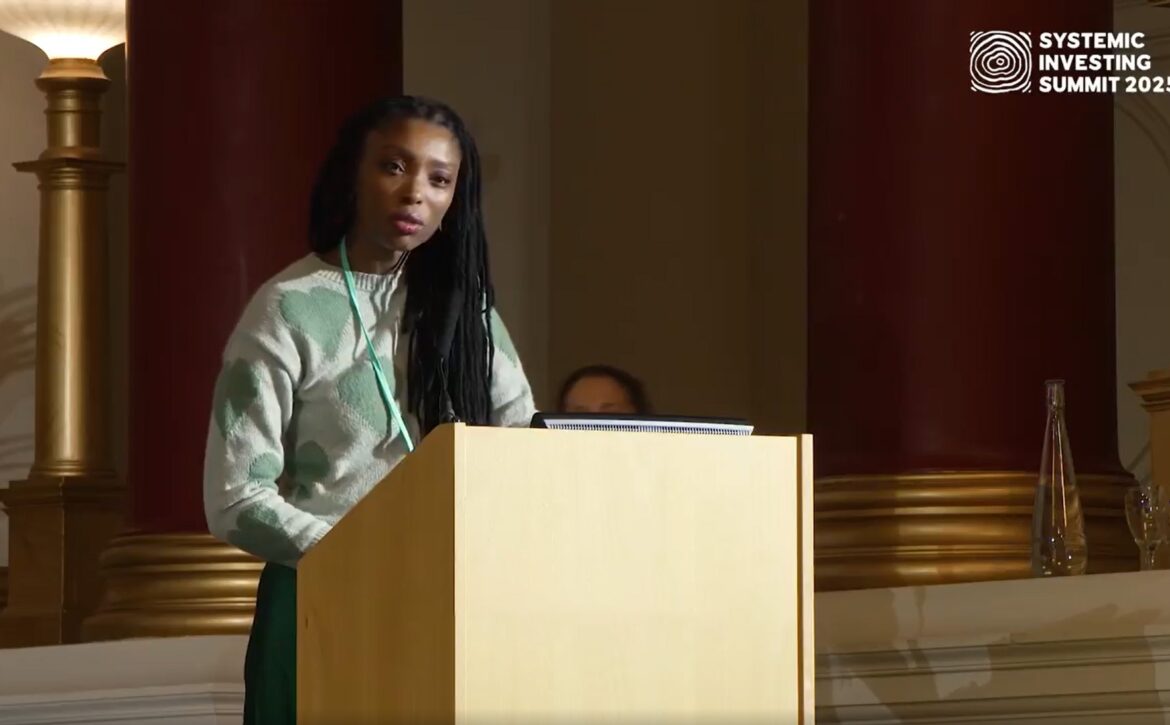
We encountered Ashanti Kunene through a poem she delivered recently. She eloquently challenges power in the four minutes of that poem, and in many ways does more to provoke our thinking than a conventional written piece. She has agreed to its inclusion in the Reflection Section as a contribution to a deeper, more critical practice of solidarity.

You can access the poem here.

The Reflection Section is a space for anyone to honestly share their critical thoughts on social justice practice. You can contact ashley@actubumbano.org to find out more about contributing to this platform.

Read More
8

Solidarity Support Facility Update

We were able to allocate ZAR1,120,000 to 56 organisations in 8 countries. We’re grateful to the Social Justice Initiative that made a financial contribution for 9 grants to South African organisations. Each grant has a financial value of ZAR20,000. 14% of the 396 applications received were supported, a factor determined largely by available budget. Grants to countries experiencing political tensions were higher than the average – 40% and 50% of applications were supported in Mozambique and Swaziland respectively. 12% of applications from South Africa were approved

Read More
9

ACT Ubumbano and the Nelson Mandela-Graça Machel INNOVATION Awards

ACT Ubumbano has been recognised as an innovator and change-maker. We celebrate receiving the Brave Philanthropy Award as part of the 2024/25 Nelson Mandela-Graça Machel Innovation Awards. The award includes $7,500 and a place in the dynamic CIVICUS Innovation community—fuelling our continued efforts to foster justice, dignity, and solidarity in our work.

We acknowledge the amazing people we have encountered in our journey of solidarity, their courage in resisting their dehumanisation, and their creativity to thrive in the face of adversity. The team extends a heartfelt thank you to our partners, collaborators, and the communities they serve.

Read More
10

Invitation to a Critical Conversation and Reception

The ACT Alliance South Africa Forum invites you to a Critical Conversation, a space to provoke our imagination about how the Church can claim it’s prophetic role in a world beset by injustice, conflict, and the exclusion and suffering of so many.

The panel will comprise Rudelmar Bueno de Faria, General Secretary of the global ACT Alliance; Rev Mzwandile Molo, General Secretary of the South African Council of Churches, and Rev. Pumla Nzimande, Presiding Bishop of the Methodist Church of Southern Africa.

You are also invited to connect with people at a reception afterwards. Confirmation of attendance is required by email to hub@actubumbano.org before Tuesday 10th June.

Venue: Garden Court OR Tambo Hotel, 2 Hulley Road, Isando
Date: Monday 16th June 2025
Time: 14h00 to 16h00 – Reception afterwards

Read More

Solidarity Support Facility Update

As the Director of ACT Ubumbano, I wish to apologise for not meeting the deadline we had set of 30 April for finalising the grant applications. I completely underestimated the time it would take to review all the proposals, compounded by the many public holidays that take place during this time. We will be making final decisions on the grant applications on 16 May, and will communicate with everyone very soon after that.

Find out more about the work of partner organisations here.

Read More
11

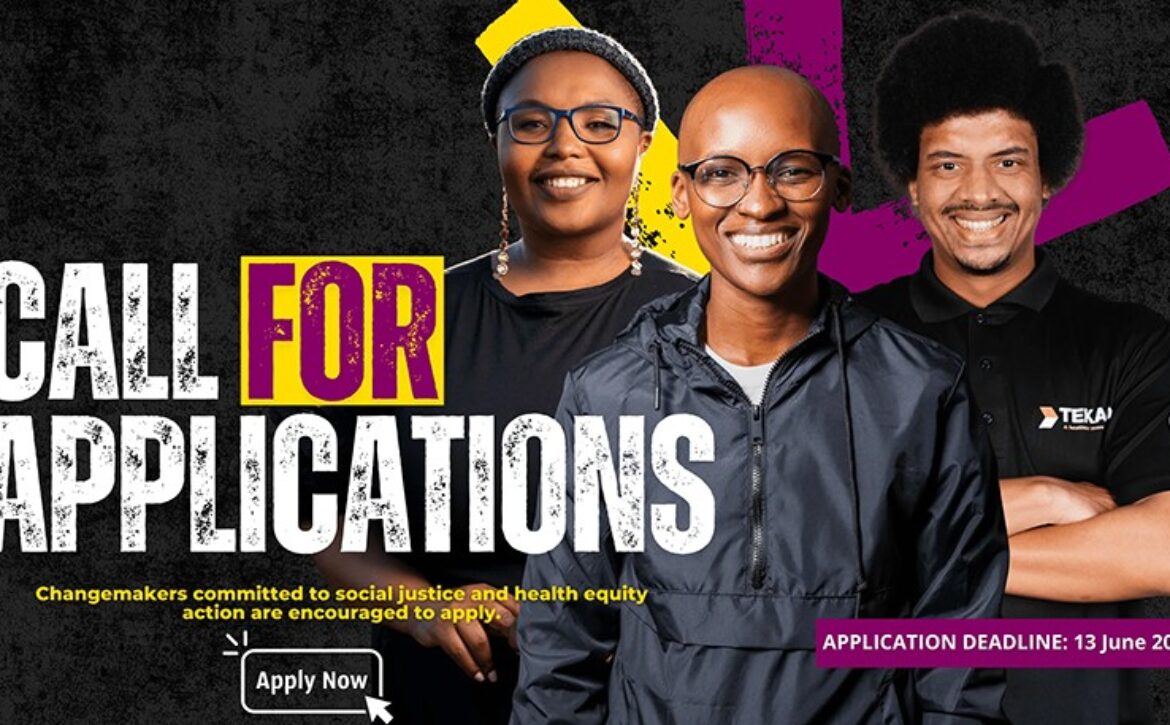
Call for Applications: Become a fellow

Applications are now open for The Tekano Fellowship for Health Equity, a platform for changemakers committed to bold ideas and transformative actions that address health injustice. This fellowship is designed for critical thinkers, courageous doers, and determined individuals who aim to sharpen their strategies, build power, and collectively forge a just future. Tekano is an organization dedicated to creating health equity and addressing injustice in South Africa, and it is one of seven Atlantic Fellows programmes globally

To find out more and to apply, click here.

Read More

We’re recruiting a new Programme Manager

ACT Ubumbano supports local struggle by facilitating critical reflection on our social justice practice, listening to the voices of those most affected by injustice, and supporting innovative and collaborative solidarity initiatives that address unjust power relations globally.

About the Job

This role will help enable, develop, support, and consolidate solidarity actions and programmes within the ACT Ubumbano network of South(ern) African and Northern NGOs working to confront social justice issues including Economic, Environment/Climate and Gender Justice. The purpose is to facilitate space for critical reflection, advocacy, and innovative solidarity initiatives that address unjust power relations in Southern Africa and globally. The Programme Manager will work closely with the Director with stakeholders involved in ACT Ubumbano processes.

To read full job profile and to apply, click here.

Read More
12

ACT Alliance Is Alive and Well in Southern Africa

The ACT Southern Africa Regional Forum (SARF) is a shared platform for ACT Alliance members in Southern Africa, whose objective is to increase the effectiveness and impact of development, humanitarian and advocacy work in the region. The 2019 meeting took place on 3-4 September in Bulawayo, Zimbabwe, where delegates from faith-based organisations and churches in Mozambique, South Africa, Zimbabwe, Botswana, Zambia and Malawi looked deeply at how to increase their preparedness for a coordinated regional response to disasters. Discussions were deepened with input from the SDG Center for Africa based in Rwanda, the National University for Science and Technology in Zimbabwe, and the ACT Alliance teams from Nairobi and Geneva.

The delegates spent some time updating internal matters, and the leadership of Ashmeer Joseph was appreciated as he was returned as the Regional Chair. For more information, you can reach him on director@elcsads.org.za.

Read More
13

Too Close for Comfort: Has civil society lost its bite and how it might get It back?

“Power concedes nothing without a demand; speaking truth to power is a necessary demand for justice and equality.”  Frederick Douglass

Who holds trust into the future? Have we drifted too close to development ‘orthodoxy’ and too far from the communities we claim to represent? Is it too late to reclaim civil society’s essential role as watchdog and accountability monitor?

In any well-established democracy, civil society’s fundamental purpose isn’t to blindly support the State, but rather to hold it accountable for its shortcomings, to push it toward improvement, and to amplify the voices of those who live and work in the country the State serves.

A broad social compact that includes civil society cannot come at the expense of civil society’s independence or its watchdog function. To engage effectively with the State, civil society organizations must enter such agreements with a clear, shared position on accountability and distinct understanding of their role. Without this differentiation, it risks being co-opted under the banner of patriotic action or merely substituting for services the State or private sector is unwilling to provide.

Civil society, apart from social formations like sport, art, and religious groups perhaps, has a singular function – creating conditions under which power holders can be held accountable.

Current Challenges

As South Africa approaches a proposed National Dialogue, we must acknowledge some uncomfortable truths: formal civil society institutions have weakened, are increasingly co-opted as service delivery partners, and often display a remarkable lack of internal democracy. Despite the rhetoric of “movement building,” collective organizing has diminished. Consequently, the gap between civil society organizations and their source of power – the broader population, what some might call ‘a mass base’ – continues to widen, potentially reaching a point where reconciliation becomes impossible.

Organizing practices have deteriorated. Instead of listening and actively engaging with people, practitioners – convinced of their superior intellect, access, or learning – increasingly impose their worldview on others. Many refuse to engage in genuine debate or collaborative solution-building unless those solutions align with their predetermined agendas. Participatory practice has devolved into box-ticking exercises with little more integrity than corporate “consultations.”

Trapped in notions of expertise and ill-fitting ideas imported from the private sector – like “unique selling propositions” and obsessions with “scale” – civil society inadvertently perpetuates the status quo. We remain comfortable in this familiar world where we can maintain our relevance and power.

Trust from ordinary citizens is essential for civil society to fulfil its mission. Without an investment into building and maintaining this trust, the mandate of civil society becomes impossible to fulfil.

Time for Reflection

This moment demands deep reflection on our practices to address the growing dissonance we all experience in our change-making work: Are we fit for the future that is already upon us? Are we sufficiently accountable to our constituencies? Are we agile, responsive, and connected enough?

The answer to these questions may determine whether civil society can reclaim its vital role as an antagonist to the State – not in opposition for opposition’s sake, but as a necessary counterbalance ensuring power remains accountable to the people it serves.

By building new models of engagement that prioritize genuine participation, independence, and accountability, civil society can make obsolete the existing models that have allowed power to go unchecked. This isn’t merely about criticizing what exists, but about demonstrating through action what could and should be.

The threat of a good example remains our most powerful tool. When we model the accountability we demand from others, we create ripples that can transform entire systems. This is civil society’s highest calling – not as service provider or silent partner, but as the conscience of democracy itself.

“You never change things by fighting the existing reality. To change something, build a new model that makes the existing model obsolete.” – R. Buckminster Fuller

Allan Moolman is a Director at dala! Consulting and works extensively with ACT Ubumbano

Read More