Category: News

202

Ubumbano Community Voice App

It was a decision from the first Solidarity Hub to create a platform for activists and community members to tell their stories of struggle without filter. ACT Ubumbano created an App and Website that carries these stories, and hopefully amplifies the voice of those who experience the brunt of injustice and exploitation. The Ubumbano Voice App is freely available for download, and the website is www.ubumbanovoice.com.

This platform has attracted the interest of the Dobsonville Advice Office in Soweto and its partners, and they have convened an initial training session to get their network members to participate in getting the word out. From the training they have already collected a range of stories that can be accessed by clicking here.

In Durban, the Phephisa movement of survivors of gender-based violence convened a training session that generated great eagerness to use the platform not just for telling stories, but for advocacy as well.

If any community – geographic or otherwise – is interested in using this platform in their work, please get in touch with the office at ashley@actubumbano.org.

Read More

2019 Solidarity Hub

The 2019 ACT Ubumbano Solidarity Hub took place on 21-23 May in Johannesburg. 67 participants from community organisations, NGOs, FBOs and churches used the SEE JUDGE ACT method of social analysis to explore the theme “Environmental Justice – a Question of Survival”.

The Hub began with a sharing of experiences of environmental injustices in different communities. For many it was the first time having a deep reflection about what climate change and environmental degradation means for them and their communities. This laid the basis for a discussion on the systemic drivers of injustice, of an economic system that only thrives on more and more consumption at the expense of our natural ecosystems. This challenged participants to explore how their own practices either challenge or maintain these destructive social, political and economic structures, and through some difficult conversations to look deeply at what needs to change in their own work.

Feedback from participants confirmed that the Solidarity Hub and the approach of using critical review of practice methodologies is an important new feature in the social justice landscape. This is evidenced in the evaluation comments that said that “the process forces us to think critically and deeper”, and that we must “continue to provide the ‘liberated’ space for organising and reflecting”. The Hub takes a deliberate approach of “focusing a solid amount of time on reflection rather than just talking about what we do.”

ACT Ubumbano consciously creates space for voices not usually heard. In the 2019 Solidarity Hub, 52% of participants were women. 17% were under 30 years of age, while a further 23% were in their forties. The effect of this was a conversation that was lively and challenging, and that will shape the action plans of ACT Ubumbano into the future.

Read More

Multi-Faith Meeting Discusses Sexual and Reproductive Health Rights

[av_section min_height='custom' min_height_px='500px' padding='default' shadow='no-border-styling' bottom_border='no-border-styling' bottom_border_diagonal_color='#333333' bottom_border_diagonal_direction='' bottom_border_style='' custom_margin='0px' custom_margin_sync='true' custom_arrow_bg='' id='' color='main_color' background='bg_color' custom_bg='' background_gradient_color1='' background_gradient_color2='' background_gradient_direction='vertical' src='https://www.actubumbano.org/wp-content/uploads/2019/06/FBOMeetingMay2019GL1-10.jpg' attachment='696' attachment_size='full' attach='scroll' position='center center' repeat='stretch' video='' video_ratio='16:9' overlay_opacity='0.5' overlay_color='' overlay_pattern='' overlay_custom_pattern='' av_element_hidden_in_editor='0' av_uid='av-jwhnmcp5'][/av_section] [av_layout_row border='av-border-top-bottom' min_height_percent='' min_height='0' color='main_color' mobile='av-flex-cells' id='' av_element_hidden_in_editor='0' mobile_breaking='' av_uid='av-xdumr'] [av_cell_one_fifth av_uid='av-q3l9v'] [/av_cell_one_fifth][av_cell_three_fifth vertical_align='top' padding='30px,10px,10px,90px' background='bg_color' background_color='' background_gradient_color1='' background_gradient_color2='' background_gradient_direction='vertical' src='' attachment='' attachment_size='' background_attachment='scroll' background_position='top left' background_repeat='no-repeat' link='' linktarget='' link_hover='' mobile_display='' av_uid='av-jwi1xpb6'] [av_hr class='custom' height='50' shadow='no-shadow' position='center' custom_border='av-border-fat' custom_width='150px' custom_border_color='#ed2124' custom_margin_top='30px' custom_margin_bottom='30px' icon_select='no' custom_icon_color='' icon='ue808' font='entypo-fontello' av_uid='av-jwi25mr4' admin_preview_bg=''] [av_heading heading='Multi-Faith Meeting Discusses Sexual and Reproductive Health Rights' tag='h2' link_apply='' link='manually,http://' link_target='' style='blockquote modern-quote modern-centered' size='' subheading_active='subheading_below' subheading_size='30' margin='' margin_sync='true' padding='10' color='' custom_font='' av-medium-font-size-title='' av-small-font-size-title='' av-mini-font-size-title='' av-medium-font-size='' av-small-font-size='' av-mini-font-size='' av_uid='av-jwiwy9yh' admin_preview_bg=''] 20 – 22 May 2019
[/av_heading] [av_heading heading='‘Moving from Faith to Action’' tag='h3' link_apply='' link='' link_target='' style='blockquote modern-quote' size='' subheading_active='' subheading_size='30' margin='' padding='10' color='' custom_font='' custom_class='' admin_preview_bg='' av-desktop-hide='' av-medium-hide='' av-small-hide='' av-mini-hide='' av-medium-font-size-title='' av-small-font-size-title='' av-mini-font-size-title='' av-medium-font-size='' av-small-font-size='' av-mini-font-size=''] 20 – 22 May 2019
[/av_heading] [av_textblock size='' font_color='' color='' av-medium-font-size='' av-small-font-size='' av-mini-font-size='' av_uid='av-jwhkgsg3' admin_preview_bg=''] ACT Ubumbano in collaboration with Gender Links convened a multi-faith meeting to discuss Sexual and Reproductive Health Rights (SRHR) 20-22 May.

Participants were drawn from networks of ACT Alliance Southern Africa Regional Forum and the SRHR Alliance partners, from nine southern African countries, Botswana, Lesotho, Madagascar, Malawi, Mauritius, Mozambique, South Africa, Zambia and Zimbabwe. Delegates were made up of representatives from individual congregations, umbrella bodies of Christian churches, representatives from other faiths in the region such as the Bahai, Islam and African traditional religions.

The workshop theme was “ Moving from Faith to Action” with the aim of showcasing the work and experiences of faith leaders in the spaces of SRHR. Faith-based institutions and networks have inherent power and exert influence as policymakers and civil society leaders as they uphold religious doctrines and practices. Religion has a unique power of tackling structural issues, transforming gender and power relations, norms and values, is critical to ending poverty and challenging inequality. The role of religion as a driver of positive change towards social justice was also discussed. The participants agreed that concerted efforts have to be made towards engaging religious leaders and institutions for positive change and upholding human rights, gender equality and just communities.
The three days were punctuated with lively discussions, disagreements as well as reflections on SRHR themes and approaches.   The workshop assisted to identify common SRHR themes and challenges for further learning and dialogue.  The workshop revealed information gaps in SRHR knowledge and provided ideas on how ACT Ubumbano, Gender Links and other partners can assist faith leaders reach other peers.

Faith leaders worked through advocacy strategies for appropriate messaging to influence national policies. This was important to support interventions that keep children at school and reduce the incidences of girl children’s vulnerability to teenage pregnancy and child marriage. The religious leaders also considered a way forward that includes addressing issues of early child marriage, girls’ access to affordable sanitary wear; SGBV and provide compassionate accompaniment to survivors of GBV and those battling with addiction.  The meeting was appreciated as an important and frank multi-faith space to deal with issues of sexual reproductive health rights.


[/av_textblock] [av_hr class='invisible' height='25' shadow='no-shadow' position='center' custom_border='av-border-thin' custom_width='50px' custom_border_color='' custom_margin_top='30px' custom_margin_bottom='30px' icon_select='yes' custom_icon_color='' icon='ue808' font='entypo-fontello' av_uid='av-jwivqsql' admin_preview_bg=''] [av_button label='View Image Gallery' link='post,617' link_target='' size='x-large' position='center' label_display='' icon_select='no' icon='ue800' font='entypo-fontello' color='theme-color' custom_bg='#444444' custom_font='#ffffff' av_uid='av-jwivp6uw' admin_preview_bg=''] [av_hr class='invisible' height='25' shadow='no-shadow' position='center' custom_border='av-border-thin' custom_width='50px' custom_border_color='' custom_margin_top='30px' custom_margin_bottom='30px' icon_select='yes' custom_icon_color='' icon='ue808' font='entypo-fontello' av_uid='av-jwivqsql' admin_preview_bg=''] [/av_cell_three_fifth][av_cell_one_fifth vertical_align='top' padding='30px' background='bg_color' background_color='' background_gradient_color1='' background_gradient_color2='' background_gradient_direction='vertical' src='' background_attachment='scroll' background_position='top left' background_repeat='no-repeat' link='' linktarget='' link_hover='' mobile_display='' av_uid='av-hu8sr'] [/av_cell_one_fifth][/av_layout_row][av_layout_row border='' min_height_percent='' min_height='0' color='main_color' mobile='av-flex-cells' id='' av_element_hidden_in_editor='0' mobile_breaking='' av-desktop-hide='' av-medium-hide='' av-small-hide='' av-mini-hide='' av_uid='av-lr5bv'] [av_cell_one_fourth av_uid='av-ebfzf'] [/av_cell_one_fourth][av_cell_one_half vertical_align='top' padding='40px,30px,80px,30px' background='bg_color' background_color='' background_gradient_color1='' background_gradient_color2='' background_gradient_direction='vertical' src='' attachment='' attachment_size='' background_attachment='scroll' background_position='top left' background_repeat='no-repeat' link='' linktarget='' link_hover='' mobile_display='' av_uid='av-jwhonrzy'] [av_one_half first min_height='' vertical_alignment='' space='' custom_margin='' margin='0px' link='' linktarget='' link_hover='' padding='0px' border='' border_color='' radius='0px' background='bg_color' background_color='' background_gradient_color1='' background_gradient_color2='' background_gradient_direction='vertical' src='' background_position='top left' background_repeat='no-repeat' animation='' mobile_breaking='' mobile_display='' av_uid='av-dn2o3'] [av_image src='https://www.actubumbano.org/wp-content/uploads/2019/06/logo2-1.jpg' attachment='575' attachment_size='full' align='center' styling='' hover='' link='' target='' caption='' font_size='' appearance='' overlay_opacity='0.4' overlay_color='#000000' overlay_text_color='#ffffff' copyright='' animation='no-animation' av_uid='av-jwho9owu' admin_preview_bg=''][/av_image] [/av_one_half][av_one_half min_height='' vertical_alignment='' space='' custom_margin='' margin='0px' link='' linktarget='' link_hover='' padding='0px' border='' border_color='' radius='0px' background='bg_color' background_color='' background_gradient_color1='' background_gradient_color2='' background_gradient_direction='vertical' src='' background_position='top left' background_repeat='no-repeat' animation='' mobile_breaking='' mobile_display='' av_uid='av-iszkj'] [av_image src='https://www.actubumbano.org/wp-content/uploads/2019/06/logo1-1.jpg' attachment='574' attachment_size='full' align='center' styling='' hover='' link='' target='' caption='' font_size='' appearance='' overlay_opacity='0.4' overlay_color='#000000' overlay_text_color='#ffffff' copyright='' animation='no-animation' av_uid='av-jwho9owu' admin_preview_bg=''][/av_image] [/av_one_half][/av_cell_one_half][av_cell_one_fourth vertical_align='top' padding='30px' background='bg_color' background_color='' background_gradient_color1='' background_gradient_color2='' background_gradient_direction='vertical' src='' background_attachment='scroll' background_position='top left' background_repeat='no-repeat' link='' linktarget='' link_hover='' mobile_display='' av_uid='av-bsrbn'] [/av_cell_one_fourth] [/av_layout_row]

Read More
205

Programme | ACT Ubumbano Solidarity Hub

The Ubumbano Solidarity Hub is a space within which participants are invited to share their struggles and experience, to learn from others and to seek and find solidarity. Informed by the experience of participants, the Hub is a space in which alternatives to the mainstream are explored. The Hub responds to an increasingly hostile social, political and economic environment by providing a critical reflection space centred around the principles of human dignity. Within the space is a recognition that activists and organisations need to transform practice in order to achieve social justice.

Within this framing, the May 2019 Solidary Hub will bring together a range of activists and organisations from formal and informal civil society to engage each other on the question of environmental justice and the implications this has for how we pursue a broader agenda of justice and human dignity.

The question of the environment brings the tension between development (as it is currently framed) and sustainability into stark focus. An environmental justice approach asks us to consider this tension critically – to critique not only the way the world is, but also our individual and collective role in creating the conditions that erode human dignity. An environmental justice approach asks us to see ourselves as part of a system in which our individual and collective choices and actions have an impact on the whole.

Much of the thinking that informs development is based on the idea that in order to create a better world, we simply need to improve the living conditions of poor people. What this translates to is that we must give people more – more technology, more money, more goods and services. This approach does not necessarily recognise that we live in a world of finite resources that we may deplete if we continue along the current trajectory.

The Hub will therefore focus on how we work with this tension – between the increasing demands for jobs, connectivity, mobility and economic development, and the need to sustain communities and the ecology that supports life on the planet.

Over the course of the process we will focus on the following broad questions:

  1. What are the specific tensions/demands that are particular to our work with women, small scale farmers, mining affected communities and young people?
  2. What underpins the demands that people are able to articulate – how does the system in which they live shape their expectations?
  3. Do these demands bring them into conflict with an agenda focused on sustainability and human dignity?
  4. What about our practice needs to shift/change in response?

ACT Ubumbano uses the See-Judge-Act method of social analysis and enquiry.

  • The SEE phase is about exploring the lived experience of those who struggle for their humanity. It concerns how current social, economic and political structures continue to deprive people of their humanity and dignity,
  • The JUDGE phase is focused on critical reflection and analysis. Participants locate their own struggles within the context of global structures of injustice, and collectively analyse and critique those structures. It explores theoretical approaches that explain the persistence of global inequality and challenge econometric definitions of human progress.
  • The ACT phase allows participants to translate their reflections on the world, and their practice within it, into actions that are transformative.

Click here to download programme.

Read More
206

Churches involved in urgent relief for cyclone Idai survivors

This partnership stems from the fact that this disaster will require the highest level of mobilisation possible.

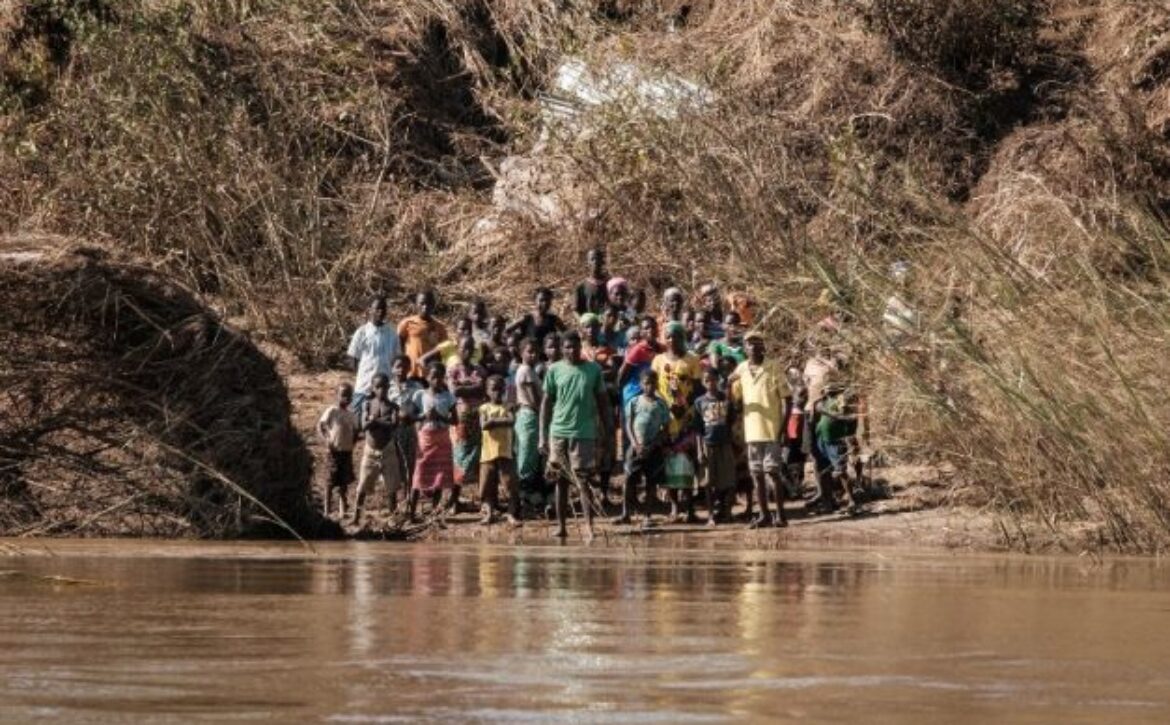
The South African Council of Churches (SACC), Red Cross South Africa, Hope Worldwide, and other civil society partners have been involved in consolidated and urgent relief efforts to help survivors of cyclone Idai in Mozambique, Malawi, and Zimbabwe.

Red Cross South Africa CEO Lindel Papiyah said ahead of a planned media briefing: “We are partnering with the churches because this is a disaster that will require the highest level of mobilisation possible, and churches have that footprint and goodwill.”

Cyclone Idai has wreaked havoc on Beira and surrounding areas of Mozambique, resulting in loss of communication, damage, and destruction to shelter and settlements, health and water/sanitation facilities and thousands of hectares of standing crops, communication infrastructure, with loss of life and injury.

SACC’s Bishop Mpumlwana said: “We know that many more people will die from disease resulting from this tragedy, far more than those lives taken by the cyclone itself. Human lives will need to recalibrate in the new reality, including dealing with hundreds of children orphaned in this disaster.

“This is an urgent but long term joint effort by us as churches and civil society to help our neighbours that will require consistency of commitment.”

Deloitte has joined the partnership, bringing in pro bono audit support to the fund that is being launched.

Deloitte CEO, Lwazi Bam said: “We have been looking for civil society partners to respond to this disaster, and are happy to have the partnership with the SACC and faith-based organisations. We shall be calling on all our associates to participate in this noble endeavour.”

– African News Agency

Read More
207

16 Days of Activism confronting Gender Based Violence (GBV)

CA in South Africa is again involved in 16 Days of Activism confronting Gender Based Violence (GBV) in the country – through our emerging joint ACT Ubumbano Solidarity Hub work.

We focus on 2 key solidarity activities this year to empower communities to take forward the justice struggles against GBV (prophetic voice in action) far beyond the 16 days – watch this yammer space for updates in the new year:

  1. Intergenerational Dialogues on GBV – Building Solidarity through Liberation Theology
  2. Improved Community-based GBV protection systems – through community paralegal advice office network

The intergenerational dialogues within a faith space have the aim of creating safe space for dialogue between younger and older women (especially linking those below 24 with those above 65 – both groups experiencing GBV) and develop concrete solidarity and networking plans for different communities and groups involved involving church leaders and various communities and community-based social movements. While individual church leaders have spoken out on GBV, this initiative hopes to advance a collective ecumenical voice to amplify voices from grassroots social struggles.

The community-based GBV protection system is a pilot for using the well-respected community advice office network as a catalyst to shift the focus of GBV approach at community level from response and support to protection, where communities become agents of their own protection, by involving varied actors: churches, local police, migrant women, community savings clubs and local CBOs.

This responds to a major challenge in South Africa that GBV plans often remain national policy documents without filtering to other levels, particularly communities. These can then in turn support advocacy towards more informed future plans at higher levels.

Both these actions will link with several member partners of ACT Ubumbano and will involve church leader engagement in the approach.

What is ACT Ubumbano?: We are a network of Southern African and European organisations working for economic, gender and environmental justice.  ACT Ubumbano brings together about 30 southern partners (with a strong faith-based participation, but inclusive of others with no specific faith identity) and 3 ACT E8 European members (CA is a co-founder) – as an initiative of ACT Alliance members and other partners. The partners work on different themes and from local to global, but a priority has emerged of intersecting and connecting different justice struggles and amplifying community voice.

Gender Justice is a key component of this work, and a key strategy is around engaging faith leaders and GBV survivors, as well as focusing on women/girls as well as men/boys in different activities and taking their voice to decision makers. We look forward to exchanging with other countries to amplify and learn from each other, for example connections related to Side-by-Side or other similar connections engaging communities and recognizing the role of faith actors in advancing Gender Justice.

Read More
208

Government’s Intervention Vital in the Waste Industry

Community activists are calling for government to intervene in the waste pickers industry. The community of Thulani Snake Park informal settlement in Soweto wants the government to regulate the industry by protecting waste pickers and thus allow the community to make a meaningful living from collecting waste.

“Residing in a community that is contaminated by mine waste radioactivity is not easy for the people of Thulani Snake Park, as this causes health hazards and endangers our livelihoods. People around the area are now making a living as waste pickers to survive” says community member and activist Thokozile Mntambo.

Picking up waste has allowed the community to make money from recycling, thereby ensuring that they can pay for electricity, paraffin and food.

Waste picking is not covered by any type of legislation or policy, and waste management policies in South Africa cover only the formal waste sector.

“It is hard for women waste pickers as they need to wake up early  and walk long distance pushing a trolley to get items like metal scrap and plastic bottles for recycling” says Mntambo. In the suburban areas’ women waste pickers get labelled with derogatory names such as “bomalala pipes” while security guards also chase them away from picking up waste.

“Waste pickers also do not get enough money from waste collection because the scrap yard does not pay much, especially when the scale is small,” continued Mntambo.

A 2017 report by Department of Science and Technology through the National Research Foundation’s Centre of Excellence in Food Security found that on average waste pickers made between R290 to R 770 a week from the waste they collect.

In Thulani Snake Park, some of the waste pickers are drug addicts, who use the returns from selling scrap metal to feed their addiction. This contributes to the dangers faced by women waste pickers who are exposed to intimidation by these addicts.

“The Thulani Snake Park community is calling on government to formulate policies that will ensure that they are recognisedas an informal sector,and to stop the municipality from privatising the waste picking sector,” concludes Mntambo

NOTE TO EDITORS: The Ubumbano Community Voice website and application is a platform for community activists in Southern Africa to share stories of their struggles for dignity and justice, and for journalists and others to get direct access to those stories. It is supported by the ACT Alliance, a global coalition of faith-based organisations.

For More Information and Interviews Contact:

Nhlanhla Kubeka
frayintermedia: Account manager
Tel: +27 11 888 0140
Cell: +27 79 847 897
Email: nkubeka@frayintermedia.com

Thokozile Mntambo
Thulani Snake Park community activist
Cell: +27 65 326 4565

Ashely Green-Thompson
ACT Ubumbano: Change Manager
Cell: +27 83 442 4497
Email: AGreen-Thompson@christian-aid.org

Read More
209

NGO creates citizen journalism app for communities

By Sibahle Malinga, IT Web Journalist
Johannesburg

CT Ubumbano, a network of non-governmental organisations (NGOs) around Southern Africa, has unveiled a mobile and Web-based application aimed at helping community members report and share their personal stories of social, economic and gender injustice.

ACT Ubumbano is part of the global ACT Alliance consisting of members from Europe and Southern Africa, aimed at helping communities fight societal ills such as child abuse, lack of service delivery, crime, domestic violence, racism and xenophobia by collaborating with, and supporting, solidarity initiatives.

Speaking at the launch in Johannesburg yesterday, Ashley Green-Thompson, change manager at ACT Alliance, said the citizen journalism platform, the Ubumbano Voice Community Project, is aimed at giving a voice to marginalised communities and those most affected by social injustice.

“Mobile phones have become a critical tool to change lives in communities. The digital platform is about giving communities the opportunity to speak to each other and to the public, in a way that is unfiltered or unedited.

“Primarily, we want to create a network of communication between communities, government councillors, NGOs and churches, through sharing stories which will explore relevant issues.

“Oftentimes other people such as the media and politicians speak on behalf of community members without always representing facts or reality. As ACT, we don’t decide what the messaging should be, it’s the community member who does so, by sharing a personal story about something that affects them directly and raises awareness on an issue that could go unnoticed,” she explained.

In citizen journalism style, the user shares an image, video or a written article of their personal story or incident on ACT’s social media pages on Facebook, WhatsApp and Twitter.

The moderator analyses the stories, makes minor edits and then uploads them to the ACT Web site, which automatically feeds them onto the mobile app.

The app, currently only available from the Android app store, is not only about having journalists follow up and report on some of these stories. It also aims to go beyond telling stories and creating a flow of information, sending a message to key decision-makers, such as national government officials and local councillors, to be aware of what’s happening in their communities, Green-Thompson pointed out.

“There could potentially be hundreds of stories told per day and it’s important for the policymakers to have access to these stories, through the app. While there is no limit to the type of stories shared, there are obviously guidelines to follow regarding the type of content published, and the stories have to be credible and based on factual events.”

Global impact

The ACT Alliance is a global network of 146 churches and NGOs working together in over 120 countries to create positive and sustainable change in the lives of poor and marginalised people. The NGOs include: Act for Peace, the Centre for Disaster Risk Management and Community Development Studies, Baptist World Aid and the Council of Churches.

In response to changing global conditions, and to effectively amplify the impact of its work, the Alliance collaborated with three European Protestant development agencies and Southern African partners, to explore new models of solidarity and collaboration between European development organisations and civil society organisations in Southern Africa.

“A key element of this process was establishing a ‘Solidarity Hub’, which is the focal point for interaction, learning and dialogue among local and international partners. The Ubumbano Voice Community Project is part of the Solidarity Hub, seeking to take targeted and strategic action to make real change and deepen solidarity in communities,” according to ACT Ubumbano.

With the advent of technological advancements and social media, the popularity of citizen journalism has spread across the globe. Some major news events have been recorded by citizens who were in the right place at the right time. These include the widespread destruction of the 2004 Indian Ocean tsunami, the 2005 London subway bombings and the 2005 Air France crash in Toronto.

Other NGOs that have introduced citizen journalism digital platforms in SA include youth organisation loveLife; amandla.mobi, which runs online social activism campaigns; and the Citizen Journalism in Africa Project, a partnership project between NGOs Sangonet and Hivos.

Source: IT Web

Read More
cof

Ubumbano Wants To Empower Communities To Tell Their Own Stories

By Shaazia Ebrahim

Your smartphone is a powerful tool. It is a basis of a terrible inequality, and one of the reasons that the Democratic Republic of Congo – and various countries in Africa – suffer disruptions. But it can also be used as a tool for change. ACT Ubumbano wants to empower communities to use their smartphones to tell their stories and empower themselves.

ACT Ubumbano is an organising tool and enables users to post stories about their communities on it. It was designed to help highlight community struggles and allow communities to interact with and learn from each other. It launched its website and a mobile app that accompanies it as part of it’s ‘Solidarity Hub’ on Wednesday in Rosebank.

Ubumbano is a Nguni word for solidarity. The organisation is made up of local organisations and three European Protestant development agencies of global faith-based association the ACT Alliance. It was developed to explore new models of solidarity and collaboration between European development organisations and civil society organisations in Southern Africa.

All these organisations have “a shared commitment to human dignity”, ACT Ubumbano’s Ashley Green-Thompson said. ACT Ubumbano was developed to “solve social justice challenges and build solidarity between organisations and people based on shared values” and to “challenge dominant narratives governed by the ‘big men’ and to say the voice of ordinary communities must be heard as well,” he added.

Community activist from Snake Park in Soweto, Thoko Mntambo, said the initiative is important as a platform for communities to tell their stories independently. “Who better to understand the community’s problems than themselves?” Mntambo poses.

Mntambo says communities want to be able to work independently of NGOs. “If communities can stop depending on NGOs and do things themselves, we can make change,” she said. Mntambo says that NGOs often come into communities with their own research which is not always helpful to communities.

Mntambo also says that in her experience, communities need tools that can be used with existing resources because funding always complicates activism. “When funding comes, there is corruption because as activists we forget what we’re fighting for,” she said.

What Mntambo likes about the app is that “it’s not focused on only one thing, it can be about environmental issues or social issues. It gives communities a platform to explore themselves without limiting them”.

Mntambo hopes ACT Ubumbano will conduct workshops in her community of Snake Park.

For her part, she will be speaking to as many members of her community about the app so they can get started on telling their stories.

The Ubumbano app is available on the Google Play Store and App Store for download.

Source: The Daily Vox

Read More
IMG_0835

Digital Activism Key to Galvanising Communities

Press Release
17 October 2018

“Cell phones have become a critical tool to change lives in communities.” This was highlighted by community activists at the launch of the Ubumbano Voice Community Project in Johannesburg today. Bobby Marie of the Bench Marks Foundation facilitated a panel discussion on the value of digital media in promoting social change. He said “We have not understood fully how significant cell phones are in driving change in communities. An app like this has massive potential to bring communities’ voice into the mainstream”

Community activist from Thulani Snake Park, Thoko Mntambo echoed this sentiment when she described how digital tools have helped her expose many of the difficulties the communities face by living next to discarded mine dumps and tailing dams. She told of children being affected by cerebral palsy, respiratory disease and other medical conditions caused directly by exposure to poisonous chemicals.

Mukasiri Sibanda of the Zimbabwe Environmental Law Association (ZELA) challenged journalists to pay attention to the stories of communities. “We have a wealth of information, but a poverty of attention by the media”. Reporting on community experiences can help to hold investors and governments accountable for decision that affect the wellbeing of people living in mining-affected communities.

The app is a platform for interaction, learning and exchange ideas amongst local and various stakeholders. This seeks to give voice to communities we work with, and that builds solidarity across the global south and north. Clarity Sibanda from the Zimbabwe Coalition on Debt and Development (ZIMCODD) is the moderator of information that flows to the app, and described it as “a way of communities telling their stories without being filtered by anyone – it is authentic community voice”. The challenge is for journalists to get in touch with those who post stories, and the app can help them do that.

The app can be downloaded from the Play Store.

NOTE TO EDITORS: The Ubumbano Community Voice website and application is a platform for community activists in Southern Africa to share stories of their struggles for dignity and justice, and for journalists and others to get direct access to those stories. It is supported by the ACT Alliance, a global coalition of faith-based organisations.

FOR MORE INFORMATION AND INTERVIEWS CONTACT:

Nhlanhla Kubeka
frayintermedia: Account manager
Tel: +27 11 888 0140
Cell: +27 79 847 897
Email: nkubeka@frayintermedia.com

Ashely Green-Thompson
ACT Alliance: Change Manager
Cell: +27 83 442 4497
Email: AGreen-Thompson@christian-aid.org

Read More