
Category: News


PACSA and the COVID-19 Concerned Collective
[av_layout_row border=” min_height_percent=” min_height_pc=’25’ min_height=’0′ color=’main_color’ mobile=’av-flex-cells’ mobile_breaking=” av-desktop-hide=” av-medium-hide=” av-small-hide=” av-mini-hide=” id=” custom_class=” aria_label=” av_element_hidden_in_editor=’0′ av_uid=’av-7i0j3v’] [av_cell_one_fourth av_uid=’av-6dn4kr’] [/av_cell_one_fourth][av_cell_one_half av_uid=’av-4ncbu3′] [av_heading heading=’PACSA and the COVID-19 Concerned Collective’ tag=’h1′ style=’blockquote modern-quote’ subheading_active=” size=” av-medium-font-size-title=” av-small-font-size-title=” av-mini-font-size-title=” subheading_size=” av-medium-font-size=” av-small-font-size=” av-mini-font-size=” color=” custom_font=” margin=” margin_sync=’true’ padding=’30’ link=” link_target=” id=” custom_class=” av_uid=’av-k9kc8n2t’ admin_preview_bg=”][/av_heading] [av_textblock size=” av-medium-font-size=” av-small-font-size=” av-mini-font-size=” font_color=” color=” id=” custom_class=” av_uid=’av-k9k7oa2c’ admin_preview_bg=”]
As the way of responding to the pandemic the Pietermaritzburg Agency for Community Social Action in collaborating with CREATE from the 6th of April 2020 took an initiative to mobilize food parcels to needy families. This initiative was born out of two meetings these organisations had to analyse the situation the communities living under in presence of COVID 19. The two-organisation realised that by the time COVID 19 reaches some of these communities, they would have died of hunger or hunger related violence including gender-based violence. As the result the decision to intervene was taken and an electronic poster was circulated to our partners and the public soliciting food and cash donations. Within a week the public opened their hearts and pledged food items and cash donations. To this day we truly appreciate response we got from people in terms of donations.
From conception, the Food Drive was not about food only but to be in Solidarity with those who struggle for food and understand their struggle and being present. As part of Pietermaritzburg COVID-19 Concerned Collective, PACSA learnt more from the collective partner CREATE, about their partners beyond just being in a COVID 19 Solidarity. We have learnt a lot about person living with disability. In most cases able bodied person tend to feel sorry for people living with disability without understanding that it is their life and have fully control over they bodies. As the struggle for food continued and us being present, we opened up new pathways, as one our principle is “we create a path by walking it” and walking we ask. We didn’t wait for funding to start supporting the poor on the struggle for food and existence, we started and boom the ball was rolling.
[/av_textblock] [av_masonry_gallery ids=’1075,1072,1074,1073,1071′ caption_elements=’none’ caption_styling=” caption_display=’always’ size=’fixed masonry’ orientation=’av-orientation-square’ gap=’1px’ columns=’2′ av-medium-columns=” av-small-columns=” av-mini-columns=” items=’24’ paginate=’none’ color=” custom_bg=” overlay_fx=” animation=’active’ container_links=’active’ id=” custom_class=” av_uid=’av-k9k7n8k9′] [av_textblock size=” av-medium-font-size=” av-small-font-size=” av-mini-font-size=” font_color=” color=” id=” custom_class=” av_uid=’av-k9k7oa2c’ admin_preview_bg=”]We believe that there is no one coming to save us we must create an alternative way to respond to any situation and be innovative.
We have, since we started, assisted more 120 families that includes, informal settlement dwellers, households with no income, taxi drivers and their conductors, foreign nationals irrespective of their status, persons living with disabilities, women and child headed households and families from minorities which are from white and Indian communities. Our strategy of identifying families have worked for us, moving away from announcing publicly for all in need to come and collect. We have visited all 120 families, having conversation with them before handing over food. This strategy has informed us if the families really needed assistance and what more is need in terms of knowledge and fake news propaganda about the virus. The teams have had to decide there and then to give food or not give, including adding extra care, like adding adult nappies or sanitary towel.
Our Food drive was pulled to halt by an urgent circular by COGTA, requesting all organisation’s that are on food distribution to have permits to do so, failing which they will find themselves in conflict with the law. The team leaders braved cold morning and using permits from local municipality that were deemed illegal to go and register for food distribution. The team has 6 permits and ready to cover all needy communities of Umgungundlovu, targeting those who are at the margins.
One of many challenges we have encountered during the food distribution is that some places it’s business as usual people don’t adhere to lock down laws. Due to congestion there is no social distancing other don’t even have running water , we felt as social activists it’s unfair to ask people to wash hands while we can see that there is no water.
[/av_textblock] [/av_cell_one_half][av_cell_one_fourth vertical_align=’top’ padding=’30px’ background=’bg_color’ background_color=” background_gradient_color1=” background_gradient_color2=” background_gradient_direction=’vertical’ src=” background_attachment=’scroll’ background_position=’top left’ background_repeat=’no-repeat’ link=” linktarget=” link_hover=” mobile_display=” custom_class=” av_uid=’av-39ccgb’] [/av_cell_one_fourth][/av_layout_row]
COVID-19, Solidarity and Access to Justice
The COVID-19 pandemic will have a massive impact on those who have to work the hardest to defend their dignity and their humanity. The links below will take you to some of the struggles being waged by communities. We also include a list of organisations who can provide legal advice and support in this time of crisis. And some simple information slides in different languages to help raise awareness on how we can individually contribute to the fight against the virus. Government has also provided a very information website that does not use data – https://coronavirus.datafree.co/
Please take care of yourselves and let’s stand strong in solidarity with each other.
Click here to download the Access to Justice and Covid-19 resource.
A Church Land Programme Initiative to Share Resources for Our Journey
Padkos 2020 gets off to a cracking start as internationally renowned Fanon-scholar, Nigel Gibson, returns to CLP on Monday, 2nd March! Nigel’s visit comes as a result of our ongoing collaboration with the Paulo Freire Project* with whom we’re co-hosting this discussion on Frantz Fanon and a ‘politics at a distance from the state’. Get yourselves to the CLP offices on 2 March and we’ll start at 10:30am. Stay after for a light lunch too.
Padkos 2020 gets off to a cracking start as internationally-renowned Fanon-scholar, Nigel Gibson, returns to CLP on Monday, 2nd March!
Nigel’s visit comes as a result of our ongoing collaboration with the Paulo Freire Project* with whom we’re co-hosting this discussion on Frantz Fanon and a ‘politics at a distance from the state’.
Get yourselves to the CLP offices on 2 March and we’ll start at 10:30am. Stay after for a light lunch too.
CLP has worked & experimented for a long time thinking about a ‘politics at a distance from the state’, prompted by struggles that are being thought on the ground, as well as various writers from elsewhere who we’ve found helpful (including Fanon, but others too like Alain Badiou, Wamba dia Wamba, Jacques Ranciere, Michael Neocosmos, John Holloway, Richard Pithouse and the like). Indeed, throughout 2019, padkos focused on John Holloway’s approach where it is clear that “the idea that the world could be changed through the state was an illusion” (Holloway 2005. ‘Twelve Theses’).
In notes for an exciting forthcoming book project (see below), Nigel Gibson points out that
“Fanon was one of the first theorists of the anticolonial revolution to warn that the counter-revolution was not simply caused by external forces. … The tragedy of the anticolonial struggles, Fanon continues, is framed by the macro-political outlooks of the anticolonial movement leaders, and by the intellectuals who fetishize political power, seeing access to the colonial apparatus (and the state) as their prize”.
So we’ve asked Nigel to share some thoughts about (a) what Fanon’s thinking brings to this task and (b) his own reflections around contemporary ‘politics at a distance from the state’.
You may remember that Nigel was a central player in CLP’s big ‘Fanomenal event’ in 2011 that we organised to mark the 50th anniversary of Fanon’s death. We had the pleasure of welcoming Nigel back in 2017 when he facilitated a padkos conversation on ‘Fanon, our current context, and the praxis of emancipatory politics’, and he addressed a public seminar, co-hosted with the Paulo Freire Project, on ‘Fanon, politics and psychiatry’.
At the moment Gibson is working on a really exciting new Fanon-focused collection that he will edit, to be called Fanon Today: The Revolt and Reason of the Wretched of the Earth (forthcoming from Daraja Press, 2021). Check out your padkos attachment where Nigel describes the new book’s key motivations, themes and contributions.
RSVP – Please let us know if you’re coming on the 2nd March by calling Cindy at the office (033 2644 380) or emailing padkos@churchland.org.za
*Paulo Freire Institute – South Africa / Paulo Freire Project, of the Centre for Adult Education, School Education, University of kwaZulu-Natal (UKZN).
Resources
Fanon Today: The Revolt and Reason of the Wretched of the Earth
Nigel Gibson – Background from Wikipedia
Padkos 2020 gets off to a cracking start as internationally renowned Fanon-scholar, Nigel Gibson, returns to CLP on Monday, 2nd March! Nigel’s visit comes as a result of our ongoing collaboration with the Paulo Freire Project* with whom we’re co-hosting this discussion on Frantz Fanon and a ‘politics at a distance from the state’. Get yourselves to the CLP offices on 2 March and we’ll start at 10:30am. Stay after for a light lunch too.
Padkos 2020 gets off to a cracking start as internationally-renowned Fanon-scholar, Nigel Gibson, returns to CLP on Monday, 2nd March!
Nigel’s visit comes as a result of our ongoing collaboration with the Paulo Freire Project* with whom we’re co-hosting this discussion on Frantz Fanon and a ‘politics at a distance from the state’.
Get yourselves to the CLP offices on 2 March and we’ll start at 10:30am. Stay after for a light lunch too.
CLP has worked & experimented for a long time thinking about a ‘politics at a distance from the state’, prompted by struggles that are being thought on the ground, as well as various writers from elsewhere who we’ve found helpful (including Fanon, but others too like Alain Badiou, Wamba dia Wamba, Jacques Ranciere, Michael Neocosmos, John Holloway, Richard Pithouse and the like). Indeed, throughout 2019, padkos focused on John Holloway’s approach where it is clear that “the idea that the world could be changed through the state was an illusion” (Holloway 2005. ‘Twelve Theses’).
In notes for an exciting forthcoming book project (see below), Nigel Gibson points out that
“Fanon was one of the first theorists of the anticolonial revolution to warn that the counter-revolution was not simply caused by external forces. … The tragedy of the anticolonial struggles, Fanon continues, is framed by the macro-political outlooks of the anticolonial movement leaders, and by the intellectuals who fetishize political power, seeing access to the colonial apparatus (and the state) as their prize”.
So we’ve asked Nigel to share some thoughts about (a) what Fanon’s thinking brings to this task and (b) his own reflections around contemporary ‘politics at a distance from the state’.
You may remember that Nigel was a central player in CLP’s big ‘Fanomenal event’ in 2011 that we organised to mark the 50th anniversary of Fanon’s death. We had the pleasure of welcoming Nigel back in 2017 when he facilitated a padkos conversation on ‘Fanon, our current context, and the praxis of emancipatory politics’, and he addressed a public seminar, co-hosted with the Paulo Freire Project, on ‘Fanon, politics and psychiatry’.
At the moment Gibson is working on a really exciting new Fanon-focused collection that he will edit, to be called Fanon Today: The Revolt and Reason of the Wretched of the Earth (forthcoming from Daraja Press, 2021). Check out your padkos attachment where Nigel describes the new book’s key motivations, themes and contributions.
RSVP – Please let us know if you’re coming on the 2nd March by calling Cindy at the office (033 2644 380) or emailing padkos@churchland.org.za
*Paulo Freire Institute – South Africa / Paulo Freire Project, of the Centre for Adult Education, School Education, University of kwaZulu-Natal (UKZN).
Resources
Fanon Today: The Revolt and Reason of the Wretched of the Earth
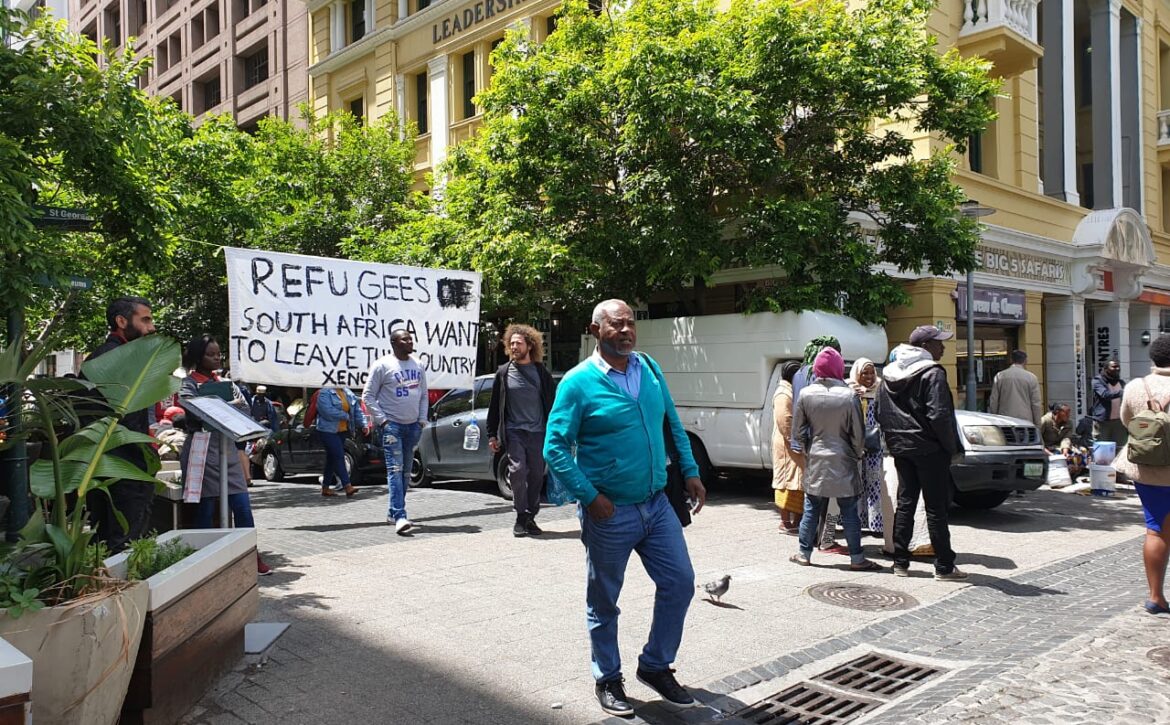
Refugees in Cape Town
Refugees sit in opposite Green Market Square in Cape Town as the city bustles with tourists, vendors and buskers. Under the banner, ‘Refugees in South Africa want to leave this country: Xenophobic,’ mothers with babies line the pavement express their vulnerability and loss. The Stalls outside in Green Market Square, whereby some foreign nationals are busy with their businesses as usual in spite of what is happening to others because they want to squatting in/outside the Mall and it’s quite sad. My eyes were highlighted by these people sitting on Cape Town streets, they want to go home and they still don’t feel safe around South Africans. I thought that this war was over but little I knew it is not. Kids are not at school because they have to be around their parents for safety reasons. Today, 29 October 2019, I witness a human experience perspective. In the midst of xenophobic sentiments within Cape Town. Some of our foreign brothers and sisters continue with business as usual at the Green Market Square. This is the ultimate balance of fighting for human rights and making a living.
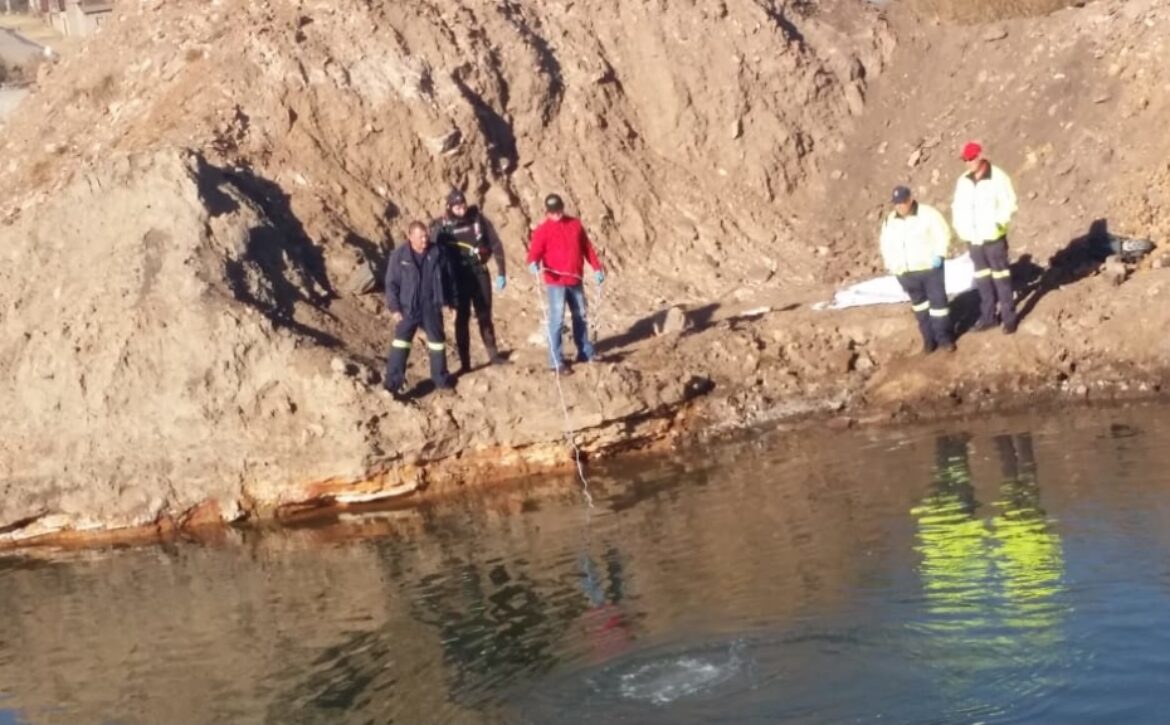
Abandoned Mine Creates Death Trap in Vosman, Mpumalanga
By Vusi Mabaso
On Sunday the 7th July around 15h00 at Vosman in Emalahleni Local Municipality – Mpumalanga, a 17 year old boy was playing street soccer with friends. The ball fell in a dam created by an abandoned mine.
The clean dam water tempted the boy to attempt to swim, then he disappeared. Police were called but they could do nothing except to call divers from Nelspruit who promised to come the following day at 08h00.
The boy was rescued the following morning, he was unfortunately found dead. The abandoned mine is Sinosi Mining.
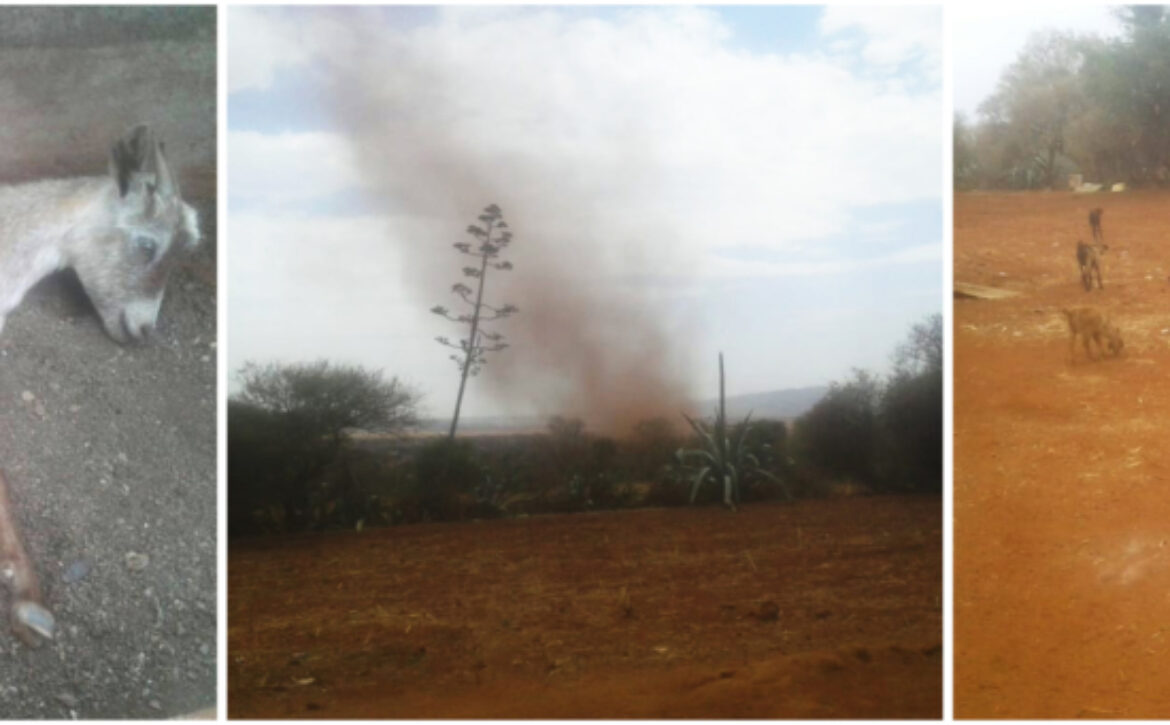
The Effects of Climate Change
By Mmabore Mogashoa
It is September in Limpopo, South Africa. Some days feel like it is still winter, very cold, or it is August because its windy and dusty is everywhere. Some days are extremely hot, and the temperatures keep rising.
The climate has changed because of the effects of what is done in the country, now we experience climate change. Today is the last day of September but the land is still dry. Despite the few hours of rain in parts of Limpopo, it is not enough for us, the animals and our land. Many animals are very thin and dying of hunger as a result.
Agriculture is in trouble as more and more of our plants are dying. The climate change is not good for our planet and everything that lives on earth. Rivers have dried up from mining and the lack of rain. Is time to stand up for climate change and save our heritage.
UN Youth Consultation Workshop, Pretoria 12-13 August 2019
By Njabulo Togane, PACSA
I attended a two-day Youth consultation workshop which was coordinated by UN South Africa to discuss the challenges, gaps and recommendations towards the National Development Plan’s (NDP) 7 pillars from a youth perspective.
Robust and constructive conversations took place to explore different channels that the youth of SA could use to work towards achieving the Sustainable Development Goals (SDGs) 2030 Agenda.
A recommendation was made to the UN by young people under a theme NOTHING FOR US, WITHOUT US. That means as young people, we want to participate in decision making platforms and have youth in strategic UN positions to drive the youth agenda.
House breaking in the neighbourhood of Palm Springs
House breaking has become fashionable. In some cases, it’s not about being unemployed or that one cannot create work for themselves, but it’s a case of being hooked up in drugs.
Someone in his 30’s was caught breaking in at house in the neighbourhood of Palm Springs in the Vaal. The community beat him up with the intent to kill him. They refused to even listen to the police till his mother came from work and rescued him from the mob. The police then arrested him. The community says they have had enough with nyaope and other crimes taking place in the neighbourhood, in particular that the troublemakers get arrested and they get bail to then come back in to the same communities.

Unemployment Driving the Selling of Fake Products in Soweto
Unemployment is a serious problem growing daily, many people loosing their jobs through restructuring and other reasons that affect mostly poor people.
In many cases people often seek for other ways to create employment for themselves once they are out of jobs. Unemployment rate in South Africa affects South Africans and people from other countries who come to South Africa to look for a better life, jobs or even start small businesses.
The issue at hand is Nivea products sold in street corners R20 for 3 which one may look at these as a bargain and at the stores one 50ml of Nivea roll-on is R20 or so, Nivea products sold in street corners are fakes and could damage the skin and people should be careful about these products although these is a way for the sellers of these products to provide for their families and pay rent if they renting or their needs.
These Nivea roll-ons are water like that looks like powder soap added in water, when it is shaken there’s a lot of foam showing at the top.