8d6c5b3c-a60f-a708-180a-9b3fe39a694d

A Community Manifesto for People’s Power 

In the run-up to local government elections in South Africa on 4 November 2026, candidates will be canvassing for your votes. This is a great opportunity for communities to set the terms of its relationship with its councillor, rather than wait to be told what those terms will be. A community manifesto can help us do that. Together with My Vote Counts and others working for greater accountability, we have developed a template for what a community manifesto could look like, and a simple guide on how to use it. You can adapt it to your reality. And if you do the work, please share stories of how it’s going in your community. Your story could inspire others to hold their politicians to account.

Read More
stand and look

Stand at the crossroads and look for the ancient ways

By Ashley Green-Thompson

For most South Africans, faith is an important part of life. Many take the teachings of their religions seriously as guides in how to live good lives. These teachings would ask of adherents to foster a better coexistence with others, and that they live out the values of justice, compassion, and kindness. This is not to deny the many contradictions that come with institutionalised religion. Too often there is judgement, moralistic superiority, and marginalisation of vulnerable people. Patriarchy, misogyny and homophobia are the most visible of these contradictions – the harm they cause is so starkly at odds with the command to love each other.  I am in awe of how faithful poor people can be to their churches when so much of formal religion relegates them to the margins of society. The church too often uses charity to avoid standing in active solidarity with poor communities in their fight against systems that impoverish them.  And then there’s the literal, uncritical, and blind interpretation of sacred texts as if they have the miraculous ability to morph into ‘how to’ manuals for every human situation and context.

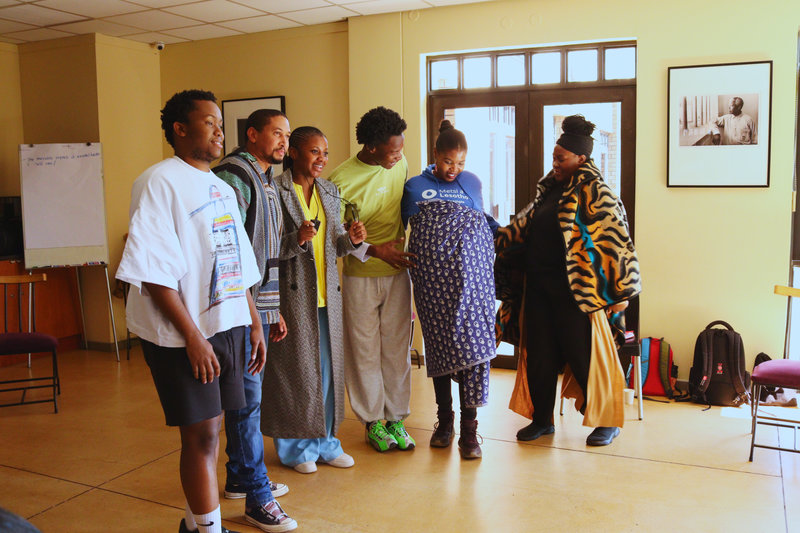
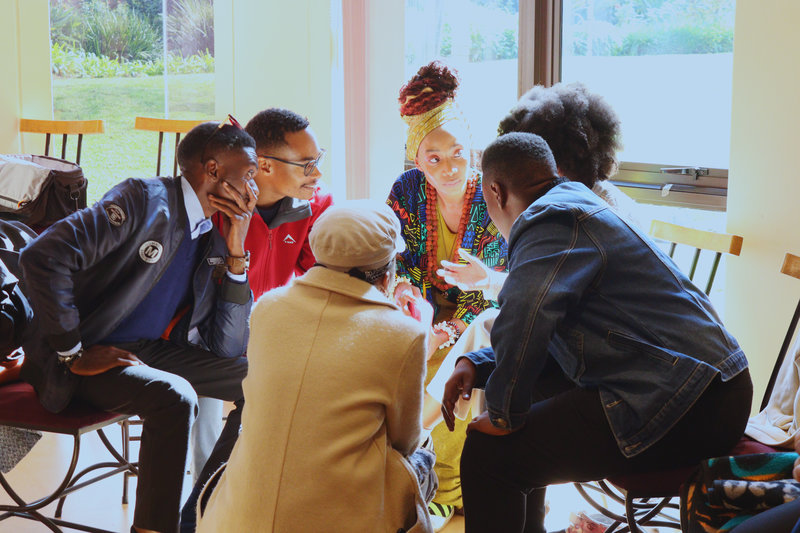
This week I spent two days with 30 Christians from South Africa, Zimbabwe and Namibia. They were an eclectic group of community organisers and agitators, pastors and priests, theologians and academics. The Joburg chill was made bearable by the beautiful surroundings of the Jesuit Institute in Auckland Park.

It was a chance to pause, not to try to solve the world’s problems, but to reflect on how we appear in the world. We were asked to consider a bible verse from the book of Jeremiah: ‘Stand at the crossroads and look; ask for the ancient paths, ask where the good way is, and walk in it.’ This was no bible punching session or Sunday sermon, but an invitation to interrogate what it is people of faith are called to do in a world so defined by a politics and practice of death.

Standing at the crossroads and looking at the world is not as simple an act as it would seem. You could get knocked down by the traffic; you could get mugged. You could irritate those travellers in a hurry to cross by standing in the way. You could become part of the traffic jam that crossroads often are. But you might also find life and companionship with travellers, with those who live and work at these confluence points of humanity. Being at the crossroads allows you to see the options that can be taken – the traveller has to choose which way to go. Standing and looking allowed us a moment to see the world and understand the context in which we live and practice our faith.

The text doesn’t just ask us to observe. We have to ask about the ancient ways, and look for the good paths amidst the hustle and bustle of the crossroads. And yet to ask is to be vulnerable – in a world where certainty and expert knowledge is so valued, not knowing appears as weakness. You also don’t know what the consequences might be of your asking. The answer might challenge us to action, or disruption, and so we would rather limit our curiosity and not ask. When you ask questions of authority, you are in danger of being cast out as a troublemaker. Institutional power – religious or secular – remains intact by limiting the questioning of that power. Someone shared an idiom that it is not the role of the cow to ask the farmer what he does with the milk.

There is the danger that we romanticise the ancient ways as the answer to the alienation of modern life. We hanker for the good old days, and yet the practices of the past do not provide simple, ready-made answers to how we deal in current challenges. We are called on to be critical and discerning about what we take from our past. The West African Sankofa bird provided a powerful image of taking what is good in our past to use for the present and future.

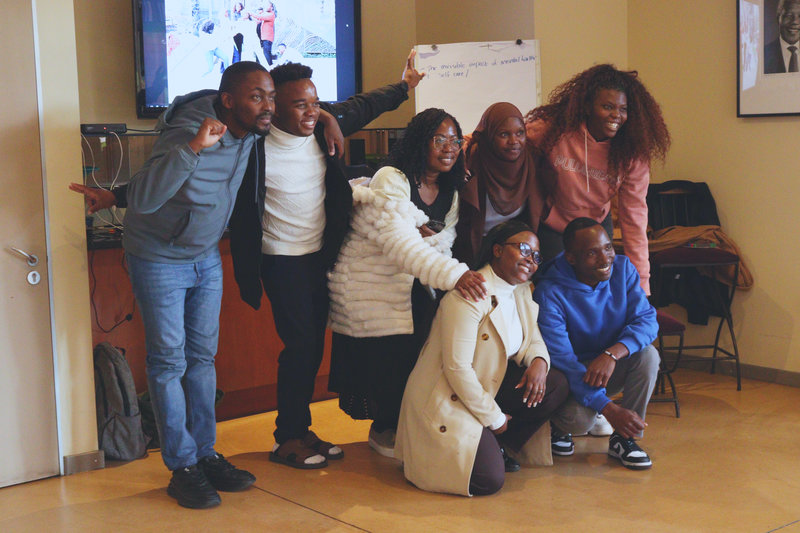
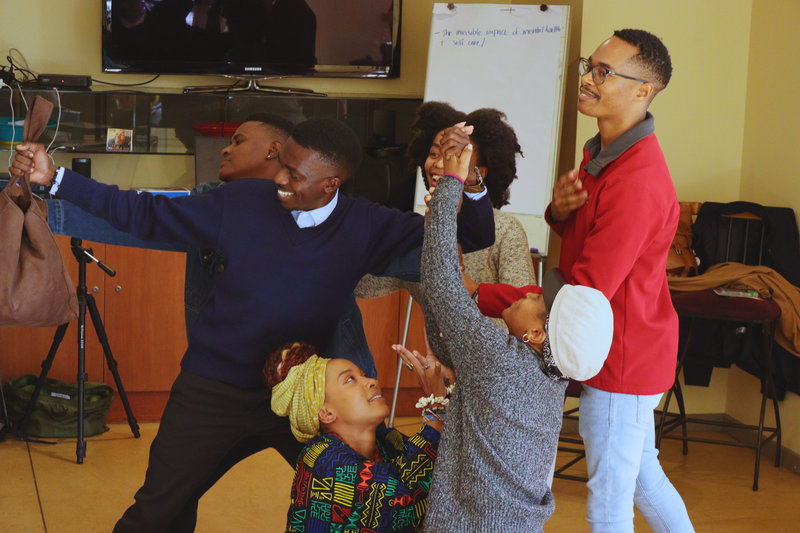
The convening was called Faith in Solidarity. It was a space to ask what faith demands of us – to be unquestioning bystanders, or to be path seekers and sojourners in the search for a more just world. In the midst of global crises and local struggles for survival, this was a moment to explore what it means to have faith in solidarity – that thing that is so elusive, but critical to building peace and justice.

Read More
Planact Townhall-55

Communities Call for Accountability and Meaningful Participation

The Durban South Community Advice Centre (DSCAC), in partnership with Africa Climate Foundation and supported by ACT Ubumbano, undertook a baseline Knowledge Assessment survey in six communities in the South Durban Basin to find out what they feel and think about the Just Energy Transition (JET).

Read More
Still 2026-05-26 134742_1.54.1

Faith in Solidarity – looking out at the crossroads

The Durban South Community Advice Centre (DSCAC), in partnership with Africa Climate Foundation and supported by ACT Ubumbano, undertook a baseline Knowledge Assessment survey in six communities in the South Durban Basin to find out what they feel and think about the Just Energy Transition (JET).

Read More
WhatsApp Image 2026-05-27 at 14.28.31

Image Gallery: Due diligence and a practice of decolonial funding

Read More
img-2

LFI: Due diligence and a practice of decolonial funding

Decolonial praxis is about sowing resources in ways that allow the roots of dignity, sovereignty, and collective flourishing to deepen. It stands against the continual uprooting of community change through inconsistent funding, short-term interventions, and dependency-producing models of support. This is not about entitlement or waiting for a saviour; rather, it is about recognising how philanthropy has often imposed precisely that posture on communities through fragmented, inconsequential project funding detached from broader social realities.

A decolonial approach requires institutions to understand the places and people they exist alongside and claim to serve, and to situate their work within the historical, political, and economic conditions shaping those communities. It asks philanthropy to confront an uncomfortable truth: too often, what is called “support” becomes a quiet induction into institutional obedience. Become legible to us on our terms or be excluded.

In grounding our decolonial praxis, we have undertaken office visits to identified potential partners to gain that very understanding and begin building relationships of humility and trust. Our site visits are therefore not acts of inspection masquerading as partnership. They are an attempt to return to an African ethic of accompaniment and mutual recognition. One cannot walk with people without knowing who they are, why they do what they do, what histories they carry, and how their work is rooted in place. Relationship matters.

This too is a practice of dignity. It interrupts the familiar power dynamic that expects those in need to travel toward those who hold resources, legitimacy, and discretionary power. One office shared that it had previously been excluded from departmental and EU funding simply because it could not afford transport. The irony is devastating. Communities most in need of support are often required to perform mobility, fluency, and institutional sophistication in order to access it. By travelling to communities ourselves, we reject that logic. We affirm instead that accompaniment begins with presence, listening, and the humility to encounter people where they are rather than where institutions expect them to be.

This requires intentionally dismantling what is often veiled as due diligence but functions as a subtle architecture of power asymmetry: take this shape, speak this language, adopt this structure, perfect this performance of professionalism, or risk exclusion. In this sense, conventional philanthropy can become less about solidarity than about disciplining communities into recognisable administrative forms. We are committed to resisting the reproduction of demeaning and subservient relationships to money and to recognising that the value of this work is not one-sided; the benefits of genuine partnership are mutual, and support must therefore be approached in a spirit of reciprocity rather than patronage.

Instead, we hold open the possibility of money as medicine, a resource that enables communities and civil society formations to participate actively in undoing the root causes of social harm. In this sense, Ubuntu must move beyond moral sentiment into the socioeconomic realm. As thinkers such as Mogobe Ramose remind us, human dignity and collective flourishing remain impossible while land, territory, labour, and the means of production remain alienated from the people. Liberation therefore cannot be reduced to symbolic inclusion within systems that continue to produce dispossession. It requires restitution, sovereignty, redistribution, and the material conditions necessary for communities to shape their own futures.

What we are finding is that communities often described as forgotten, marginal, or out of reach are already generating innovative, if sometimes rudimentary, forms of reclamation rooted in locality, mutual aid, agency, and sovereignty. They are not waiting passively for intervention. They are already building. Already adapting. Already creating infrastructures of care and survival beneath conditions of abandonment. What they often lack is not vision or legitimacy, but stable resources capable of transforming fragile survival into durable institutional presence.

This fundamentally challenges dominant ideas of sustainability. Too often, corporatised NGOs remain trapped in the exhausted cycle of one more grant, one more endowment, one more foundation, all in service of sustaining extractive and ultimately unsustainable models of civil society. Sustainability, in our context, cannot mean refining the art of begging.

Sustainability must instead mean strengthening local productive capacity, mutual aid systems, community ownership, and democratic control over resources. It means building institutions capable of remaining accountable first to the people they serve rather than to shifting donor fashions but relentlessly protecting trust through transparency and accountability with unassailable fiduciary care. This resonates deeply with Pan-Africanist and Nkrumahist traditions, which insist that freedom without economic sovereignty leaves African societies vulnerable to neocolonial dependence and perpetual extraction.

In walking with these offices, one thing becomes unmistakably clear: philanthropy should be a means toward actualisation, restoration, and reparation, not a performance of relevance or a pathway toward institutional comfort or retirement or lifestyle funds for salaried executives insulated from the conditions they theorise. We are attentive to dismantling aid architectures built on extraction, opportunism, and the quiet violence of discretionary denial.

We are not seeking partners who can merely perform change through intangible milestones and donor-friendly abstractions while the material realities of neighbours, schools, workers, families, and elders remain fundamentally untouched. We are seeking evidence of rootedness, reciprocity, courage, and community trust.

These visits therefore mark the beginning of a different dialogue, one in which we are learning to sit, listen, and be taught before we intervene. In that process, conventional understandings of funding relationships begin to crack open because people realise we are not there to intensify surveillance, demand submission, or wield institutional power through hidden conditions and arbitrary exclusion. As a result we have witnessed them opening up even the more about their true vision.

And this is where another truth becomes unavoidable. Transition without economic transformation is not liberation. The South African experience has shown this with painful clarity. The end of formal oppression means little when wealth, land, infrastructure, and economic power remain structurally concentrated. Liberation demands redistributive justice, economic sovereignty, wealth restructuring, and a decisive break from neoliberal capitalism, which continues to marginalise working-class Black communities while preserving historical patterns of dispossession beneath the language of democracy and inclusion.

What these visits are teaching us is that truly community-rooted civil society already exists. The question is whether philanthropy is prepared to resource it in ways that deepen sovereignty rather than dependency, agency rather than compliance, and collective flourishing rather than institutional self-preservation.

.

Read More
Untitled-1

Not Forgotten: An Interfaith Call to Keep Sudan in Focus and Demand Peace, 15th April 2026

We mark three painful years since the outbreak of the conflict in Sudan, a conflict which has devastated Sudanese people, scattered families, destroyed livelihoods and shaken the foundations of the nation. Women and girls bear the brunt of the crisis, facing increased violence, and severely limited access to protection and essential services. We, as faith leaders and faith-based organisations responding in Sudan, urge concrete, accountable commitments through the Berlin Conference and beyond to uphold human rights and protect civilians and frontline responders.

Sudanese local actors, including women, youth and mutual aid groups, are at the forefront of the response. Communities remain resilient, with long-standing solidarity networks. Among these, faith-based actors play a vital role through their trusted presence in vulnerable and hard-to-reach areas, delivering essential services such as food, health, nutrition and WASH, alongside livelihoods, spiritual care and psychosocial support to restore dignity and agency. 

Read full statement here.

Read More
12e79826-2c2a-8e72-e309-9dab98c2dfed

April 2026 Edition

The Durban South Community Advice Centre (DSCAC), in partnership with Africa Climate Foundation and supported by ACT Ubumbano, undertook a baseline Knowledge Assessment survey in six communities in the South Durban Basin to find out what they feel and think about the Just Energy Transition (JET). The outcome is the SDB JET Baseline Assessment Report.

These communities are affected by air polluting, coal-fuelled industries, and this research is a step to ensuring greater community voice in processes aimed at moving to sustainable and renewable energy.

Read More
dc01e999-8e5b-baac-c3da-7692d9d1f66e

Community Advice Offices: The Real Infrastructure of Justice

By Mpho Raboeane – May 2026

On Thursday, 23 April, our team met with the leadership of Community Advice Offices South Africa (CAOSA), including its Chairperson, Deputy Chief Justice Dunstan Mlambo, and acting co-directors Seth Mguni and Wayne Ncube. Our conversation returned, as it so often does, to familiar pressures facing the sector: chronic underfunding, the absence of formal recognition, and uneven state support. These challenges are longstanding and structural, shaping the daily reality of community advice offices and the people who sustain them.

Yet what stayed with me long after the meeting was not scarcity, but the extraordinary social and moral weight this sector continues to carry despite having so little material support. Community advice offices remain among the most important, and least recognised, forms of social infrastructure in South Africa.

Community advice offices occupy the space between what the law promises and what people are actually able to access. They are the places people turn to when trying to secure a birth certificate, challenge an unlawful dismissal, access a social grant, escape violence, or hold on to a home. In doing so, they become sites of trust, mediation, political education, and community organising.

This role is deeply rooted in South Africa’s history. From the 1960s through the 1980s, advice offices formed part of the wider architecture of resistance to apartheid. With the support of organisations such as the Black Sash, paralegals helped communities navigate pass laws, forced removals, labour exploitation, and the dense bureaucratic machinery used to control Black life. In that period, the law was not neutral; it was an instrument of domination. Advice offices made the law intelligible to those it was designed to exclude, carving out pathways through systems meant to frustrate, displace, and silence. In doing so, they built local power and collective resilience under immense pressure.

The democratic transition transformed South Africa’s constitutional framework but did not eliminate the distance between formal rights and lived realities. While the Constitution promises dignity, equality, and access to justice, these remain difficult to realise without practical support. Today, through CAOSA’s coordination, community advice offices operate in more than 250 locations across the country, from densely populated townships to remote rural villages, in some instances with a single office supporting dozens of surrounding communities.

Their significance lies not only in the issues they address, but in how they restore agency. To sit with someone, explain their options, guide them through a process, and accompany them through an often hostile system is a profoundly political act. It insists that the poor are not outside the law and affirms that dignity is not theoretical.

My own understanding of this work was shaped during my articles of clerkship, visiting communities dispossessed of their ancestral land and engaged in long struggles for justice, reparation, and return. I learned from the deeply knowledgeable Bab’Mtshali, whose understanding combined legal insight with lived history. In Orange Farm, I witnessed forms of community empowerment and economic solidarity through initiatives such as Bab’Bricks and the local advice office. Alongside Mme Josephine, I was part of providing legal advice and referral support in contexts where even small interventions could make a tangible difference.

Deputy Chief Justice Mlambo himself cut his teeth in advice offices across Soweto, where early exposure to community-based justice work helped shape a legal career grounded in access, dignity, and accountability, values that continue to inform his leadership today, including as Chairperson of CAOSA.

And yet, despite the sector’s undeniable importance, it remains structurally precarious. Advice offices operate with inconsistent funding, limited recognition, and minimal institutional protection, while being expected to absorb the consequences of deep and persistent inequality.

This contradiction reveals something fundamental about how justice is maintained in South Africa. Much of what keeps communities functioning does not happen through well-resourced institutions. It happens through under-recognised labour, carried out by people who continue to serve despite instability because they understand what is at stake.

The advice office sector quietly holds together the relationship between people and the promises of democracy. If we are serious about justice, this sector cannot remain an afterthought. Supporting paralegals is not peripheral social support; it is an investment in the everyday functioning of democracy. In a society still marked by inequality, community advice offices sustain the conditions under which democratic life becomes possible.

That is their work – every single day.

Read More
2c60f3cf-7fba-796e-1088-d6c7df8177df

Community manifestos: why now, and how to build one

In the months before a local government election, something shifts in how candidates engage with the wards they hope to represent. Doors that have stayed closed for four years are knocked on. Promises that no one was making last year are made freely. Once the votes are counted, and the winning candidate starts earning a salary, their engagement fades to almost nothing. And, as most of us know and have experience, most of them will not be back until the next election approaches.

Local Government Election 2026 — a moment of community power

The Community Manifestos initiative starts from a simple observation. In the weeks before an election, candidates need votes more than any resident needs any candidate. It is the only moment in five years when the balance of power tips toward the people living in a ward – the one moment during which a community can set the terms of its relationship with its councillor, rather than wait to be told what those terms will be. A community manifesto is potentially what an organised community can do in that moment to take power back.

The political system we enjoy does not favour community power. Most councillors are deployed by their parties, often into wards they have no connection to. Once elected, their loyalty runs upward – to party leadership and municipal management – rather than to the people they are meant to serve. Fewer residents believe their ballot will change anything. Voter turnout has fallen from 58 per cent in 2000 to 46 per cent in 2021. What people see in their wards day to day gives them little reason to disagree with those who have stopped voting.

The 2026 elections present a particular opportunity. The political landscape is more competitive than it has been in a generation, with coalitions common and independent candidates standing in growing numbers. In many wards the margin between winning and losing is small, and an organised, informed community has real power.

What is a community manifesto?

A community manifesto rests on three things. The first is the priorities the ward agrees through a structured, broad-reaching process –  water, sanitation, housing, safety, roads, or whatever residents themselves identify as urgent. The second is the standards expected of the councillor, for example: living in the ward, being contactable, communicating honestly, declaring financial interests, and treating every resident with the same respect. The third is the accountability practices required once that councillor is elected: regular public report-back meetings, written progress reports, an independent oversight group, a written commitment to step down if they clearly break the compact, and anything else the community considers reasonable.

Once the manifesto is finalised, every candidate standing for the ward is invited to a public event at which they are asked to sign a compact committing to its priorities, standards, and accountability practices. The signing event is public on purpose. Its power comes not only from the signature but from how visibly organised the ward is and how broad the process behind the document was. Candidates who refuse to sign do so openly, in front of the residents whose votes they are asking for. In a competitive ward where people are organised and paying attention, refusing to sign can be a costly position.

How a community manifesto is built

The Community Manifesto process is designed to fit the rhythms of community life rather than disrupt them. The work can run over roughly three months, in five steps, and depends on what most community formations already have: organised people, communication channels, and a willingness to follow through. It does not require outside consultants or significant new funding. What it does require is coordination, time, and the patience to do each step properly.

Step one — organising and spreading the word.

A coordinator within the community formation makes contact with the local groups already at work in the area (for example, residents’ associations, faith communities, advice offices, sports clubs, street committees) and brings them into the conversation. Notices go out through WhatsApp groups, Facebook pages, community noticeboards, and word of mouth at gatherings residents already attend. The aim is to reach as many people living in the ward as possible, so that every household has a fair chance of hearing that the process is under way and can take part if they choose to.

Step two — a survey across the whole ward.

This is the step that the credibility of the whole exercise depends on. The survey could be done in two ways at once: an online form distributed through social media, and door-to-door visits conducted by trained community members. Both routes are necessary, because the door-to-door route is what reaches the residents who cannot otherwise show up — pensioners, residents without internet access, and those for whom a large public meeting is not a comfortable place to speak. It also provides a point of connection, building a more human engagement. The questions are simple: what are the biggest problems in this ward, what should be expected of a councillor, and how should that councillor account to residents? Every household reached strengthens the manifesto. Every household missed weakens it.

Step three — sharing the findings back.

Survey results are taken to the community through open meetings and through smaller, focused discussions with the groups whose voices are easily missed in larger gatherings. The intention is not to present a finished manifesto but to test, refine, and settle on the priorities and standards that will go into one. This is the step at which the document moves from being the work of a coordinator to being the work of the ward.

Step four — drafting and circulating.

A small drafting team writes the manifesto, drawing on the survey, the meetings, and any existing community charter, constitution, or earlier consultations. The draft is shared widely before it is finalised so that residents can suggest changes. The credibility of the document is built in this step as much as in the survey. The more people who have had genuine input, the harder it becomes for any candidate to dismiss the manifesto as the view of a small group.
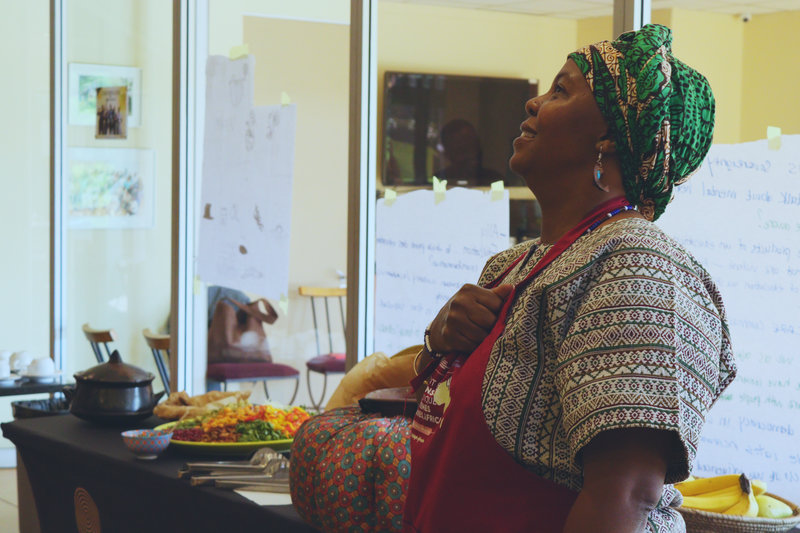
Step five — the public signing event.

All candidates standing for the ward are invited to a public town hall meeting at which the manifesto is presented and they are asked to sign the compact in full view of the community. This must happen before the formal election campaign begins. In the weeks before the campaign, an organised community with specific written demands has the most power — and the most ability to shape what candidates have to commit to in order to be taken seriously as leaders.

What needs to happen now

The hardest part of the process, in practice, is reaching the residents who are routinely left out. Pensioners, women, young people, residents without internet access, those who do not usually attend public meetings — whether their views are in the manifesto is what gives it real authority. This is also the part of the process most often shortened under time pressure, and it is worth resisting that pressure. A manifesto that genuinely represents the ward is one a candidate cannot easily refuse to sign.

Three months is enough time. It is also not very much time. The work that needs to happen now is the easiest to begin: identifying the coordinator, mapping the local structures already in place, agreeing the lines of communication, and drawing up the survey. Everything else depends on those early decisions. The window will not stay open, and the work to use it must begin before the campaigning does.

* The manifestos work sits inside two larger programmes that frame and support it. The first is the work of My Vote Counts through the Democracy from Below – Civic Formations Collaboration for People’s Power 2026, where the manifesto initiative is one of several instruments for shifting power back to communities. The second is the ACT Ubumbano Accountability Project, whose ground-level community conversations have provided much of the lived evidence on which the manifesto template now rests. The two programmes are complementary: the civic formations collaboration provides the political framing and the link to a potential wider movement for a Right to Recall in South African law, with the Accountability Project providing the empirical foundation – what residents in real wards actually say they need from a councillor, and what they would accept as a minimum standard of accountability.

May 2026

Read More