Save the Date: Annual Solidarity Hub  

Save the Date: Annual Solidarity Hub  

The 2026 ACT Ubumbano Solidarity Hub will happen in Johannesburg on 13-14 October. There is always a constraint on the number of participants we can accommodate. We will be inviting applications from activists in Southern Africa and will allocate space according to regional representation, gender and age demographics, and past experience. Look out for a separate email announcement in the next few weeks.

Read More
Imprimir

June 2026 Edition

The Durban South Community Advice Centre (DSCAC), in partnership with Africa Climate Foundation and supported by ACT Ubumbano, undertook a baseline Knowledge Assessment survey in six communities in the South Durban Basin to find out what they feel and think about the Just Energy Transition (JET). The outcome is the SDB JET Baseline Assessment Report.

These communities are affected by air polluting, coal-fuelled industries, and this research is a step to ensuring greater community voice in processes aimed at moving to sustainable and renewable energy.

Read More

Moving Money Differently in the Crucible of Transition

The pilot phase in the establishment of the Leverage Fund Institute has seen the first round of grants being made in South Africa. Mpho Raboeane shares her personal reflection on contracting these grants with CBOs, advice offices, and on stewarding shared resources through law, trust and liberatory decolonial praxis

There are moments in the work that appear, from the outside, to be ordinary. A contract signed. A banking detail verified. A compliance document received. A grant agreement sent back with initials in all the right places. But beneath these administrative gestures, something like a tender justice is happening: resources are beginning to move towards people and places long asked to survive on too little.

Successfully contracting the first round of grants with community-based organisations and advice offices feels, to me, like bringing nebulous ideals and politics into concrete, albeit transitional, infrastructure. It is delicate, practical, urgent and sacred all at once. And a stark reminder that money has memory, that paperwork has power, and that the way we move resources can either repeat old violences or rehearse new freedoms.

There is a structural friction here that I cannot romanticise away. To anchor decolonial stewardship, authentic community agency and radical trust inside the architecture of the legal system is to feel two worlds rub against each other: one reaching for interconnectedness, repair and life; the other trained in containment, exclusion and control. And still, we enter that friction consciously, asking whether contracts, compliance and grant administration can be made to serve relationship, redistribution and repair rather than suspicion, extraction and punishment.

To steward shared resources is to begin with humility. These funds do not belong to us privately; we are temporary custodians asked to listen for where resources are being called, move them with integrity, and account for them without turning accountability into suspicion. A liberatory decolonial praxis asks more of us than efficiency: it asks us to notice the colonial afterlives still living inside funding systems, while also being careful with shared resources because people’s lives and material conditions are at stake.

The contract as transition infrastructure

Alnoor Ladha and Lynn Murphy’s Post-Capitalist Philanthropy: Healing Wealth in the Time of Collapse helps me name this paradox. Their work asks philanthropy to confront the history of wealth accumulation, the logic of late capitalism, and the need for deeper shifts in how we relate, redistribute and repair. The Transition Resource Circle describes this as work to alchemise and liberate capital in service of Life, honouring historical entanglements, lineage, reconciliation and healing. That language helps me understand the contract as transition infrastructure: an imperfect container built inside the old world to protect the tender experiments of the next one.

In this frame, the legal shell becomes a shield rather than a shrine. The grant agreement, compliance checklist and audit trail are not holy in themselves; they are tools. They become dangerous when we mistake them for the work, but useful when they protect resources from capture, misuse or withdrawal from the commons. Compliance, at its best, becomes an act of care: not obedience to a master, but the careful tending of a structure so that quiet, radical redistribution can happen inside it.

Linda Alvarez’s work on Discovering Agreement and Conscious Contracts also offers language for what this process was reaching towards: legally enforceable agreements that support alignment, creativity and a return to relationship when change or disagreement arises. This matters because traditional contracts often anticipate betrayal before they imagine care, allocating blame before asking what the relationship is for.

To de-escalate the contract is not to make it weak. It is to make it more honest about what sustains the work. The preamble, shared purpose, values and mutual recognition should not sit ornamentally at the front of an agreement; they should be the pulse that calls parties back to relationship when conflict, delay or uncertainty appears.

A practice of moving differently

I keep thinking about what it means to move money differently: not only faster, though speed matters when organisations are stretched; not only more cleanly, though governance matters when resources are shared. I mean differently in a deeper sense: with memory, consent, reverence for local knowledge, and an awareness that every system we build teaches people what we believe about them.

This is the ethics of the bilingual practitioner. We have to remain fluent in the radical, life-affirming language of decoloniality, relationality and community agency, while also being fluent enough in the dry language of indemnities, governance protocols, reporting duties and liability to prevent that language from doing harm. The work is not to let the sterile alphabet of law swallow the living grammar of liberation, but to bend the tool towards protection.

That is why this first round has felt like a crucible. Not a perfect practice, not a purified politics, but an honest attempt to build something strong enough to withstand scrutiny and soft enough to remember why it exists. A practice where reporting can become learning, compliance can protect rather than punish, and community organisations are not treated as risks to be managed but as co-stewards of a shared future.

I want to acknowledge this first round softly: not as a finish line, and not as proof that the work is now simple, but as a beginning that required many hands, many reminders, many acts of coordination, and a shared belief that advice offices and CBOs deserve to be resourced with seriousness and care.

Perhaps this is the lesson I am carrying most closely: resourcing justice is not only about transferring funds. It is about the spirit in which we transfer them, the structures we build around them, and the courage to keep those structures answerable to life. It is about refusing to let bureaucracy harden the heart of the work, and instead bending cold tools of enclosure into protective sanctuaries where dignity can travel with the money.

Read More
Still 2026-06-30 140624_1.115.1_result

Image Gallery: Youth Solidarity Hub

Read More
11-2048×731

Reflections from The Youth Hub in Johannesburg

By Rifqah Tifloen

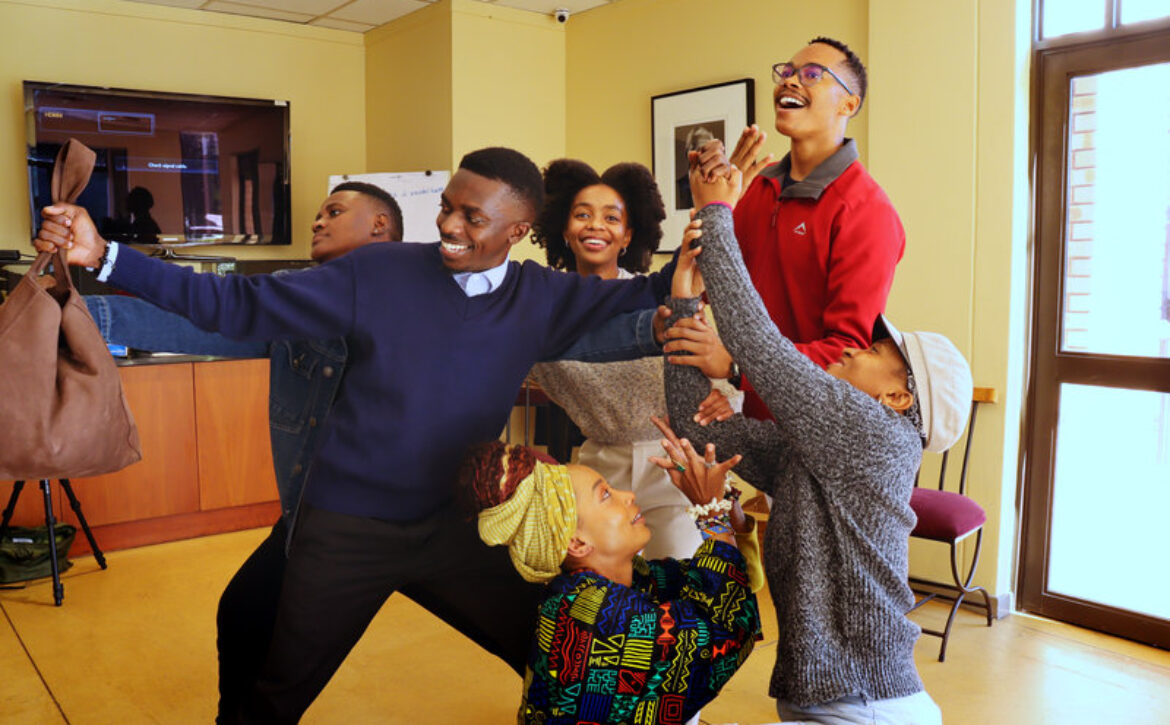
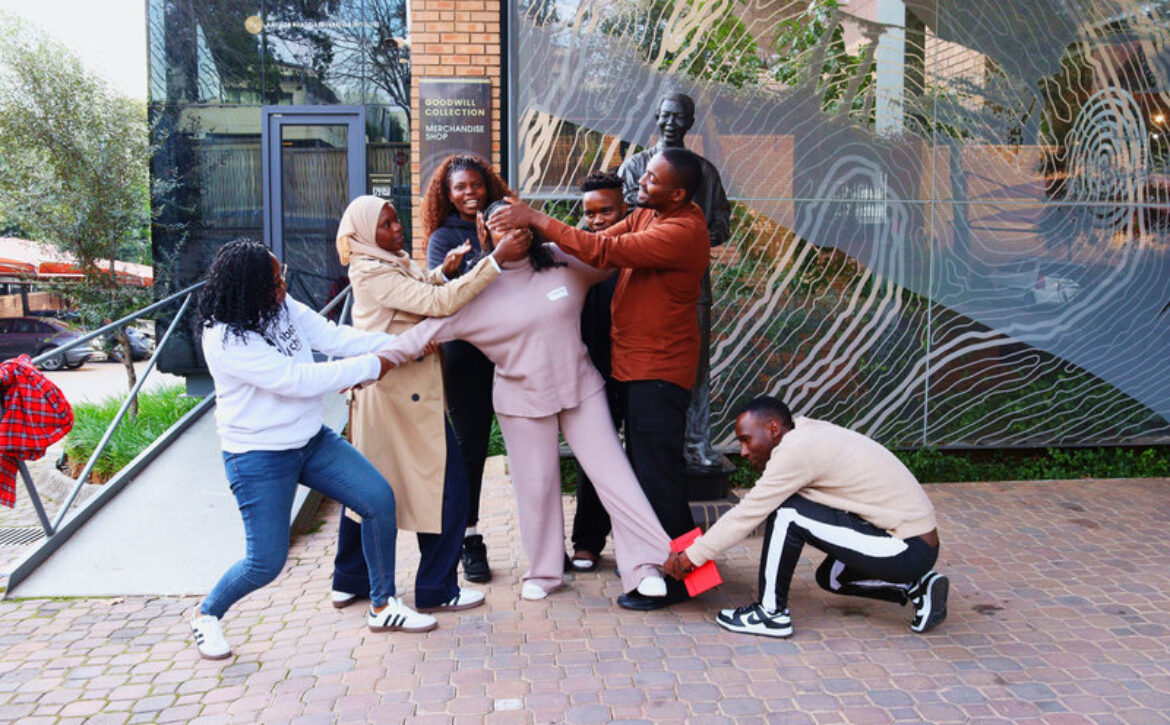
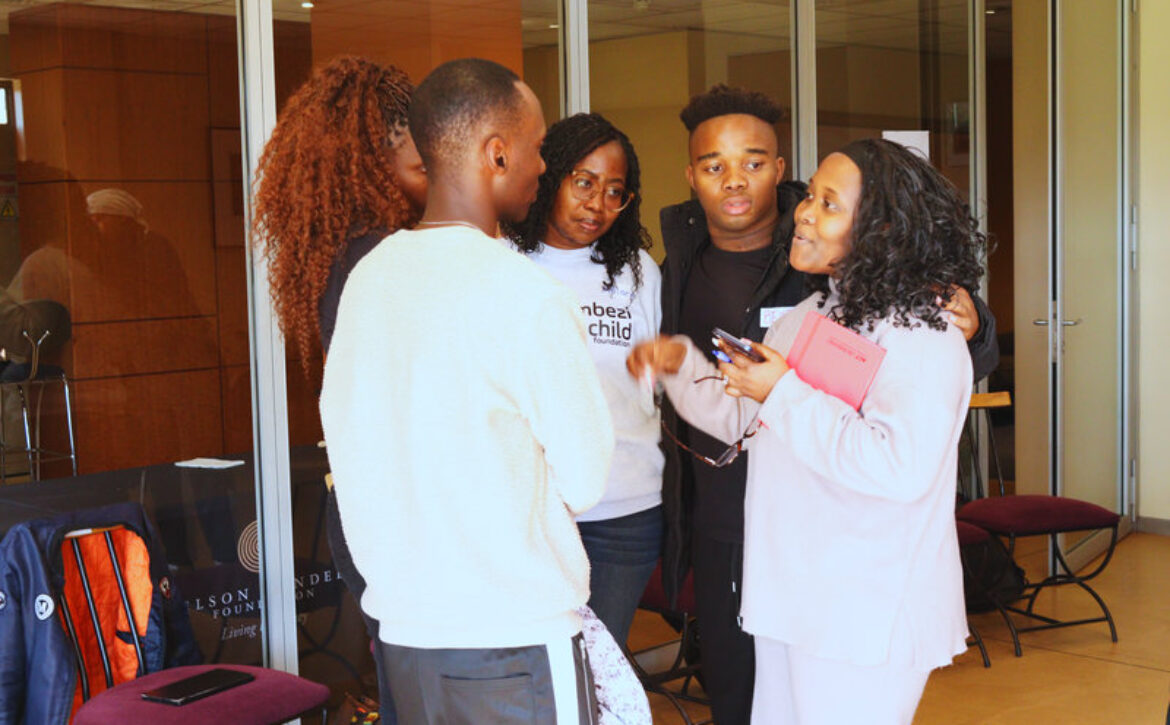
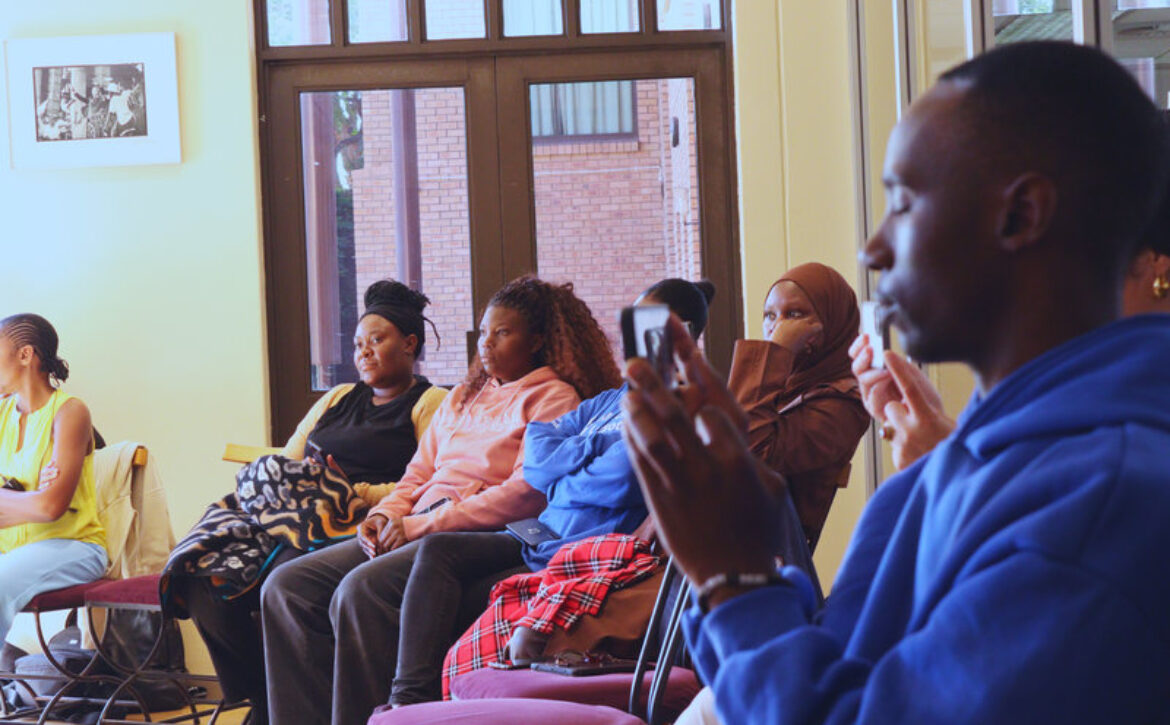
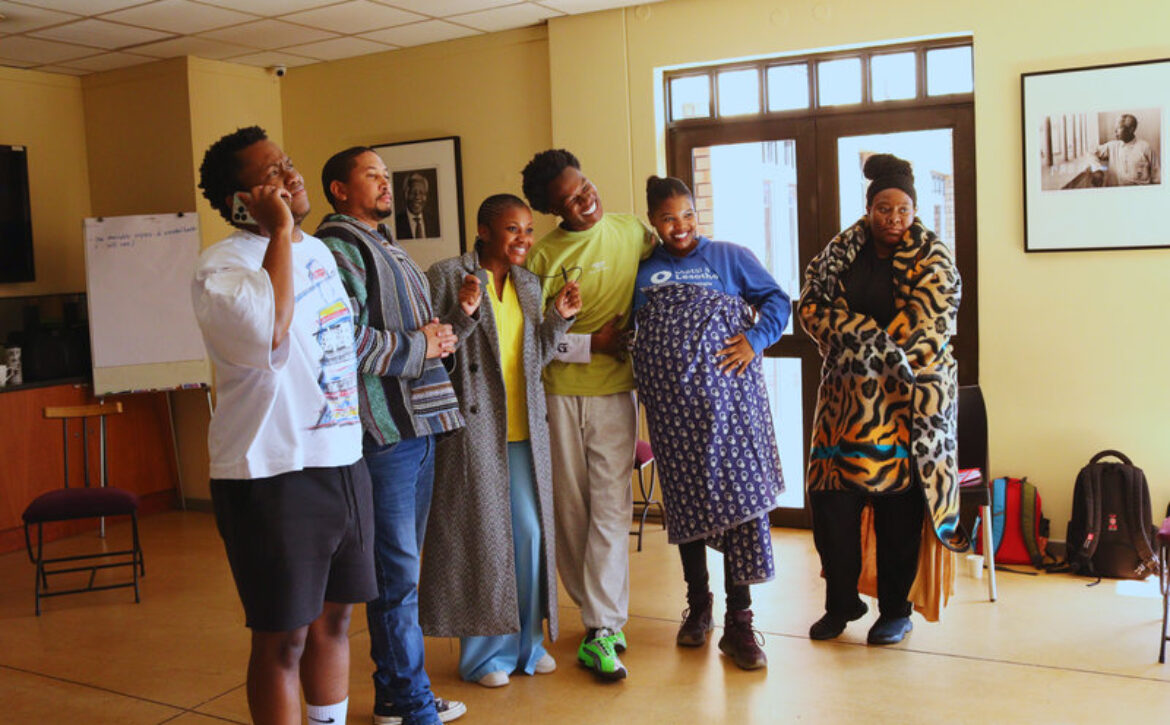
Last week, I sat in a room at the Nelson Mandela Foundation with young activists for the Youth Hub from eight African countries — South Africa, Malawi, Zambia, Namibia, Mozambique, Zimbabwe, Lesotho, and Botswana. Many had crossed borders to get there, uncertain and fearful while outside, anti-migrant marches were being planned to shut down the city. Inside, we were talking about solidarity in the same walls where Nelson Mandela once worked.

In the days afterwards I kept returning to the conversations we had at the hub. We talked about our solidarity practice, the cost of activism, AI, power, multiple genocides, infrastructures of care, mental health, belonging, religion, we disagreed about what solidarity requires and we talked about what young people are already doing that the sector may not recognise as activism. Around the same time, I read a Substack essay by Khadija Patel, where she argues that “the right to move is the most contested right of our time. It is being challenged everywhere, by walls and wire and hostile policy and organised violence”. And yet, we were still able to gather.

This was exactly the contradiction the Hub was operating inside of. A country built by people who once needed passes to move through their own land is now, in places, asking other Africans to produce the same kind of paperwork to prove they are allowed to exist here.

As part of the pre-work for the learning hub, youth activists were invited to bring an object, photograph, or item that represented where they come from and the struggle they are most engaged in, something more personal. It was an invitation to begin with ourselves.

I found myself reflecting on how often, in social justice work, there exists a separation from what we do and who we are, even though the two are deeply connected. For me, as a Muslim, the idea of tawḥīd—Oneness—shapes my practice. Our lives, our relationships, and our struggles are not separate from one another. It asks me to keep returning to the work of resisting division, both around me and within me.

The hub seemed to enact exactly this. A photograph of a first volunteer mission sixteen years earlier, with a uniform that cost more than the year’s stipend. A dissertation journal opened to a quote from Angela Davis on the discipline of imagining a different world. A disposable menstrual pad beside a reuseable one. A notepad carrying compressed grief. A Capulana cloth.  A cowrie shell. A paintbrush. A jazz vinyl record. A cup of water.

None of these were presentations. None of these were organisational strategies. They were lives.

Although the struggles were different—menstrual dignity, polluted rivers, mental health, climate justice, education, belonging—the objects showed much more. They spoke about relationship. About memory. About care. About places and people that had made these young activists who they were before they ever joined an organisation.

At a time when movements such as March and March have amplified anti-migrant sentiment and Afrophobic narratives, what does it mean for organisations like ours—organisations that claim solidarity as both a value and a practice—to convene across borders? The timing of the Hub made these questions impossible to avoid.

What does it mean to invite African partners into South Africa at this particular moment? Is creating a shared space enough, or does the moment ask something more of us? How do we make our position against Afrophobia visible—not only in our statements, but in the way we host, accompany, advocate, and act? What responsibilities do we carry towards our fellow Africans who continue to experience violence, displacement, and exclusion in a country that has so often spoken the language of liberation?

Perhaps this is why beginning with ourselves mattered. Before we could ask what solidarity requires of organisations, we first had to remember what it asks of people.

These are not comfortable questions, nor are there easy answers. But perhaps they are precisely the questions that solidarity demands we sit with. If solidarity exists only within the walls of a convening, or in statements, does it endure? What might it look like for solidarity to become a sustained practice rather than an event—one that is willing to confront the realities of the present while imagining different possibilities for the future?

South Africa itself invites us into this tension. If the Freedom Charter still asks us to believe that South Africa belongs to all who live in it, then who is responsible for making that true — and are we willing to be counted among them?

Read More
a77f56bc-aa5d-f814-2844-2caf5e90aeb9

ACT Ubumbano supports the Siyafana Sonke call for unity  

The team at ACT Ubumbano is worried about the dangerous anti-migrant mobilisation happening in South Africa right now, and has pledged to collaborate with others who refuse to target poor and vulnerable people as the cause of the country’s problems. ACT Ubumbano is committed to the dignity of every human being, and rejects the simplistic scapegoating of migrant and refugee communities. Please read the statement In Defence of Unity, and click on the Siyafana Backabuddy Campaign to lend your support to those who seek a more human response to our challenges.

Read More
16cf119d-78a4-90f7-5fda-28ce74ebe350

May 2026 Edition

The Durban South Community Advice Centre (DSCAC), in partnership with Africa Climate Foundation and supported by ACT Ubumbano, undertook a baseline Knowledge Assessment survey in six communities in the South Durban Basin to find out what they feel and think about the Just Energy Transition (JET). The outcome is the SDB JET Baseline Assessment Report.

These communities are affected by air polluting, coal-fuelled industries, and this research is a step to ensuring greater community voice in processes aimed at moving to sustainable and renewable energy.

Read More
f27c539f-bf31-42bc-f5e9-0f17b1ea5f4a

Support the Generating Better Livelihoods (GBL) Project 

The GBL project focuses on helping SASSA child support grant beneficiaries, specifically young women aged 18 to 35 by connecting them with opportunities, including skills training, education, job placements and entrepreneurship. The project’s goal is to create an enabling environment and provide the tools they need to achieve sustainable livelihoods.

Through coaching, the GBL project helps young women identify their entrepreneurial pathway. With the right tools, they become business owners who contribute to their household and, ultimately, the community. With the investment they need, they can earn, grow and support their families.

Watch a short film of how a combination of social grants and GBL support is helping young people build better livelihoods for their families. Support 6 GBL participants start earning an income from their businesses here.

Read More
9715d30e-626d-3a52-8622-d30daa26fbaf

Solidarity Support Facility 

Decolonial praxis is about sowing resources in ways that allow the roots of dignity, sovereignty, and collective flourishing to deepen. It stands against the continual uprooting of community change through inconsistent funding, short-term interventions, and dependency-producing models of support. This is not about entitlement or waiting for a saviour; rather, it is about recognising how philanthropy has often imposed precisely that posture on communities through fragmented, inconsequential project funding detached from broader social realities.

A decolonial approach requires institutions to understand the places and people they exist alongside and claim to serve, and to situate their work within the historical, political, and economic conditions shaping those communities. It asks philanthropy to confront an uncomfortable truth: too often, what is called “support” becomes a quiet induction into institutional obedience. Become legible to us on our terms or be excluded.

In grounding our decolonial praxis, we have undertaken office visits to identified potential partners to gain that very understanding and begin building relationships of humility and trust. Our site visits are therefore not acts of inspection masquerading as partnership. They are an attempt to return to an African ethic of accompaniment and mutual recognition. One cannot walk with people without knowing who they are, why they do what they do, what histories they carry, and how their work is rooted in place. Relationship matters.

This too is a practice of dignity. It interrupts the familiar power dynamic that expects those in need to travel toward those who hold resources, legitimacy, and discretionary power. One office shared that it had previously been excluded from departmental and EU funding simply because it could not afford transport. The irony is devastating. Communities most in need of support are often required to perform mobility, fluency, and institutional sophistication in order to access it. By travelling to communities ourselves, we reject that logic. We affirm instead that accompaniment begins with presence, listening, and the humility to encounter people where they are rather than where institutions expect them to be.

This requires intentionally dismantling what is often veiled as due diligence but functions as a subtle architecture of power asymmetry: take this shape, speak this language, adopt this structure, perfect this performance of professionalism, or risk exclusion. In this sense, conventional philanthropy can become less about solidarity than about disciplining communities into recognisable administrative forms. We are committed to resisting the reproduction of demeaning and subservient relationships to money and to recognising that the value of this work is not one-sided; the benefits of genuine partnership are mutual, and support must therefore be approached in a spirit of reciprocity rather than patronage.

Instead, we hold open the possibility of money as medicine, a resource that enables communities and civil society formations to participate actively in undoing the root causes of social harm. In this sense, Ubuntu must move beyond moral sentiment into the socioeconomic realm. As thinkers such as Mogobe Ramose remind us, human dignity and collective flourishing remain impossible while land, territory, labour, and the means of production remain alienated from the people. Liberation therefore cannot be reduced to symbolic inclusion within systems that continue to produce dispossession. It requires restitution, sovereignty, redistribution, and the material conditions necessary for communities to shape their own futures.

What we are finding is that communities often described as forgotten, marginal, or out of reach are already generating innovative, if sometimes rudimentary, forms of reclamation rooted in locality, mutual aid, agency, and sovereignty. They are not waiting passively for intervention. They are already building. Already adapting. Already creating infrastructures of care and survival beneath conditions of abandonment. What they often lack is not vision or legitimacy, but stable resources capable of transforming fragile survival into durable institutional presence.

This fundamentally challenges dominant ideas of sustainability. Too often, corporatised NGOs remain trapped in the exhausted cycle of one more grant, one more endowment, one more foundation, all in service of sustaining extractive and ultimately unsustainable models of civil society. Sustainability, in our context, cannot mean refining the art of begging.

Sustainability must instead mean strengthening local productive capacity, mutual aid systems, community ownership, and democratic control over resources. It means building institutions capable of remaining accountable first to the people they serve rather than to shifting donor fashions but relentlessly protecting trust through transparency and accountability with unassailable fiduciary care. This resonates deeply with Pan-Africanist and Nkrumahist traditions, which insist that freedom without economic sovereignty leaves African societies vulnerable to neocolonial dependence and perpetual extraction.

In walking with these offices, one thing becomes unmistakably clear: philanthropy should be a means toward actualisation, restoration, and reparation, not a performance of relevance or a pathway toward institutional comfort or retirement or lifestyle funds for salaried executives insulated from the conditions they theorise. We are attentive to dismantling aid architectures built on extraction, opportunism, and the quiet violence of discretionary denial.

We are not seeking partners who can merely perform change through intangible milestones and donor-friendly abstractions while the material realities of neighbours, schools, workers, families, and elders remain fundamentally untouched. We are seeking evidence of rootedness, reciprocity, courage, and community trust.

These visits therefore mark the beginning of a different dialogue, one in which we are learning to sit, listen, and be taught before we intervene. In that process, conventional understandings of funding relationships begin to crack open because people realise we are not there to intensify surveillance, demand submission, or wield institutional power through hidden conditions and arbitrary exclusion. As a result we have witnessed them opening up even the more about their true vision.

And this is where another truth becomes unavoidable. Transition without economic transformation is not liberation. The South African experience has shown this with painful clarity. The end of formal oppression means little when wealth, land, infrastructure, and economic power remain structurally concentrated. Liberation demands redistributive justice, economic sovereignty, wealth restructuring, and a decisive break from neoliberal capitalism, which continues to marginalise working-class Black communities while preserving historical patterns of dispossession beneath the language of democracy and inclusion.

What these visits are teaching us is that truly community-rooted civil society already exists. The question is whether philanthropy is prepared to resource it in ways that deepen sovereignty rather than dependency, agency rather than compliance, and collective flourishing rather than institutional self-preservation.


.

Read More
0952f435-177a-8a27-2d86-9c14bbd85cd4

Communities Call for Accountability and Meaningful Participation 

On 12 May 2026, Planact, SIVIO Institute and ACT Ubumbano hosted a Town Hall in Johannesburg to share findings from the 2025 Citizens’ Perceptions and Expectations Survey. 40 residents from Skoonplaas, Rabie Ridge, Lawley Station, Wattville, Thembelihle, Choba, Msholozi, the Inner-City Forum, Freedom Park, Kuvuki, and Brakpan Old Location confirmed that the survey reflected the lived realities and challenges faced by these communities. They spoke about how many public participation processes often feel like “tick-box exercises” that fail to result in meaningful change. Despite this, there remains a strong commitment to collective action and citizen-led solutions, and they discussed practical responses such as petitions, social media advocacy, civic education, community monitoring committees, and community manifestos to clearly articulate local priorities.
 
Keep an eye out for a podcast conversation featuring community members and a survey enumerator, hopefully in our next newsletter. Click here to see Town Hall Photos.

Read More