Category: Case Studies

Screenshot 2026-03-02 113112

Stories of Change – Documenting the Impact of ACT Ubumbano

We invited some of our partners to reflect on what difference ACT Ubumbano has made in their work. The outcome is a rich collection of stories of change ranging from the personal journeys of activists through to changes in organisational practice. Click here to read ‘Stories of Change’

Read More
Untitled-1-2048×1075

Case Studies from Communities of Faith in the Region

Twelve organisations participated in a series of interfaith dialogues to identify opportunities for engaging more effectively within faith communities. As a result, twelve case studies and 3 interfaith briefs addressing issues of gender-based violence, sexual and reproductive health and rights and teenage pregnancy were produced.

Themed, “We Can No Longer Be Silent as We Are Called to Uphold Human Dignity for All Creation,” the dialogues convened organisations of Bahai, Christian, Muslim and Traditionalist faiths from seven countries in southern Africa. These publications were supported through micro-grants and technical assistance from Faith to Action Network and ACT Ubumbano.

Case Studies

  1. #FAITHACTINGTOGETHER – Towards Improved Collaboration to end GBV in South Africa
  2. ACT Alliance – Joint Ecumenical Action Responding to Gender-Based Violence
  3. ACT Alliance Malawi Forum – Faith Based Approach to addressing Gender Based Violence
  4. ACT Alliance Zimbabwe – No longer silent, raising Faith- Gender Champions
  5. Anglican Diocese of Natal
  6. Blantyre Synod Health and Development Commission
  7. Evangelical Lutheran Church in Southern Africa
  8. Freedom from Fear – Methodists Against Gender Based Violence
  9. Inclusion, Dignity and Justice in Human Sexuality
  10. Mobilising the Prophets and Prophetesses in the Apostolic Community for Women and Girls’ Rights in Zimbabwe
  11. No longer a myth
  12. Voice for Youth – Promoting young people’s sexual and reproductive health and rights

Read More
185

Young Women Speak Out – February 2020

In the South African context, there are many people who feel that their voices are unheard or deliberately silenced.

Ubumbano Voice is a tool developed by ACT Ubumbano to raise the voice of people who are fighting for their dignity, for justice. It is a platform for community activists to share stories, resources and information, and to support local communities and organisations in their struggle for change.

Young women’s voices are particularly silenced. This is a group that is very vulnerable to poverty, unemployment, HIV and gender-based violence. Ubumbano Voice, with the support of activists, provides the opportunity for young women to share their stories. In a series of interviews, young women were specifically asked what challenges they face as young women in their communities. This booklet is the result of these interviews, and of extracts from stories posted by women on the App.

The lived experiences and challenges these young women face can be stark and even overwhelming. It is important that we remember that this publication is about young women talking about their own lives, but it is not the complete story of their lives.

Why then is it important that these stories of challenges are published and find a wider audience?

It shows that people, in this case young women, can tell their own stories – they don’t need others to speak on their behalf, to claim to be “a voice for the voiceless.”

Telling your own story is often the first powerful action step towards change. Naming the issues can provide the opportunity to learn from it and see new opportunities. Voice is more than just theory, it is action.

For these reasons, this publication does not attempt to analyse or find solutions – it simply creates an opportunity for unheard voices to be heard.

Read More
Screenshot 2026-02-16 111536

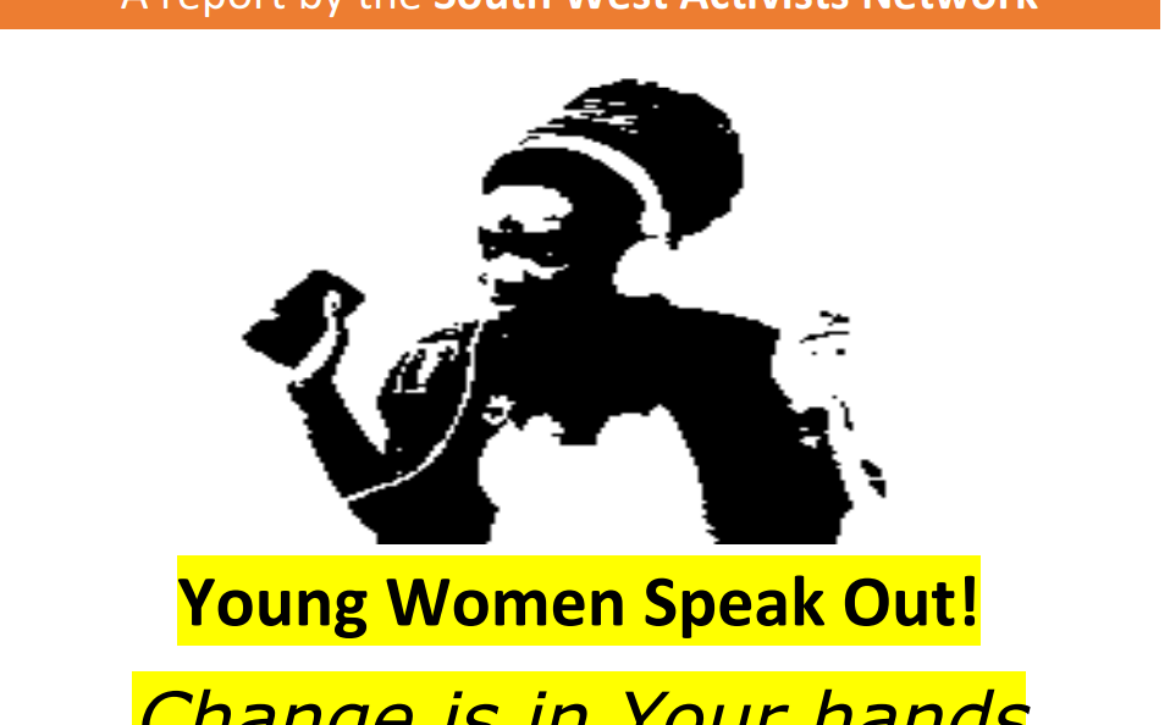
Young Women Speak Out!

Activists in the South West Activists Network, talked with young women in townships of the south west Johannesburg over August to November 2019. Young women were asked to say what challenges they faced as young women living in the townships.

Young women talked about how poverty and unemployment affected them, the difficulties of finding work or creating their own business.

While they pointed to not having money and resources as a problem, they also talked about the how the disrespect and pressure within families, from teachers and friends. They say that they are pushed in directions that lead to destruction in their life.

They said they are not safe, even in their own backyards from violent attacks. Often this is fuelled by alcohol and drugs. Mostly, it arises from the traditional attitude of men, which is that that women are their properties and they can do whatever they want with them.

These conditions make young women very unsafe. They are easily pressured or mislead into unsafe sex. Pregnancy at an early age is a big a crisis in the township. Worse still, many young women contract HIV because young men resist using condoms.

Read More