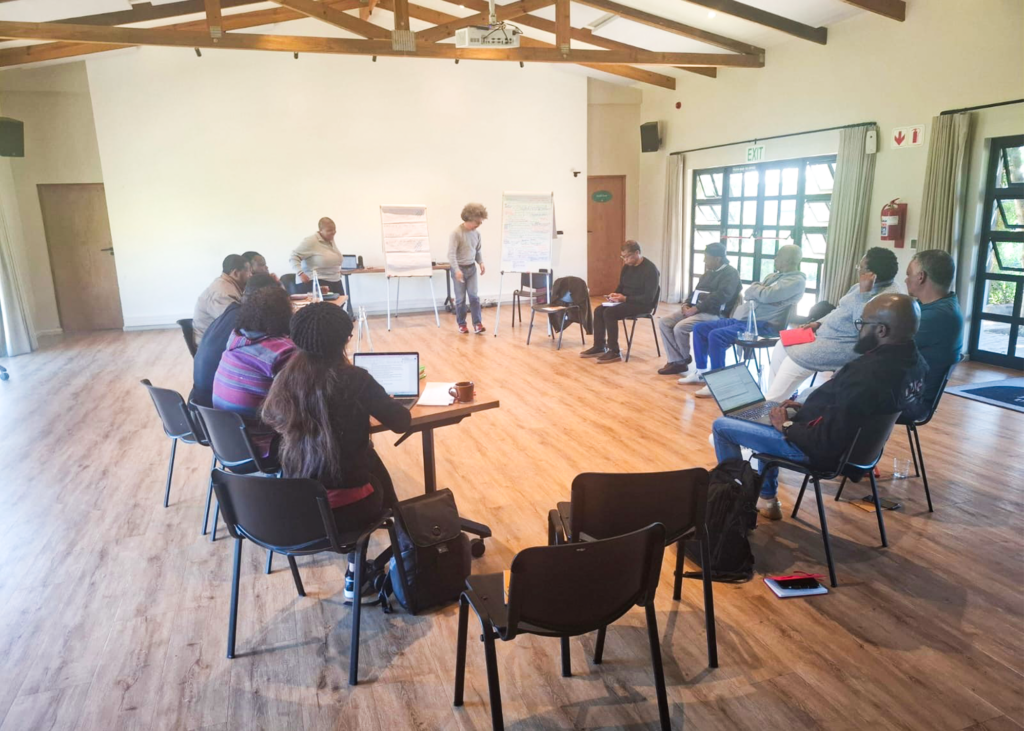
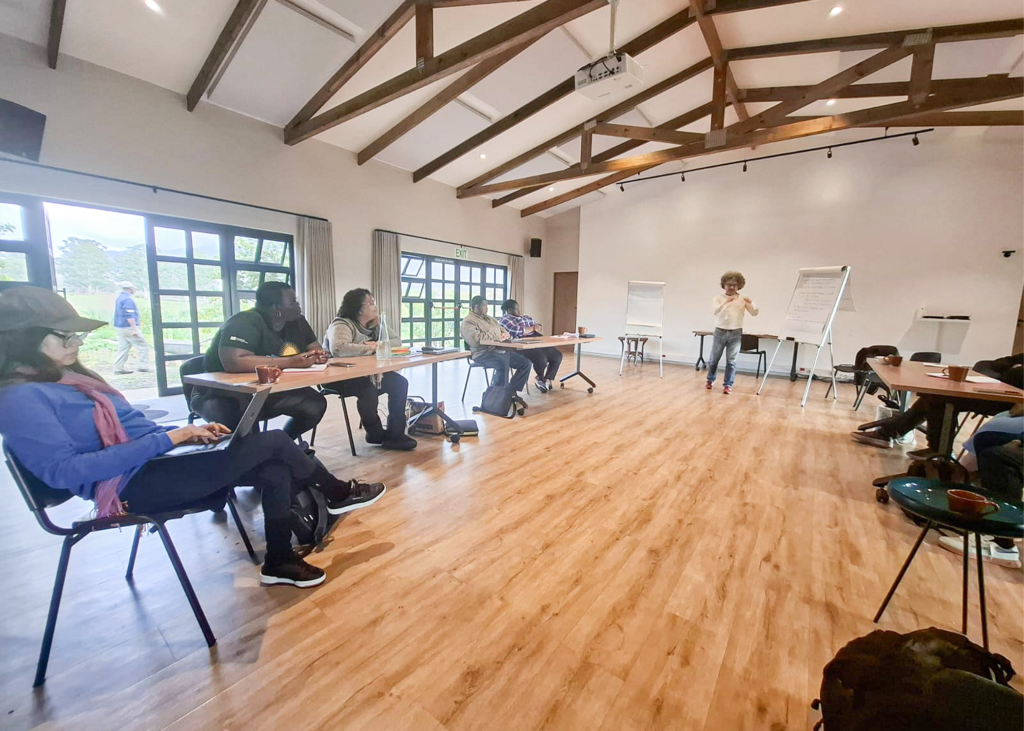
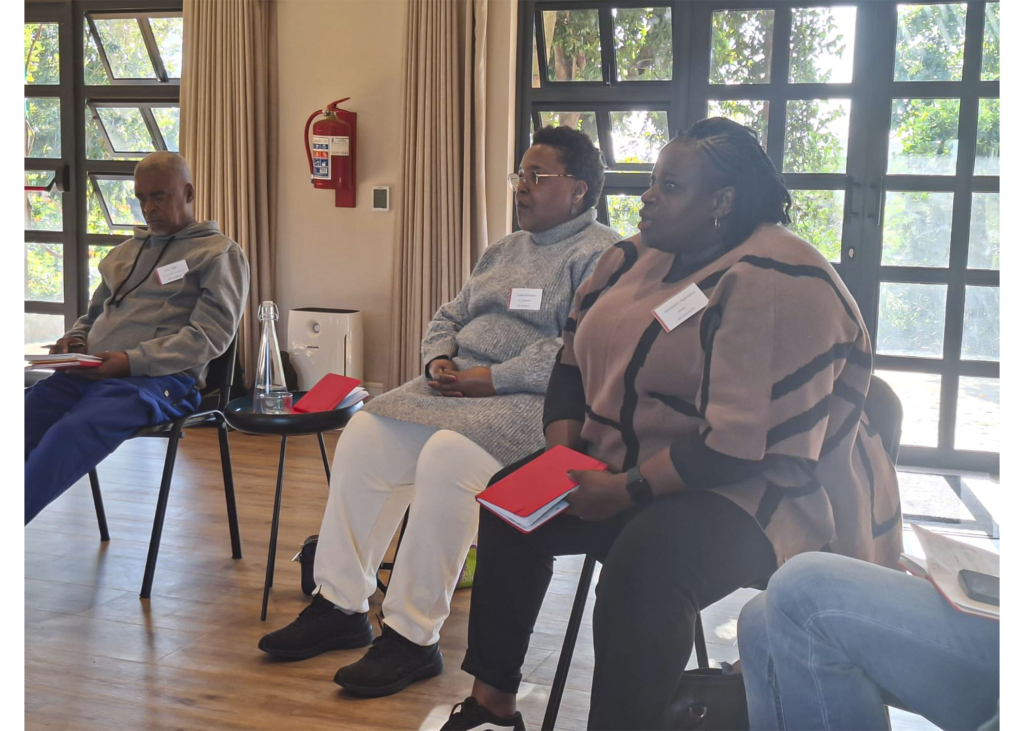
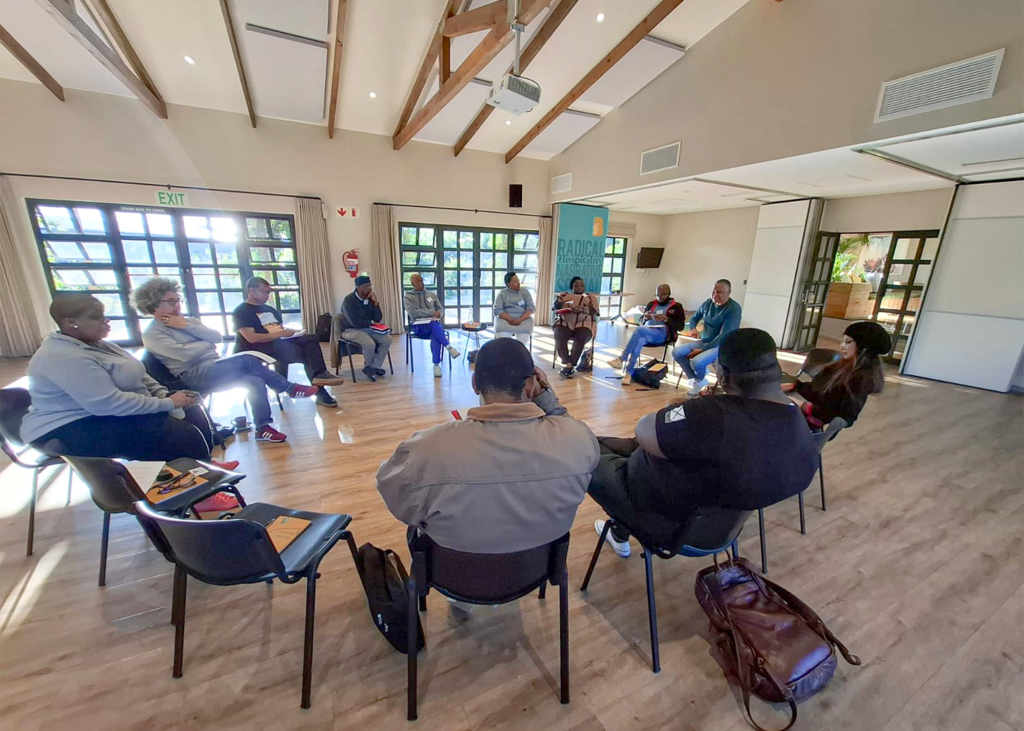
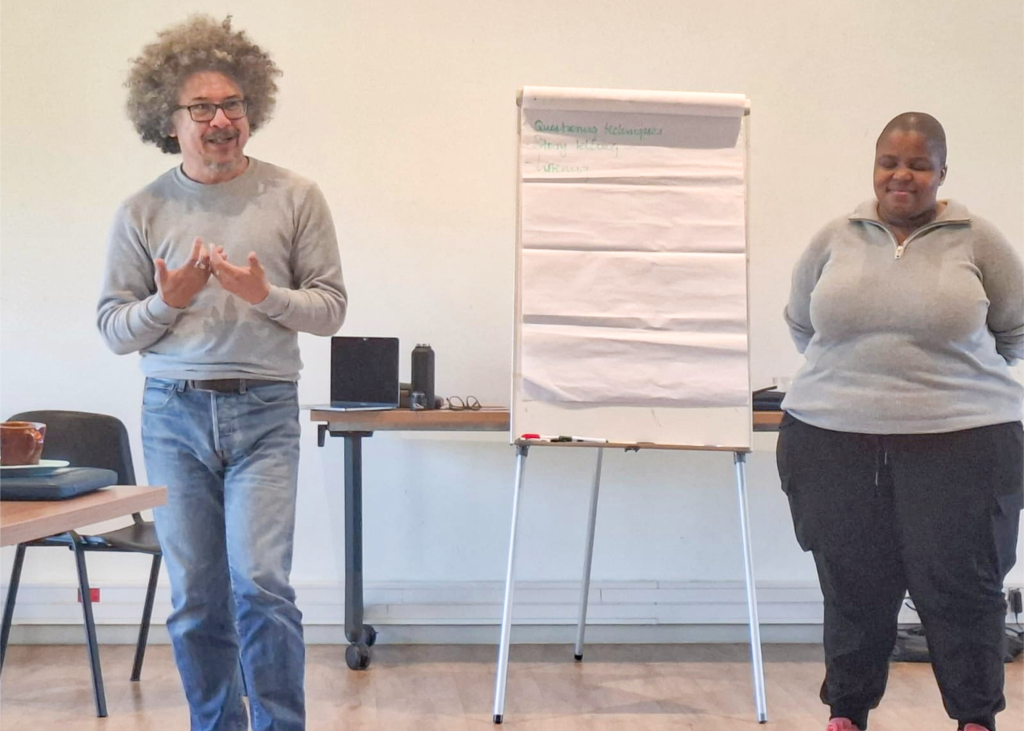
In June 2025, the project team met at Bertha Retreat in the Western Cape from the 4th to the 6th for a planning session on community engagement for the ‘Accountability Project’. The team comprised Crystal West and Akhona Siswana from Development Action Group; David Pieters and Colin Ogle from Durban South Community Advice Centre; Brian Adams from Surplus People Project; Fred Kusambiza–Kiingi and Mike Makwela from Planact; Nontando Ngamlana and Lindokuhle Vellem from Afesis; Keamogetswe Seipato from My Vote Counts; Ashley Green-Thompson, Thabo Chaba, and Pumla Mabizela from ACT Ubumbano; Veronica Sigamoney from Ethnoequity Research Insights; and Allan Moolman from Dala Consulting.
What This Project Is About
The ACT Ubumbano Accountability Project is about helping people living and working in South be better able to hold powerful people and institutions accountable. Rather than telling communities what accountability should look like, the community engagement pilot project takes a different approach. It starts by listening to what communities already know and experience, then builds from there.
What We Learned from the Planning Workshop
The reality communities are living with
When the project team sat down to design this work, they spent time talking honestly about what’s happening in communities right now. What they heard wasn’t easy, but it was important. Many, if not most people are just trying to survive day-to-day, are concerned about safety and security and the rising cost of living, are worried about where their next meal is coming from or whether they will have enough money for electricity. In these conditions it’s hard to think about bigger questions like holding your local councillor accountable, let alone confronting State failures. Perhaps most concerning, the workshop participants talked about communities living with trauma and depression. Thers is sense that societal level trauma is as yet unrecognised and not being taken seriously. People feel stuck with systems they know aren’t working, but they don’t see a way to change things. Some communities don’t even know what options or rights they have. What is often diagnosed as apathy may really be a deeper psychosocial issue.
Rethinking what accountability means
A critical insight emerging from the workshop was that accountability means different things to different people. There was agreement there was a need to step back from assumptions about what accountability looks like and really listen to how communities understand and experience it. There was a recognition that every community probably has its own ways of dealing with accountability, both formal systems like going to the police or local government, and informal ones like talking to elders or community leaders. The goal isn’t to replace these systems but to understand them better and help communities use them more effectively. And possibly, to use this community practice to shape accountability processes more broadly.
What the project wants to learn
- Instead of coming in with ready-made solutions, the project team identified four big questions they want to explore with communities. How do people actually experience accountability in their daily lives? What does it look like?
- when someone is held accountable or when accountability fails at the interpersonal level? And, what does ‘good accountability’ feel like? What are it’s markers/features?
- What gets in the way of ‘good accountability’. When people try to hold someone accountable and it doesn’t work, what went wrong? Is it lack of information, fear of retaliation, unclear processes, or something else entirely?
- What do communities need to feel more powerful and effective? What tools, information, or support would help people feel confident about demanding accountability?
- In addition, there is a need to celebrate what’s already working. Every community has some systems and practices that do create accountability, even if they’re not perfect. Understanding these successes can help build on them.
Community engagement is ongoing, including training facilitators who will lead accountability conversations in their communities from September to November 2025.