11-2048×731

Reflections on Colonialism and Solidarity

By Ashley Green-Thompson

Colonialism continues to find expression in the big political issues of our world. It is apparent every day in the skewed power distribution of multi-lateral institutions where former colonial powers enjoy sway over policy and priority setting, and the former colonies fight for their place at the table. Colonialism is essentially extractive, and its legacy is found in imbalances and inequalities of trade – Africa notably remains primarily an exporter of natural resources upon which the global economy is dependent. The benefits from this trade do little to address the historic deficit created in Africa by colonialism and slavery. These phenomena dealt severe blows to Africa’s development path when they removed the continent’s prime asset, its people, and when they arbitrarily created borders that shattered the viable social infrastructures that existed before.

Over the years there has been collaboration, to some extent, among those concerned with building a more just world to address some of the most egregious systems that cause suffering. The global movement to end apartheid is perhaps one of the greatest mobilisations of people in the north and south, and people in former colonies have enjoyed support in dealing with a range of injustices and crises – from civil war and famine to environmental disaster, from LGBTI struggles to defending human rights.

The problem is that too often the motivation for much of this support is rooted in the notion of charity, or a sense of guilty obligation that those who have must help those who do not. This is important when there is the immediacy of hunger or danger – people need to eat if they are starving, or need to find shelter immediately if there is a storm or conflict. If the giver does not reflect on the place from which this impulse to help comes, the danger is that the relationship between them and the receiver will remain one shaped by colonial attitudes. The giving is done according to the terms set by the giver who will forever have the resources – they alone will determine how they wish to give those resources. The receiver has no say – the desperation of their situation leaves them vulnerable to the whims of the giver. There is a massive inequality of power and agency in that relationship, and while it might respond to the immediate crisis, it does not lead to a fundamental change in the situation.

This inequality of power and agency is replicated in the funding of development projects as well. Social upliftment projects are important, but they stop short of seeking the transformation of the system that created the need for the project in the first place.

This inability to challenge the structures and root causes of justice, of colonial relations, is one of the great indictments of the development aid system. Too often it serves to ameliorate the worst excesses of current global neo-colonial economic and political systems. Funders from the global north very seldom support work that seeks the genuine overhaul – overthrow? – of systems that perpetuate colonial patterns of extraction and marginalisation.

Neo-colonial structures and relations are built by political elites who are beholden to those with money. Political parties and the electrical systems that characterise the ‘democratic’ world are expensive to maintain. Parties and politicians are reliant on funding from wealthy individuals and their corporations, and the policy decisions they make are always going to favour action that maintains prevailing systems rather than what will bring genuine change in the lives of those at the margins. This political-economic elite pact is manifest in states sponsoring particular sides in civil conflicts, in the advancing protectionist policies for those within the original colonial fold that create barriers to entry by those outside, and in using their financial resources to limit / reduce the disaffection of those who suffer poverty and exclusion under a global system still defined by colonial patterns.

NGOs and those in the global south who rely on development assistance to support their struggle against injustice are often compromised by the need to ‘comply’ with the requirements and priorities set by those providing the funding. Funding proposals are written with the aim of convincing the decision makers – how the funds will be used must align with the interests or priorities of those who give the money. It is very much a relationship of inequality. The significance of this is that activists and community organisers spend too much time and resources trying to comply rather than in waging the struggle for change.

What is needed is an authentic solidarity to define relationships and behaviours, one that goes beyond simply ‘charity’. Authentic solidarity requires that the people living in those parts of the world that have benefited so fundamentally from colonialism, including Germany, walk with the people from the global south and start seeing their struggles as shared. When you walk together with someone, you approach obstacles together and must look for solutions together. This solidarity demands that agendas are informed by those who are the forefront of resisting their oppression, so priorities for compliance are not the preserve of those who have the resources.

There is not enough commitment to finding new ways of developing a shared agenda that will enable this shared journey. What we are seeing instead is a retreat to parochial responses to the political and economic crises of our time. Development partners talk of reduced funding, increased compliance requirements, and entrenching of conditional support for work that is aligned with priorities set in Europe, all of which make social justice work in the south that much more difficult. Instead there should be agitation for a deepened commitment to collaboration, to harmonisation of support to the global south, and to challenging the political elites to do better at breaking unjust neo-colonial arrangements.

Development funding is not about charity, but remains a historic debt owed for slavery and colonialism. It is a valuable resource to support resistance and agency by marginalised communities that seek to transform neo-colonial structures and attitudes. It can be an enabler of solidarity that speaks of a shared concern for the problems caused by colonialism and greed, and promotes a shared exploration of what solutions there may be.

As individuals we do not have the power to reform the United Nations and other institutions, nor to stop the atrocities in Palestine, Sudan and elsewhere. We are capable of changing ourselves and our own understandings of solidarity and justice, and then connecting with others who share a commitment to genuine decolonisation that will guide our search for new ways of doing things.
Read More
19

Call for proposals: Community actions for social justice and solidarity

ACT Ubumbano invites proposals from community and activist organisations, and organisations of faith, for support for social justice action.  These actions may be responses to the impact of environmental, gender and economic injustice on communities, or they may be campaigns to change particular situations that communities are struggling with. The action must be implemented and completed by 30 November 2025.

If you received a grant in 2024 and are still in the process of implementing it and/or have not yet provided a final report, including accounting for the funding, please do not apply to allow other organisations an opportunity. There will be another call for proposals in 2026

Proposals may be for a maximum of ZAR25,000 (Twenty-five thousand South African Rands). Amounts allocated may be less than this to reach as many applicants as possible.

Proposals must be completed and submitted online at https://gmsp.smapply.io/prog/ACT_SSF/

The deadline for submission is 14h00 (SAST) on Tuesday 4 March 2025. You are encouraged to complete the online application as early as possible. You can watch a 3-minute video here to guide you with your online submission.

What will be supported?

There is a limited budget available for this call, so ACT Ubumbano consider the following in allocating grants:

  1. The proposed work is led by or directly involves people who are affected by the issue.
  2. The proposed work seeks to change the root causes or conditions of injustice.
  3. The proposed work has potential to bring new knowledge that can be shared with others.
  4. The budget is in proportion to the action that will be undertaken.
  5. The organisation has demonstrated capability to undertake the action, or has a plan to work with others who have the capability.

Who can apply?

The opportunity is open to any registered non-profit organisation or association that is part of the ACT Ubumbano network, or willing to work with ACT Ubumbano partner organisations in Botswana, Lesotho, Malawi, Mozambique, Namibia, South Africa, Swaziland (Eswatini), Zambia, and Zimbabwe.

Any funding is intended to help with taking action for change. It is not intended for general or core support for organisations, although some of the funds may  be used for organisational costs.

What will NOT be supported!

ACT Ubumbano will NOT support any action that undermines the dignity of people and the earth, or that are:

  • Homophobic or discriminatory against people from the LGBTI+ community,
  • Sexist and undermining of the dignity of women,
  • Xenophobic and discriminatory against foreign nationals,
  • Generally harmful to any vulnerable or marginalised group in society, or
  • Environmentally destructive and working against efforts to fight climate change.

Furthermore, purchase of livestock, building materials, or inputs that are used in development work (sewing machines, tools, etc), cannot be supported. Relief and humanitarian work cannot be supported, nor can scholarships, school fees, and conference attendance costs.

Who is ACT Ubumbano?

ACT Ubumbano is a resource to organisations working for social justice in different fields. We believe that there is strength in collaboration, and by sharing knowledge and experience – as well as by linking up for joint action where possible – communities can more effectively defend their dignity and bring change.

Questions can be addressed to thabo@actubumbano.org

Read More
20

Reclaiming Agency: Embracing Discomfort and the Path to Decolonisation

By Zanele Maphosa-Makombe

I find myself at a crossroads. In academic spaces, I write protest; in activist spaces, I write in academic jargon. I was asked to reflect on decolonisation in philanthropy and solidarity—not in theory, but in a way that speaks to lived struggles. The challenge isn’t just simplifying language; it’s making these ideas real, urgent, and transformative.

To do this, I will draw heavily from my Masters research “Expression of Solidarity and Decolonisation of Philanthropy in Southern Africa”, and a book recommended by a comrade,  Hospicing Modernity by Vanessa Machado de Oliveira.  These works offer different but complementary perspectives, one grounded in the realities of philanthropy in Southern Africa, the other challenging us to sit with the discomfort of systems in decline. Together, they push us to move beyond rhetoric and towards action, to reimagine not just how philanthropy operates, but whether parts of it should continue to exist at all.

Read More
21

Solidarity and the global ACT Alliance

The rise of conservatism in many parts of the world demands that we strengthen our resolve to stand more firmly with those who resist their further marginalisation. Even as ACT Ubumbano tries to convene space for activists to connect with each other, so too do we need to connect with allies in other parts of the world. ACT Ubumbano is a member of the ACT Alliance so that we can strengthen the solidarity that is needed so badly right now.

The ACT Alliance General Assembly last year made important commitments to action on a range of issues affecting humanity. That spirit is captured in a line from the statement on Palestine that says: ‘True and lasting peace requires addressing the root causes of the conflict, ensuring justice, adherence to international conventions, an end to the illegal occupation, and the upholding of human rights.’

Click General Assembly Statements to read these commitments to solidarity and action, and to find out more about the ACT Alliance.

Read More
q

The Promise of 2025

I wasn’t even paying attention and it’s already February. Welcome to our first newsletter for 2025. The team had a great planning session in January, and we confirmed to do more of the things that were effective in supporting local struggles and amplifying community voice. Keep an eye on this newsletter for planned activities in the year. The team wishes you all the strength, love, and joy that comes from knowing we are not alone in fighting for a just and fair world.

Read More
all

ACT Ubumbano at the ACT Alliance General Assembly

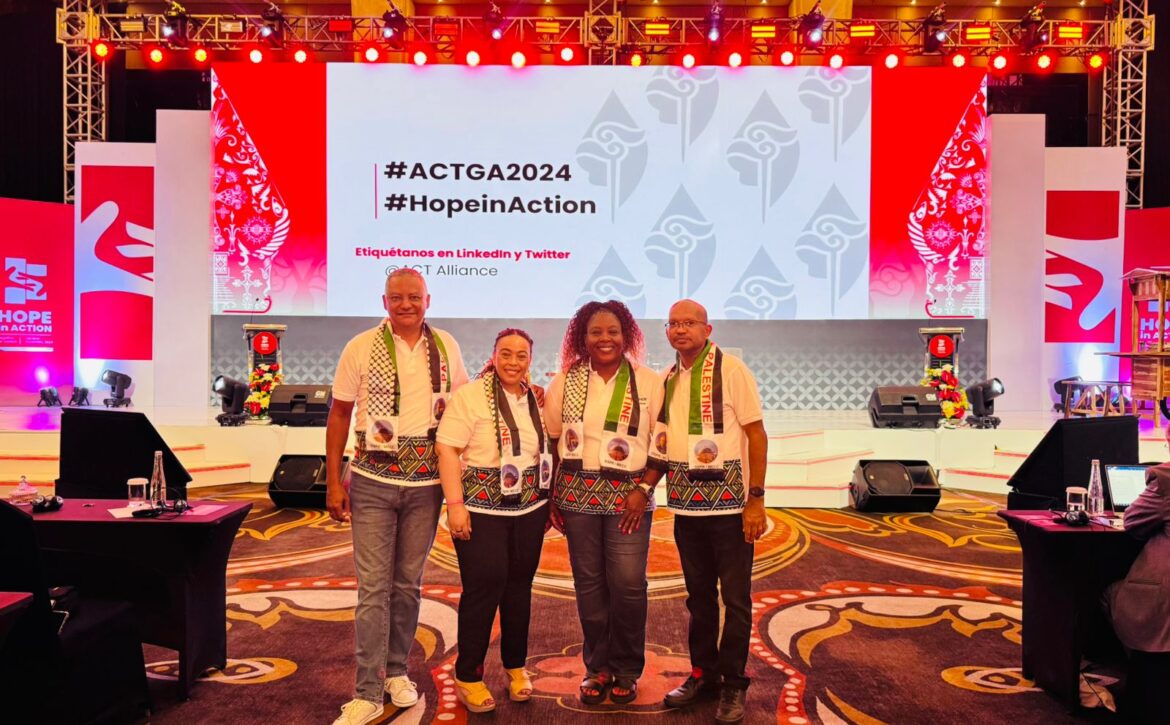
ACT Ubumbano was present for the first time as a full voting member at the General Assembly of the ACT Alliance in October in Yogyakarta, Indonesia. With over 150 member churches and organisations from 120 countries, ACT Alliance is an important voice for hope, justice, and peace in the world. At the Assembly, Zanele contributed to a session on anti-racism and decolonization, while Ashley engaged in discussions on faith-based advocacy.

Read the Assembly message here and visit the https://actalliance.org/ to find out more and connect with others also seeking solidarity in the struggle for a more just world. Click here for some pictures of ACT Ubumbano and friends at the Assembly.

Read More
faith

Faith Actors for Justice Regional Workshop

Zanele and Thabo participated in the Faith Actors for Justice Regional Communities of Practice Workshop in Mombasa, Kenya in November. The host, Faith to Action Network, convened different faith leaders from East, Southern and Horn of Africa. This was a safe and collaborative space to share experiences and actionable recommendations for advancing gender justice and women’s rights. ACT Ubumbano shared insights on community-led action and solidarity, fostering deeper connections among those present. The event recognised innovations within the faith sector through an awards evening. Find out more about F2A Network here. You can see workshop pictures here.

Read More
23

ACT Ubumbano at the Greenbelt Festival, UK

We shared a platform with Christian Aid at the annual Greenbelt Festival in Britain. The organisers describe the Festival as  “ […] somewhere to believe in. We’re somewhere artistry meets activism, where the political meets the practical. We’re somewhere to come together once a year, where we’re as likely to dream up a better world as we are to dance and debate, to pray and to party.” Ashley joined others in a session called ‘Dream On – Make Poverty History”. You can watch it here, and the short Festival highlights video here.

Read More
24

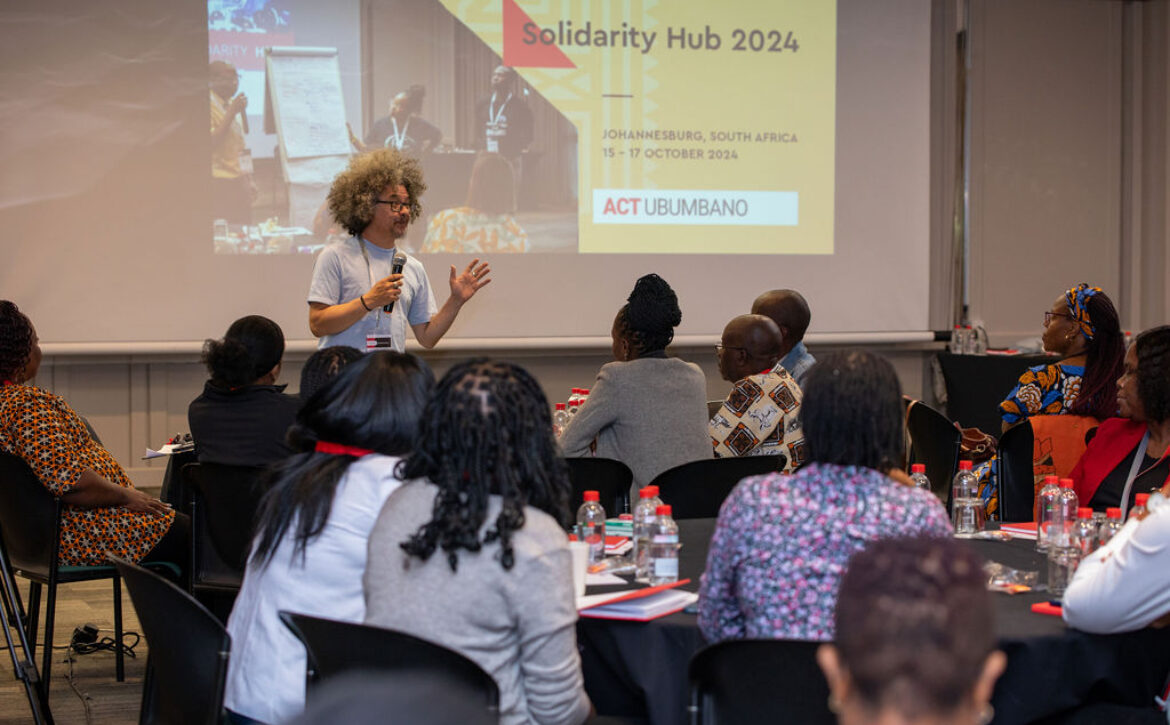
Voices from the Solidarity Hub 2024

We have captured the voices of some participants at the 2024 Solidarity Hub. You can listen to what the activists have to say, as well as viewing a short highlights video of the Hub itself. Click here to access our YouTube channel.

Read More