By Eddah Jowah – Sivio Institute
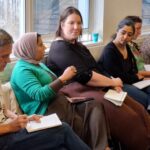
In September, I had the opportunity to participate in the European Solidarity Hub, a convening that brought together civic actors and donors from across Europe and Southern Africa. When I first received the invitation, I was a bit anxious and my immediate thoughts were practical ones. What would the agenda look like? How should I prepare? What insights would I need to bring to ensure that I showed up well, contributed meaningfully, and put my best foot forward? As updates were shared and logistics put in place, one thing seemed notably absent: a clear programme. While the rationale for the convening provided some guidance, I still found myself wondering how the day and a half of conversations would be structured. As a very structured person, I wanted certainty. I wanted to know what was coming. What I did not realise then was that the lack of a rigid structure was part of the lesson.
Key lessons that came out for me
- We are human beings first
The first day reminded me of something that is often lost in our relationships and interactions as we pursue our missions – noble and important as they may be – that first and foremost we are human beings before we are anything else. In our sector, it is often easier to engage with one another through labels and roles. Donors and grantees. Funders and recipients. Partners and beneficiaries. These identities shape our interactions and, have created sterile and distant relationships.
One of the first exercises invited us to introduce ourselves not through our job titles or organisations, but through our names and what we call home. It struck me how different this felt. Too often, introductions begin with what we do, where we work, and the titles we hold. Without fail, invisible lines and divisions are drawn. The room quickly becomes a human chessboard as people try to navigate towards the “right” or most influential person, often the largest funder or the most senior voice. However, when we begin with who we are rather than what we do, something shifts. We connect as people first. This has become increasingly important as it has become clear that the challenges faced in the world – growing authoritarianism; poverty; inequality; anti-immigrant sentiment and the rise of the far right movement, now transcend borders and continent, requiring even greater solidarity if they are to be resolved.
2. Examining my own privilege
The conversations also forced me to reflect on my own role within the civic space/ecosystem and how my actions and behaviours can sometimes perpetuate the very things I claim to be challenging when it comes to power dynamics. It is easy to identify power imbalances when looking outward. It is much harder to recognise the ways we ourselves may hold power and privilege, especially when we see our work as being in service of others. The convening reminded me that regardless of our positions, we are mothers, fathers, sisters, brothers, children, friends, and neighbours. We are human before everything else, and perhaps that is where solidarity should begin.
Instead, we have often placed resources, particularly financial resources, at the centre of our relationships. Funding has become the lens through which we engage one another. As a result, solidarity can sometimes feel conditional, transactional, or dependent on money.
True solidarity must be rooted in something deeper. While resources are important, they should not lead relationships; instead resources should support the fostering and growth of relationships.
3. Learning to sit with discomfort
I do not like being uncomfortable or not knowing how to respond to situations or provide solutions. The meeting provided an opportunity to wrestle with this discomfort of not knowing or uncertainty (as already highlighted in my introductory paragraph). I like having answers, solutions, and a clear sense of direction. Yet one of the biggest challenges I left with was the invitation to step into spaces simply to listen and to also accept that discomfort. To listen to communities. To be part of community. To resist the urge to immediately diagnose problems or propose solutions because I want to be seen as valuable.
There is discomfort in not having the answer. There is discomfort in sitting with complexity. As I grappled with this tension, I realised that perhaps there is also wisdom there. The experience reminded me that solidarity is not only about standing with others when we have something to offer. Sometimes it is about showing up without answers, without agendas, and without certainty. Sometimes it is simply about being present, listening deeply, and recognising our shared humanity, experiences or challenges. It got me to think that perhaps that is where meaningful change begins. In a sector that has become preoccupied with resources, strategies and results frameworks, impact, the European Solidarity Hub reminded me that solidarity begins not with what we have to give, but with our willingness to see and connect with each other as human beings.